
- Maybe you should clean your attic every now and then.
Buried treasures are just part of children’s stories, right? People don’t actually find that kind of stuff.
Well, they do. But most of the treasures people find aren’t buried in the ground.
In fact, they can crop up in the most unexpected places. A walk in the park, an impulse purchase at a thrift store, or rummaging through an attic might unveil something ridiculously valuable.
Here are 8 stories of people who found hidden treasures in unexpected places.
1. Saddle Ridge Hoard
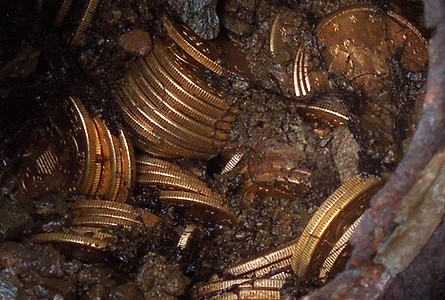
A couple, known only as John and Mary, were walking their dog on their property in Northern California when they stumbled upon a piece of trash. Out of the ground jutted a rusted metal can.
It wasn’t an old Coke can, though. Inside were dozens of gold coins.
The couple did some more digging at the site and discovered several more cans, each filled with gold. In total, they discovered eight cans containing 1,427 gold coins of various denominations, dating to 1847-1894, some of them worth millions on their own.
Nobody knows where the coins came from, but it’s possible they originated from a 1901 theft from the San Francisco Mint. Understandably, John and Mary haven’t revealed their full names to the public or where they found the Saddle Ridge Hoard, as the discovery is now known.
2. Gutenberg Bible in the Attic
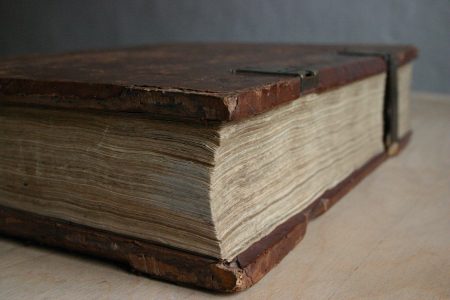
In 1958, German priest Gerard Oberthur was cleaning out an old parish house in the central German town of Immenhausen. During the tidying, he pulled out an old Bible from a pile of other books.
It’s not unusual for an old church building to have an old Bible lying around. But this one was special — it turned out to be one of the original Bibles printed by Johannes Gutenberg.
You know, the guy who invented the modern printing press with movable print.
The leatherbound book’s authenticity was confirmed in 1975. It’s a marvelous copy of the Gutenberg Bible’s second volume, containing all but seven of its 324 pages.
Considering that single pages from Gutenberg Bibles sell for more than $100,000, this dusty old tome is a real treasure.
3. The Goodwill Bust
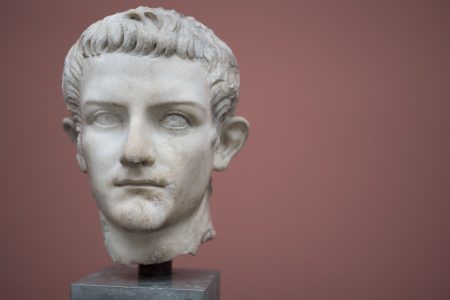
Laura Young of Austin, Texas, bought an old marble bust from a Goodwill store in 2018. She paid a whopping $35 for it.
As it later turned out, this wasn’t some cheap copy from Ashley or something. The thing turned out to be a genuine, more than 2,000-year-old sculpture of a man called Drusus Germanicus from Ancient Rome.
An American soldier serving in Germany during World War II had taken the bust from a wrecked museum as spoils of war. It would’ve been worth a kingly sum, but Young decided to return the bust to Germany in 2022.
If you want to know more about how Mr. Germanicus’ visage made it to a Texas Goodwill, read our article about it.
4. The Caligula Coffee Table
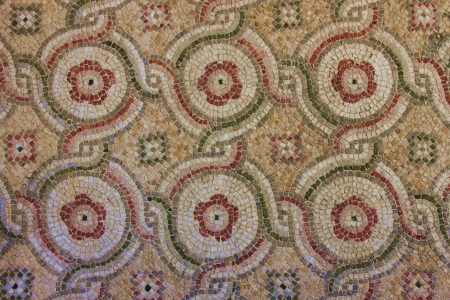
New York antiques dealer Helen Fioratti was visiting Italy when she found a beautiful mosaic. She bought the thing and converted it into a coffee table that stood in her living room for 45 years.
And then it was discovered that the mosaic originated from one of the pleasure ships built for Rome’s infamous emperor Caligula.
Caligula was notorious for engaging in every vice and pleasure he could think of. As part of his hedonistic lifestyle, he had several pleasure ships constructed which carried entire gardens, gilded rooms, and intricate mosaic floors — a piece of which Fioratti unwittingly bought.
Sadly, she didn’t get to keep her coffee table. It was illegally retrieved from a sunken Caligula ship, and Italian authorities ultimately confiscated it.
Want to learn more about how nuts Caligula was? Check out our list of 5 rulers from history who went bats*** insane.
5. Lost Hammer and Roman Riches
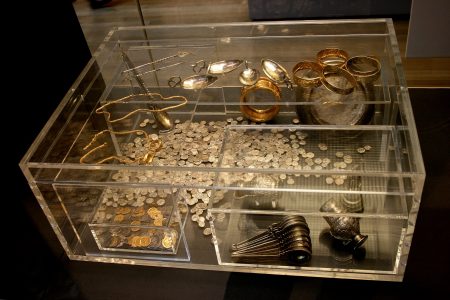
In 1992, British tenant farmer Peter Whatling was in a pickle. He’d dropped his hammer somewhere in his field and couldn’t find it, so he called his friend Eric Lawes, who owned a metal detector.
The duo set out to find Whatling’s treasured tool. However, they ended up finding some much more precious when they unearthed the Hoxne Hoard — the largest stash of Roman silver and gold ever found in Britain.
The buried treasure consists of nearly 15,000 coins, hundreds of pieces of silver dishes and tableware, and mounds of golden jewelry. Put together, the hoard is estimated to be worth about $5 million.
Under British law concerning historical treasure troves, Whatling and Lawes couldn’t keep the riches. However, they did get paid their estimated value as a reward for finding them, which they probably preferred anyway.
6. Renaissance Masterpiece in the Kitchen
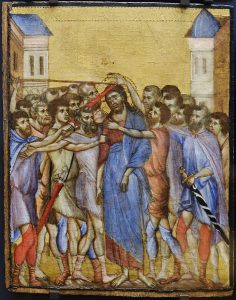
An old Parisian grandma had had a painting hanging over her cooking stove for years and years. It had been there for so long that the woman, who was in her 90s, had no idea where it had come from.
In 2019, she decided she was too old to live in her house and decided to sell it. An antiques dealer, who had come to evaluate some of her belongings, took note of the soot-coated painting.
It turned out to be “Christ Mocked,” a lost religious painting by early Italian Renaissance master Cimabue (also known as Cenni di Pepo). He painted the work in 1280 as part of a diptych depicting the crucifixion of Jesus.
Nobody knows how it ended up hanging above the old woman’s stove. What we do know is that it sold for more than $27 million.
7. Roman Villa in the Backyard

We’ve seen a lot of examples of the various forms ancient treasures can take — books, jewelry, coins, artwork… But how about a whole house?
That’s what Luke Irwin discovered when he demolished an old barn on his property in Wiltshire, England, in 2016. Underneath his backyard were the remains of an enormous ancient Roman villa.
This was the largest and best-preserved Roman home ever found in Britain, constructed between 172 and 220. The three-story building must’ve belonged to a wealthy person, as archeologists have discovered coins, jewelry, and an under-floor heating system in its 25 rooms.
8. The Declaration of Goodwill

Finally, let’s go back to Goodwill. In 2007, music equipment technician Michael Sparks was bargain hunting at a Goodwill store in Nashville, Tennessee.
On the shelves, he found a yellow, shellacked manuscript, rolled up. It didn’t have a price tag, so he asked the staff how much they’d ask for it. They said $2.48, and Sparks bought it.
The document turned out to be one of the rare official copies of the Declaration of Independence. Only 200 of them were made in 1820 at the request of none other than John Quincy Adams.
Spark put the document up for auction, with an opening bid of $125,000. Curiously, we couldn’t find what it sold for, but likely way more than that.
Don’t stop looking for treasure yet! Continue the search with our list of 5 of the largest ancient treasure troves ever found.