
- Ever wanted to run your own country?
What is a micronation? They’re self-proclaimed, often extremely tiny “countries” that typically aren’t recognized by any real state but still claim sovereignty over their own matters.
These weird entities often have quite the story behind them. They might’ve been created after a dispute with the local government, as a practical joke, or some far stranger reason.
There are dozens of micronations across the globe, but here’s a list of eight that are particularly odd.
1. Principality of Sealand
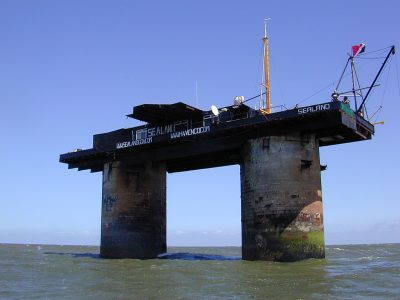
The Principality of Sealand is arguably the most well-known micronation in the world. Since 1967, it has occupied a WWII-era offshore naval defense platform some six miles off the U.K. coast.
It was founded by Paddy Roy Bates, who occupied the old fortress to run his pirate radio station (although he never did a single broadcast). He declared independence and ruled as Prince Roy of Sealand until his death in 2012, when he was succeeded by his son Michael Bates.
Sealand has quite the colorful history behind it. For instance, in 1978, German mercenaries tried to stage a coup and take over the fortress, which resulted in the mercenary leader being held hostage by Bates.
2. Republic of Kugelmugel
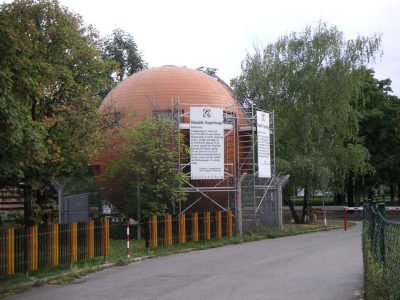
The Republic of Kugelmugel claims the area of a single, bizarre spherical house. It was built by artist Edwin Lipburger in Austria in 1971. However, he failed to obtain the proper construction permits for his weird building.
Frustrated with the subsequent bureaucracy, Lipburger declared his house an independent entity in 1978. No agreement between Lipburger and the city government of Vienna has ever been signed.
The latter has now largely accepted Kugelmugel’s existence because it brings in tourists. The micronation reportedly has 650 citizens, although they don’t live at the house. Not like they’d all fit in.
3. Principality of Hutt River
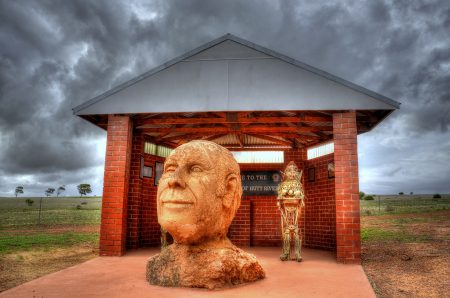
In 1970, Australian farmer Leonard Castley grew unsatisfied with state-enacted wheat production quotas. He decided to farm whatever he wanted on his own terms and declared the Principality of Hutt River as a sovereign state in 1970.
Throughout the years, his act of protest grew into a bizarre but surprisingly functional entity. Prince Leonard ruled with wisdom for decades, and Hutt River issued its own currency, stamps, and passports, and even had a national anthem.
Castley passed away in 2019. His son and successor, Graeme Casley, dissolved the principality the following year, as the Australian government was vehement about collecting the income tax his father hadn’t paid in years.
4. Principality of Snake Hill
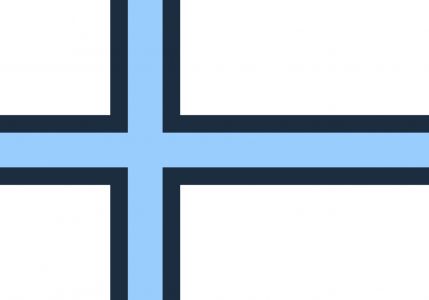
On the other side of Australia, the Jensen family was in a pickle in 2003. The poor family could no longer afford to pay their taxes or mortgage and was desperate for a way out of the dilemma.
So, they took a page out of Hutt River’s playbook. The Jensens declared the Principality of Snake Hill as an independent country.
Hundreds of people from all over have applied for and received Snake Hill citizenship over the years. Unfortunately, the bid for independence hasn’t resolved the family’s financial woes, and litigation over their property continues to this day.
5. Republic of Zaqistan
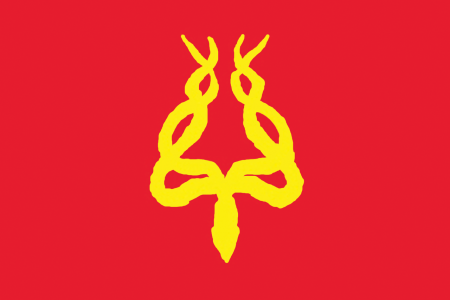
The Republic of Zaqistan is located in Box Elder County, Utah. It’s ruled over by Zaq Landsberg, the “country’s” self-declared president.
Curiously, there’s nothing in the roughly three-acre plot that Zaqistan claims as its territory. Nobody lives there and there are no buildings, although Landsberg has constructed various monuments and a border gate at the property.
Utah doesn’t seem to really bother with Zaqistan, since Landsberg still pays all his taxes. He, however, doesn’t consider them taxes but “tribute” he pays to maintain peaceful foreign relations with the great State of Utah.
6. Kingdom of Elleore
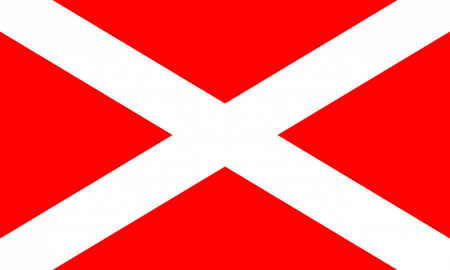
Kingdom of Elleore really stretches the definition a nation, even a micro one. This supposed kingdom occupies a minuscule island in the Roskilde Fjord off the coast of Denmark.
It has a curious origin story, though. A group of schoolteachers bought the island in 1944 from Nazi Germany, which at the time occupied the country. They then proclaimed the island an independent kingdom modeled after free Denmark.
Since then, Elleore has developed its own peculiar traditions, which include a ban on the novel Robinson Crusoe and issuing coins and stamps. Yet, the island remains uninhabited and is only used once a year as a summer camp location.
7. Empire of Austenasia
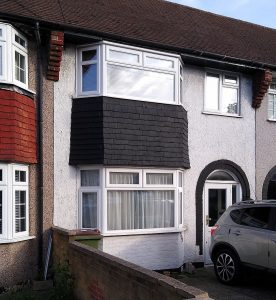
We’ve seen republics, principalities, and kingdoms. But this micronation proclaims to be an empire.
And not just any empire. Austenasia claims to be a direct successor of the Roman Empire.
In reality, its “capital” is a single townhouse in Carshalton, southern London. Other properties around the U.K. have joined the empire since its founding in 2008. Although its territory consists of private residences, Austenasia has a tumultuous past, including a 2010 “civil war.”
8. Aerican Empire
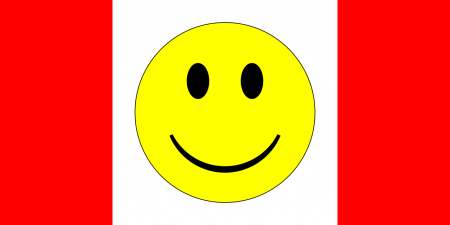
Alright, so the Empire of Austenasia has spread across the British Isles. But it has nothing on the Aerican Empire, which claims territory across the galaxy.
The Aerican Empire was founded “for fun” in Canada in 1987 by one Eric Lis and his friends. For the first decade, it didn’t claim any territory anywhere and existed purely as a joke.
Since then, though, Aerica has expanded across multiple (imaginary) planets. It also regularly wages war against other micronations of the world. The conflicts, however, are always conducted through sternly worded letters.