
- Wherever you are on Earth, you’re never far from an owl or a tragic pregnancy story.
We recently took a look at some things that people think are very common but are, in fact, exceedingly rare. The list ranges from eating wasabi to being hit with a tax audit.
But what about the flip side of the coin? Are there any things people think are next to nonexistent but actually, happen all the time, everywhere?
Of course, there are. Here are eight seemingly rare things that you can find all over the place (unfortunately in some cases).
8. Owls

A lot of folks out there consider seeing an owl a rare, delightful treat. Well, seeing one might actually be rare, but owls are definitely not.
Take, for example, the great horned owl. There are 2.5 million of them just in the U.S. and they live everywhere from the wildernesses to city centers.
Meanwhile, two million eastern screech-owls live all around east of the Mississippi. You can even get one to nest in your yard with the right nest box.
People simply think owls are rare because they’re mostly active at night and they’re masters of stealth. But if you’re out at night, there will almost certainly be an owl watching you.
7. Four-leaf Clovers

A four-leaf clover brings its founder good luck because finding one is such an astronomically unlikely thing. Or that’s what we want to think, but in reality, there’s a pretty much guaranteed four-leaf clover in every clover patch.
The mutation that creates a four-leaf clover affects roughly one clover in 5,000. If you then consider how many clovers are around…
Yeah, you can find a clover with four or even more leaves if you want to. But few people are willing to put in the effort.
6. Miscarriages

Well, this is a bit of a bummer. But it’s true — miscarriages are actually incredibly common, yet nobody talks about them.
One study found that more than half of Americans think that less than 5% of pregnancies end in miscarriage. Yet, the real number is somewhere closer to 20-25%.
That’s right: nearly every fourth pregnancy fails due to miscarriage. Families and especially women typically just don’t talk about it because of guilt, trauma, and social stigma.
5. Deserted Islands

It’d be easy to think that deserted islands are just found in swashbuckling pirate stories. After all, every spot of land in this modern era surely has some kind of structure on it.
Yet, the world’s oceans are littered with islands where nobody lives. The island country Maldives, for instance, has more than 1,000 deserted islands within its territory.
Even Greece, a popular tourist destination because of its islands, has dozens if not hundreds of uninhabited islands along its coastline. If you thought the premise of Castaway is ridiculous in today’s world, think again.
4. Solar Eclipses
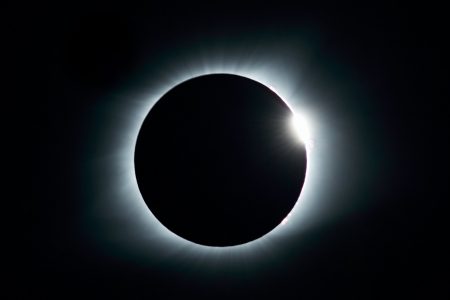
The 2024 solar eclipse was a big event. After all, solar eclipses are incredibly rare events that happen only once in a lifetime.
That would mean your remaining lifespan is counted in months, though. Every year, at least two and up to five partial solar eclipses happen somewhere on Earth.
Total solar eclipses are much rarer, though. They happen only once every year or two.
Yeah, you could see a total solar eclipse every year if you wanted to — if you’re willing to fly wherever it’s taking place.
3. Incest

This is about to get awkward. We all would like to think incest is extremely rare, with only the most disturbed freaks or historical royals engaging in it.
Unfortunately, incest is surprisingly common. Even in the U.S., roughly one in 7,000 pregnancies is a result of incest. As many as 15% of families report at least one family member has taken a dip in a shallow gene pool.
Yet, the most shocking this is that it may even be getting more common. As a silver lining, accidental incest — where the people doing the horizontal mambo don’t know they’re related — does make up for a decent chunk of the cases.
2. Sunken Treasure
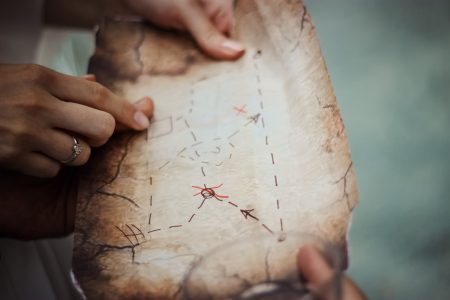
Alright, deserted islands are actually common. But sunken treasure, another staple of pirate fiction, must be a product of pure imagination.
You’d think so, but an estimated three million ships are lying on the bottom of the world’s oceans. The vast majority of them were once merchant vessels that carried precious cargo — which for a good chunk of human history meant gold, silver, and other properly pirate-y booty.
So, why isn’t anyone diving in to get that filthy lucre? Well, people are, and treasure diving is actually an entire niche industry.
The problem is that a lot of the sinking locations are unknown. Before modern navigation technologies, most shipwrecks were noted down vaguely at best, so finding the treasure may be next to impossible.
1. Oil

Oil is one of the most valuable substances in the world. It’s so precious that countries have gone to war over it (and probably will do so again).
That’s because oil is rare, right? Well, no, but also kind of yes.
Oil in itself is really not rare. There’s so much of it on Earth, in fact, that we could increase our oil consumption and still have plenty for hundreds and hundreds of years.
Oil that’s easy (or at least cost-effective) to get to, however, is a different story. Most of the world’s oil resources are either in hard-to-reach areas or mixed into tar sands or other minerals and substances.
Recovering that oil is either too expensive with modern technology and/or so environmentally disastrous that it may not be worth it. And that’s the oil crisis in a nutshell — there’s plenty to go around, but how high of a price are we willing to pay for it?