
- If you’re planning to visit any of these locations, you might want to hurry.
Our planet is filled with wondrous sights, created by nature and humanity. Unfortunately, shockingly many of them are at risk of disappearing forever.
Whether it’s due to changing climate, rising sea levels, negligent tourists, or simply the never-ending march of time, many of the world’s greatest are not long for this world. If you’ve been putting off a trip to see some of them, you might want to consider buying those flight tickets.
If you keep waiting, there may not be anything left to see when you finally go.
Here are 10 famous sights and landmarks from around the world that may soon be gone.
10. Glacier National Park
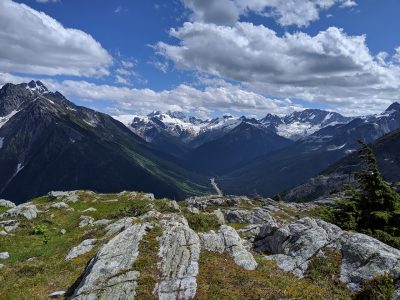
Guess what Glacier National Park in Montana is famous for? If you guessed glaciers, you’d be correct — for now.
When established in 1910, Glacier played host to 150 active glaciers (that is, ones that stick around all year long). Today, only 25 active glaciers are left in the park, and even they may disappear within 15 years.
Wonder what they’ll call the park then? Keeping “Glacier” in the name seems like false advertising.
9. The Great Wall of China
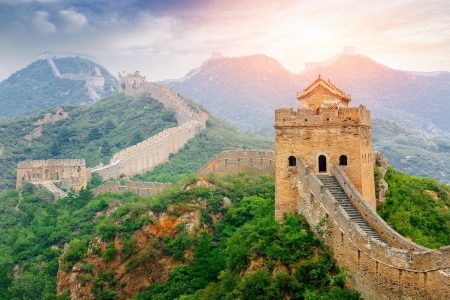
The Great Wall has stood proudly for more than 2,000 years to protect China from northern invaders. For many reasons, however, only around half of China’s indomitable barrier is left (at least in a state that’s worth seeing).
Some parts of the wall have been torn down due to illegal industrial and farming projects. Vandals and tourists alike are also tearing the wall apart to take its bricks home as souvenirs.
Yet, the Great Wall’s sheer age is one of the biggest issues. Nothing lasts forever, after all, and the 2,000-year-old structure is simply deteriorating due to its age.
8. Venice
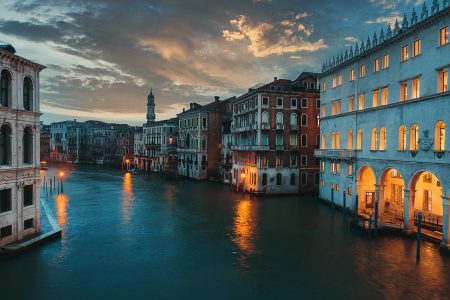
Ah, Venice — the jewel of Italy, the floating city. Well, that last nickname is kind of undeserved since the floating city is sinking.
Venice was originally built in a muddy lagoon, which doesn’t exactly make for a solid foundation. The city is basically sinking into the soft ground under its own weight.
Groundwater is also getting pumped out from under the city, causing it to sink even faster. Add to that the rising water levels of the Mediterranean, and the waters in Venice’s canals may soon swallow the whole city.
7. Galapagos Islands
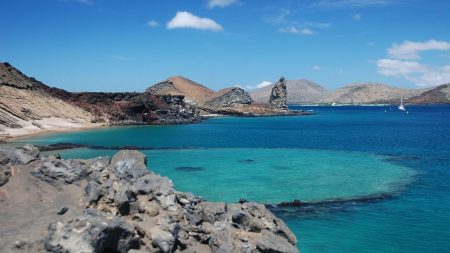
The Galapagos Islands were once, in the words of Charles Darwin, a “little world within itself.” Indeed, the remote islands are home to unique (and vulnerable) animals that aren’t found anywhere else.
Galapagos is not remote anymore, though. The islands’ population is growing, there are four airports, and cruise ships bring in a constant stream of tourists to gawk at the exotic creatures.
Human presence has started causing environmental degradation, which — if allowed to continue — may threaten the very animals people come to see. That raises the question: should you really visit Galapagos at all?
6. Taj Mahal
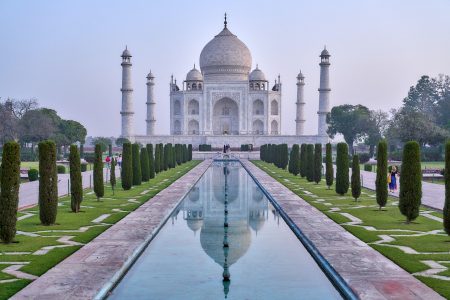
The ivory and marble mausoleum of the Taj Mahal is a gleaming miracle of Indian architecture. But if you’ve seen photos of it lately, the structure may have seemed to you a bit… Dull.
Indeed, the Taj Mahal’s white surfaces are quite literally dissolving away. Airborne pollution and the resulting acid rain are slowly but steadily destroying the tomb of the fifth Mughal emperor.
The Indian government has tried regulating traffic around the Taj Mahal, but the country’s growing population needs transport. Meanwhile, one of, if not the most famous landmark in all of India is gradually melting away.
5. Great Barrier Reef
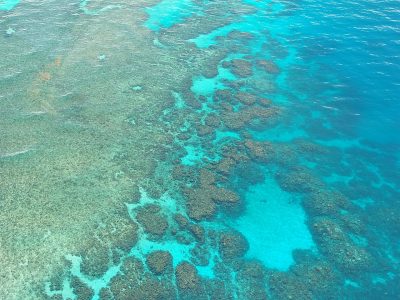
The Great Barrier Reef off the coast of Australia is one of the most biodiverse places on Earth. Or at least it was.
Rising ocean temperatures and acidity have been causing one coral bleaching event after another for the past 30 years. Today, roughly half of the reef’s coral coverage is dead and gone — and the rest may follow by 2030.
4. Grand Canyon
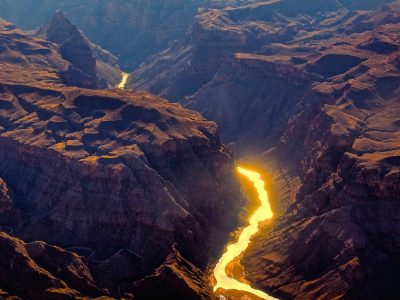
What could possibly threaten the majestic Grand Canyon? Sadly, it’s you, me, and everybody else going there.
If you haven’t been to the Grand Canyon recently, well… It’s turning into a kind of a dump. Some buildings and trails around the canyon are in serious disrepair.
With poor access to the official paths and facilities, tourists tend to make their own. As a result, they’re only adding to the problem by causing erosion to the pretty parts of the canyon.
3. The Dead Sea
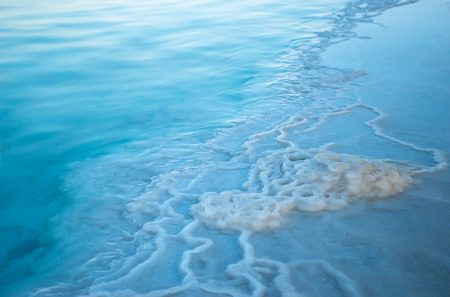
The name of the Dead Sea on the borders of Jordan, Israel, and the West Bank is soon about to be very accurate. That’s because the sea, famous for its highly salty and supposedly therapeutic waters, is about to die.
Water levels in the sea have fallen by one foot per year since 1930. This is due to natural factors and manmade issues, such as pumping the sea’s water away.
The receding waters have left behind huge underground caverns which are constantly collapsing into enormous sinkholes. Sometimes, they only make things worse as they allow the Dead Sea’s remaining waters to flow away somewhere deep beneath the earth.
2. Amazon Rainforest
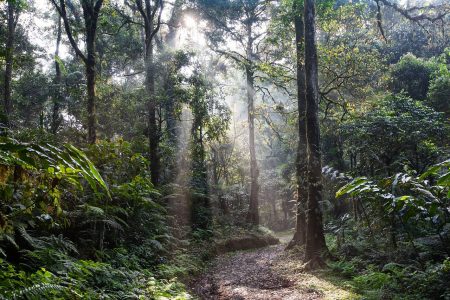
It shouldn’t be news to anyone that the Amazon Rainforest is deteriorating. However, not everyone realizes just how dire straits the home of more than a third of the world’s plant and animal species is in.
Roughly 20-40% (depending on definitions) of the Amazon has been destroyed over the past four decades. The reasons range from wildfires (both natural and human-caused) to mining, farming, and both illegal and legal logging.
1. The Maldives
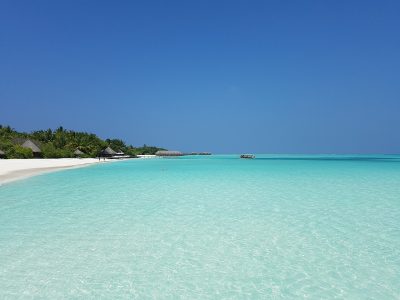
The Maldives, located in the middle of the Pacific Ocean, is a beachgoer’s paradise. The nation, consisting of nearly 1,200 islands across 26 atolls, is famous for its pristine beaches, beautiful blue waters, and excellent diving opportunities.
Yet, it also has a more dubious distinction. The Maldives may become the first modern nation to be lost to the seas.
Already the first lowest-lying country, the Maldives is seriously threatened by rising ocean levels. According to estimates, the tropical paradise may be part of the ocean floor by 2100.