
- Be extra suspicious about the news you read today.
April Fools! It’s again the time of year to remind your friends and loved ones why they really shouldn’t trust you.
Well, you really shouldn’t trust anybody on this day. Some of the most infamous April Fools’ pranks ever have been pulled by the most reliable public organizations out there.
And they have embarrassed millions upon millions of people. Here are eight of the most successful public April Fools’ jokes in history.
1. The Left-handed Whopper
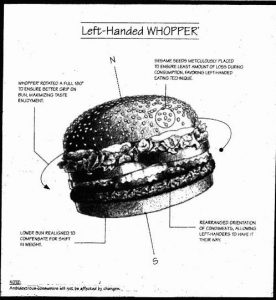
In 1998, Burger King answered the prayers of all southpaw lovers of gas-grilled hamburgers. The company would release a version of its flagship Whopper sandwich that was designed specifically for left-handed diners.
Burger King bought a full-page ad in USA Today, which included a diagram detailing the full 180-degree rotation in the burger’s construction. The condiments were also rearranged, and the lower bun realigned for left-side structural integrity. The lefty burger would be first released in the U.S. before its international debut.
Thousands of people flocked to Burger King restaurants to try the supposed left-handed Whopper (a fact proven by sales data). Yet, not everyone was impressed — some surveyed customers said they thought the old right-handed burger tasted better.
2. The Jupiter Gravity Jump

Astronomer Patrick Moore told a BBC interviewer in 1976 of an astounding upcoming cosmic phenomenon. On April 1, precisely at 9:47 a.m., Jupiter and Pluto would line up perfectly with Earth, creating a strong gravity pull that would allow people to hover momentarily if they jumped at that time.
That, of course, wasn’t going to happen, but you wouldn’t believe that based on the calls the BBC got. One delighted person said she and 11 friends had all floated happily around her living room.
Meanwhile, another caller demanded compensation for floating too high and hitting his head on the ceiling.
3. The Digital Big Ben
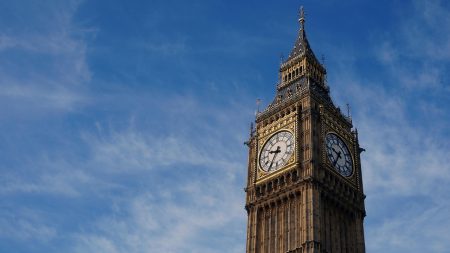
The BBC struck again in 1980. On April 1 that year, the news service announced that Great Britain was going to catch up with the quickly modernizing times.
One part of the change would be the renovation of London’s famous Big Ben. Its traditional clock face would be replaced with a new, ultra-modern digital display, and the classic hourly bongs would become digital beeps, like an alarm clock. With that, the clock would also change its name from Big Ben to Digital Dave.
If the British love anything, it’s their traditions. The public was outraged, with angry calls flooding the BBC phone lines, demanding an explanation on why the beloved landmark was being desecrated.
4. Nixon’s Second Coming
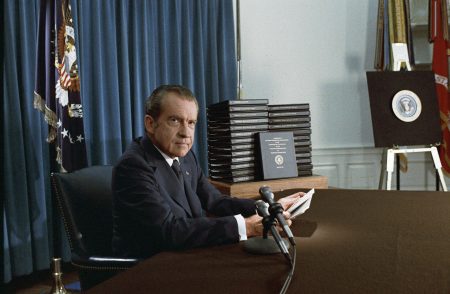
Richard Nixon resigned as President of the United States in 1974. In 1992, he decided it was time for him to give the job another try.
On April 1, NPR aired an interview in which Nixon announced his presidential run in the year’s upcoming elections. “I never did anything wrong, and I won’t do it again,” the voice, claimed to be Nixon’s, said.
At the time, a lot of people still remembered the Watergate scandal all too well and were incensed at the thought of the famous not-a-crook running again. NPR sure found one convincing impersonator for their prank.
5. The Stocking TV Color Hack
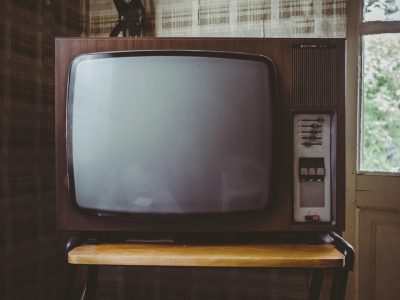
Color television existed in 1962, but in Sweden, there were no color TV broadcasts at the time. Much to the delight of the Swedish public, Sveriges Television — the country’s national (and only) TV station — made an incredible announcement on April 1.
A “technical expert” informed the public on a live broadcast that they could exploit the way Swedish televisions projected the image. If the display was viewed through a fine mesh, the distortion of light would render the image in vibrant technicolor.
The most easily available mesh to use was pantyhose. Thousands of people around Sweden fell for the gag and ruined a perfectly good pair of stockings by stretching it over their TVs.
6. The U.S. Treasury Heist
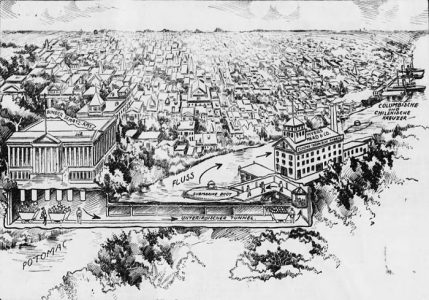
“Extra! Extra!” yelled German paperboys on April 1, 1905. “All the gold and silver in U.S. Federal Treasury have been stolen! Read all about it!”
The news story included a detailed explanation of how a group of criminals, funded by American “robber baron” millionaires, had spent three years tunneling under the Potomac River to break into the treasury. They stole an astounding $268 million in precious metals, practically emptying U.S. national coffers.
Embarrassed, the American government was trying to keep the public in the dark about the crime while sending federal troops after the burglars.
As an American, you probably know that this theft never happened. Yet, many Germans, including several reliable media outlets, believed the story. From Germany, it spread to other countries across Europe until the hoax was revealed (much to Americans’ amusement).
7. The Lung-powered Pilot
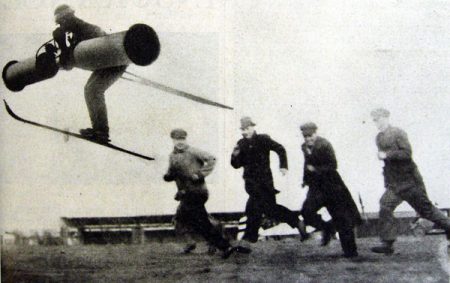
In 1934, another German newspaper printed a story about Otfried Koycher who had developed an ingenious flying device. He had created a machine that allowed him to fly simply with the power of his lungs.
The article featured an image of a ski-wearing airborne man, blowing into a bizarre contraption strapped to his chest. Why, if there’s a picture in this German story, it must be true!
This time, it was the Americans’ turn to fall for a German joke. Multiple major newspapers, including the largest U.S. paper at the time, New York Daily News, ran stories about this fantastic new German invention.
A part of the reason why American papers picked up the story was due to a simple language barrier. They didn’t get that “Koycher” was a pun on “keuchen,” which in German means “coughing” or “wheezing.”
That’s certainly what you’d do after flying this device.
8. The Great Spaghetti Harvest

Finally, we have perhaps the most famous public April Fools’ prank of all time. In 1957, the BBC (again) aired a TV program showcasing how spaghetti was harvested in Italy.
The broadcast showed footage of smiling Italian farmers, carefully plucking ripe strands of spaghetti from Italy’s spaghetti trees. As they worked, a narrator explained that the crop was particularly good, thanks to a mild winter and a new pesticide that had eradicated the dreaded spaghetti weevil.
The British public swallowed the story hook, line, and sinker. Many people called the BBC asking if they could grow their own spaghetti trees in the British climate. They were told to put a strand of spaghetti in a can of tomato sauce and plant it in the yard.
Granted, at the time, both spaghetti and television were completely new things to most British people. Still, you can’t help wondering why anyone trusts a word the BBC publishes.
Want to laugh at more people who fell for stupid jokes? Check out our list of 6 incredible animals (that were nothing but hoaxes).