
- If you’ve never heard of these failures, consider yourself lucky.
In the 1980s, there was big boom in consumer product development. Partially, it was because people had enough money to buy stuff, but tech was also getting smaller and cheaper, so all kinds of gadgets found their way to the store shelves.
Some of them never left the shelf, though.
Because of the mad rush to bring anything and everything to people, some products were quite odd and didn’t fare very well. In some cases, it was because of rushed development, in some cases the devices were just too far ahead of their time — and then there were those products that were just piles of crap.
Here are eight odd products made in the ‘80s that quickly fell by the wayside.
1. CED Video
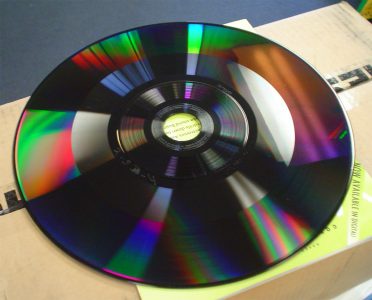
The Capacitance Electronic Disc (CED) was a home video format that briefly showed up at the marketplace in the mid-‘80s. It was essentially a vinyl for video.
The CED system read huge, 12-inch discs that were permanently housed inside a plastic shell. Inserting the shell into a CED player would extract the “vinyl” and play it.
Unfortunately, the CED just wasn’t a good format, as the discs broke easily, you couldn’t reverse or fast-forward the video, and the picture quality was terrible. Additionally, VHS, Betamax, and LaserDisc were already available when the CED was introduced in 1984, rendering it obsolete out of the gate.
That said, the CED was first designed in 1964, but it got stuck in development hell for ages. Had it come out 20 years earlier, it would’ve been cutting edge.
2. Life Savers Soda
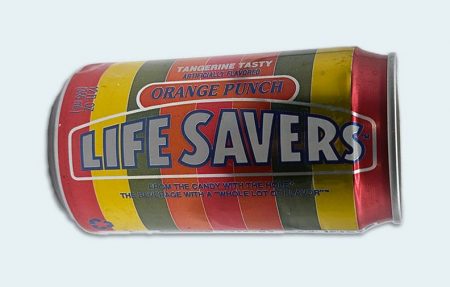
Life Savers are a popular brand of candy, and people were nuts about soda in the 1980s. So, to ride the soda high, Life Savers released its own soda in 1981.
The drink, which came in five flavors, was supposed to (and did) taste just like the candy. That sounds pretty good, right?
Well, reality turned out different. Although the soda had its fans, consumers generally found the stuff way too sweet.
Faced with low sales, the soda disappeared in 1982. Some flavors are simply meant to stay as candies, we suppose.
3. The Clapper
Clap on, clap off! If you remember the ads for the Clapper, well… We’re sorry, but you’re getting on in years.
It’s okay, so are we.
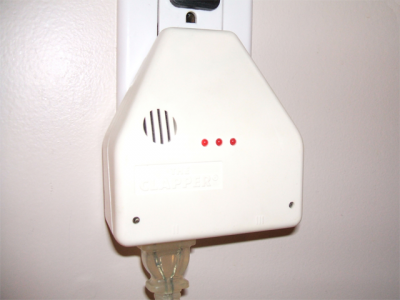
If you are too young to remember, the Clapper was a device that aimed to replace your light switches (or other electronics switches) with clapping. Plug the Clapper to an outlet, plug a device to the Clapper, and you can now turn it on or off by clapping your hands twice.
The Clapper wasn’t very well-designed, though, and anything from the audience clapping on TV to a dog barking could activate or deactivate it. That said, you can still buy Clappers, so we guess it wasn’t a complete failure — but it sure never became mainstream.
4. McDLT
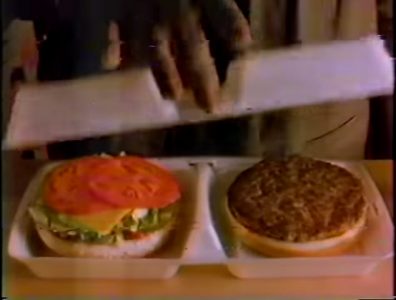
In 1984, McDonalds decided to solve a problem no one was having. They introduced the McDLT, a burger that came in two separate parts.
The top bun, cheese, and any vegetable were houses on one side of a styrofoam container, while the patty and bottom bun were on the other side. According to Mickey D’s, this was supposed to keep the “cool parts cool and the hot parts hot.”
That’s nice, but it didn’t really work well, and both sides ended up lukewarm. Additionally, people considered the styrofoam package wasteful — not to mention they didn’t want to build their own burgers.
Still, the McDLT survived until 1991 before it was killed off.
5. IBM PCjr
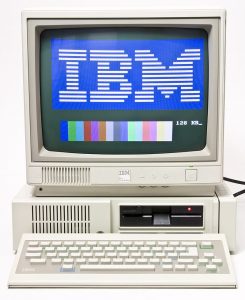
The IBM PC was the big dog of the computer market in the ‘80s — hence why we call most computers PCs these days. However, it was expensive and aimed mostly for office work, so IBM decided to roll out the PCjr (pronounced PC Junior).
The PCjr was supposed to be an affordable, gaming-oriented home computer that would still support serious PC work. It was none of those things.
Although it was cheaper than a PC, the PCjr still cost more than $1,000, which was more than twice as much as a Commodore 64 or its other competitors. It wasn’t great for games, since the system was seriously underpowered even by ‘80s standards and had an atrociously bad keyboard.
Finally, you couldn’t replace a work PC with the thing, since in a mind-bogglingly stupid decision, IBM didn’t make PCjr compatible with most PC software. Consumers soon realized PCjr was useless and IBM buried it after only a year on the market.
6. Pepsi A.M.
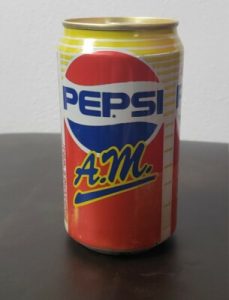
Want a caffeine boost in the morning but you’re not a fan of coffee? Well, Pepsi A.M. is just for you!
This soda, launched in 1989, was essentially Pepsi with extra caffeine. It tasted more or less like a regular Pepsi, but with 25% more go-go juice.
Pepsi A.M. essentially tried to be Red Bull before Red Bull came to America. However, it turned out that most people don’t want to start their day with a Pepsi, and the Pepsi A.M. lived for a year before it got taken to the farm upstate.
7. Premier Cigarettes
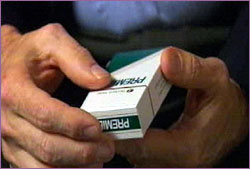
By the ‘80s, the general population was starting to wake up the fact that smoking is seriously bad for you. In a desperate attempt to appear more health-conscious, the tobacco first R.J. Reynolds introduced Premier — a brand of smokeless tobacco.
These cigarettes featured a hard casing which contained a small amount of processed tobacco and flavoring agents. You’d light the thing’s carbon tip, which would heat the tobacco inside, releasing a nicotine aerosol with next to no smoke and tar.
It was kind of like vaping before vaping.
But smokers didn’t like the product because — and we quote a Japanese consumer — it “tasted like s***.” Indeed, the taste was unpleasant and, if lit with a sulfur match, the Premier cigarette produced a stench not unlike really bad farts.
But hey, if the fecal experience got you to stop smoking, good for you.
8. DMC DeLorean
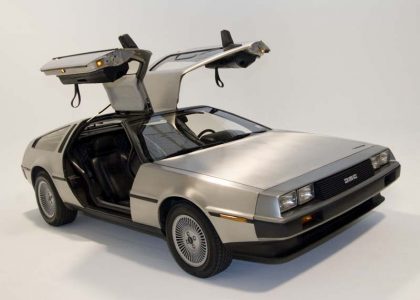
The DeLorean is an absolute ‘80s icon. Serving as the time machine of the Back to the Future franchise, it’s one of the most famous cars in history.
It was also a really bad car.
The DeLorean looked futuristic from the outside, and that was pretty much all it had going for it. It was rushed to the market and it really showed.
DeLorean’s interior components looked and felt cheap, not matching its outward appearance. Additionally, it had an underpowered engine that disappointed drivers expecting to pilot the sports car of the future.
But the thing does still look darn good on the movie screen.