
- From unexplainable fairy circles to waterfalls of blood, nature sure can be spooky.
Nature can be stunningly beautiful. At the same time, it can be incredibly weird and even downright creepy.
There are plenty of natural phenomena out there that will catch you by complete surprise if you don’t know what to expect. It may be because whatever’s happening is so out of place compared to its surroundings, or perhaps because we don’t know why the phenomenon is happening.
Or the whole thing could just be straight-up deadly.
Here are seven strange and creepy natural phenomena from all corners of the world.
1. Namibia’s Fairy Circles
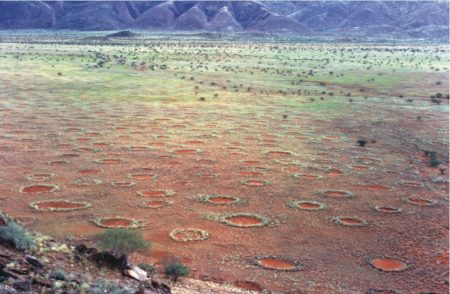
The Namib Desert of Namibia is a vast, arid grassland, covered in short, dry grass. Except in some mysterious spots where it isn’t.
Known as fairy circles, these bizarre barren patches range from roughly 7 to 39 feet in diameter. Yet, around their edges, they often sport a small ring of unusually wildly growing grass.
No one has been able to figure out how or why the fairy circles appear. There are many theories, though, from termite activity to radioactive soil or lingering toxins killing the plants.
2. The Blue Volcano
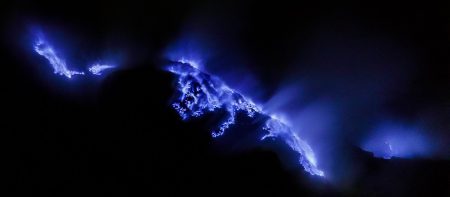
If you were to see any color during a volcanic eruption (if the black and gray smoke doesn’t conceal everything) it’d be lava red, right? The Ijen volcano on the island of Java in Indonesia, however, often burns blue.
It’s not the magma itself that’s blue, though. Instead, the color comes from the sulfuric gases the volcano is constantly belching out, even when it’s not erupting.
When the gases come into contact with air, they can ignite. The blue gas flames can be up to 16 feet high, making for quite a show.
3. Pele’s Hair
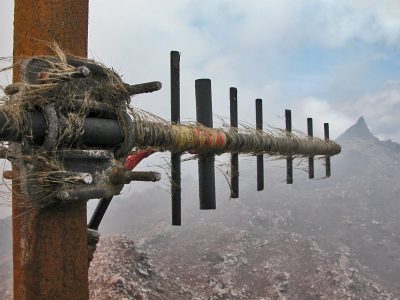
Finding an unexplainable clump of hair anywhere is creepy enough. But what if you stepped outside and found everything covered in fine strands of hair?
That can happen in Hawaii with the phenomenon known as Pele’s hair. Don’t be too grossed out, though — the “hair” isn’t real hair but fine strands of glass.
During volcanic activity, the high temperatures can melt sand and stone, producing volcanic glass. When the wind is just right, it can catch and stretch the molten glass into long “hairs” that get tangled on everything downwind from the volcano.
4. The Sailing Stones
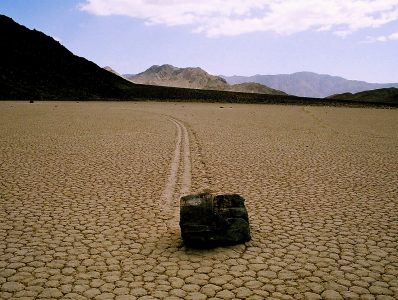
Rocks don’t generally do much more than sit wherever they’ve landed. But the Sailing Stones of the Racetrack Playa in California aren’t having any of that.
These famous stones move on their own, traveling across the flat desert and leaving long tracks behind them. For the longest time, the phenomenon was a total mystery because no one had actually seen the stones move.
Now, researchers believe they’ve cracked the case. At night, a very thin sheet of ice forms between the stone and the ground, allowing the rock to slide along the seemingly level desert.
5. Bolton Strid
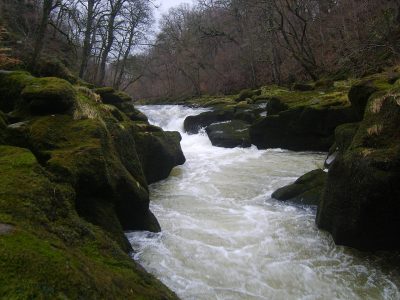
Bolton Strid is a picturesque waterway in Yorkshire, England. The narrow, roughly seven-foot-wide stream, flanked by mossy stones and pretty trees, is so idyllic you’d half-expect to see hobbits prancing about.
You’d better not get into the water, though. The Strid is actually a section of the 90-foot-wide River Wharfe that rock formations force into the narrow channel.
That doesn’t affect the volume of water flowing through the Strid and the strong current will definitely sweep you away. Additionally, both banks of the Strid are undercut with large voids beneath them, making for a perfect natural death trap.
We’re not being dramatic here. The Strid is responsible for dozens of fatalities and the area is littered with signs warning visitors to stay out of the water.
6. Combustible Lakes
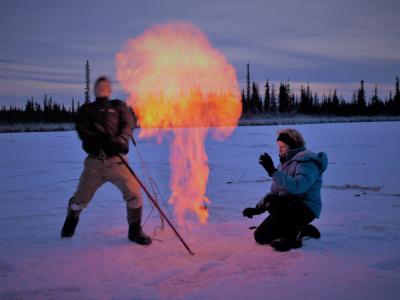
If there’s one thing lakes shouldn’t do, it’s burn. However, thermokarst lakes, located in the northern parts of Eurasia and America, are very combustible.
Thermokarst lakes are found in areas that usually experience year-round permafrost — and have done so for millennia. As a result, the permanently frozen lake bottoms have trapped enormous amounts of methane beneath them.
Sometimes, the ground melts enough to release the trapped methane. Especially in winter, the lakes can get so full of methane that it’s possible to light them on fire. You might sometimes even see the frozen methane bubbles under the ice.
7. Blood Falls
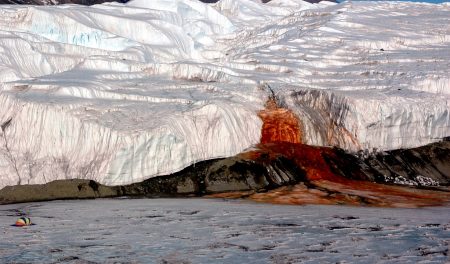
Imagine the vast whiteness of Antarctica. But there, in the middle of it all, the icy glacier is bleeding.
Blood Falls in the Taylor Glacier is a striking blood-red waterfall. As creepy as it is, though, the crimson liquid pouring out from beneath the Antarctic ice really is water.
The water source of the Blood Falls is an ancient lake that was trapped deep beneath the Taylor Glacier five million years ago. Over the millennia, the lake’s water has become extremely concentrated with both salt and minerals — including iron oxides.
The high salt content keeps the water liquid even in the frigid Antarctic weather while the iron dyes it a deep red. So, the stuff coming out of Blood Falls isn’t blood — just really, really rusty water.