
- Just because a building looks fancy, doesn’t mean it’s doing its job right.
Everybody appreciates a beautiful building, even if they know nothing about architecture. And sometimes, it’s easier to appreciate famous buildings when you don’t understand the science and art behind them.
If you did, you’d be either incredibly frustrated or running away in abject terror.
Surprisingly many world-renowned buildings are, in reality, garbage at the purpose for which they were constructed. That is, when they’re not famous simply for being horrible failures of architecture.
Here are 7 famous buildings that don’t live up to what the architect imagined.
1. Guggenheim Museum, New York
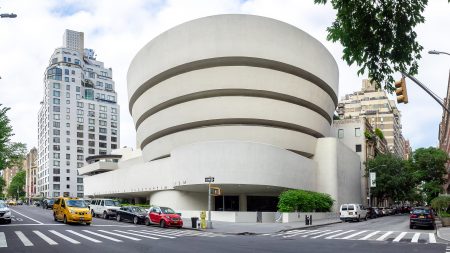
The Guggenheim is one of New York City’s most iconic landmarks and among the most famous art museums in the world. That’s despite the fact that building kind of sucks as an exhibition space.
While its round and spiraling walls are part of the reason for the Guggenheim’s fame, they make hanging flat paintings really awkward. Consequently, many exhibitions have to use separate stands and cabinets to display artwork.
Many artists, critics, and other art adjacent people have lambasted the Guggenheim throughout its existence for this simple failure in design. It does bring up the question of whether the exhibition space should be a work of art in itself, or whether it detracts from the others works on display.
2. Millennium Bridge, London
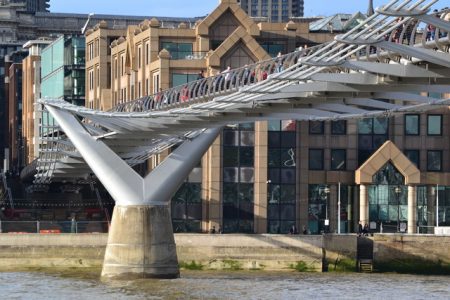
The Millennium Bridge in London was built to commemorate the turn of the millennium (hence the name). However, when it opened in June 2000, pedestrians immediately noticed something concerning.
The entire bridge swayed wildly as people walked over it. What was supposed to be London’s grand gesture for welcoming in the 2000s earned the unpleasant nickname of “Wibbly Wobbly” within 24 hours.
Due to the swaying, the Millennium Bridge was closed the same day it opened. Traffic over the bridge wouldn’t be allowed again until 2002, following further construction that cost $6.7 million.
That’s on top of the bridge’s original $24 million price tag, which was already $4 million over budget. Next time, build a bridge that people can actually walk on without fearing for their lives.
3. Walkie Talkie Tower, London
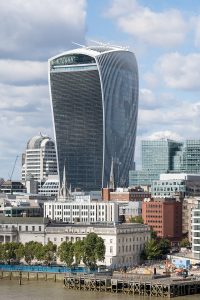
The skyscraper at 20 Fenchurch Street, London, is better known by its nickname, the Walkie Talkie. The name stems from its shape, which looks kind of like a remote communicator handset.
Yet, the building is even more famous for firing off solar-powered lasers due to its concave shape.
In 2013, on a particularly sunny day, the Walkie Talkie concentrated the sun’s beams to one point on the street. The spot got so hot that a car parked there literally melted onto the asphalt.
Owners of the Walkie Talkie have attempted to mitigate the problem with non-reflective film on the tower’s windows. Man, we sure hope nobody makes this kind of mistake again…
4. Vdara Hotel and Spa, Las Vegas
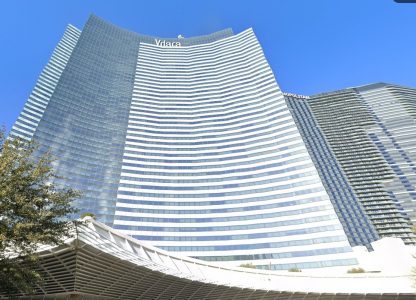
In 2009, the windows of the concave Vdara Hotel in Las Vegas turned the rays of the blazing Nevada sun into a scorching beam. Blasting onto the hotel’s pool deck, this heat ray melted plastic bags and singed the hair of guests trying to lounge by the pool.
Wow, that’s exactly what happened with the Walkie Talkie in London! How could these buildings, constructed around the same time half the world apart, have identical issues?
What if we told you both the Walkie Talkie and Vdara Hotel were designed by Rafael Viñoly Architects? They might want to consider developing a new signature look that doesn’t turn buildings into a mad scientist’s death rays.
5. Standard Oil Building/Aon Center, Chicago
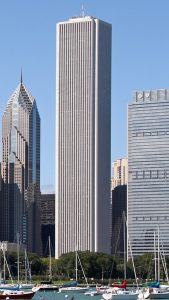
The Standard Oil Building, today known as Aon Center, was a beautiful marvel of its time. Completed in 1973, standing above 1,150 foot tall, it was the world’s tallest building clad entirely in marble.
If you’ve seen it recently, though, you might wonder where all the marble went. Well, it started falling off.
The architects neglected to take into account that marble is a very soft stone. After just a decade of weather exposure in the Windy City, the 350-pound marble slabs were dangerously cracked and buckling, and some fell off entirely.
In 1990, the building went through a complete refacing project that replaced the marble with white granite. That cost more than $80 million. Oopsie.
6. Ryugong Hotel, Pyongyang
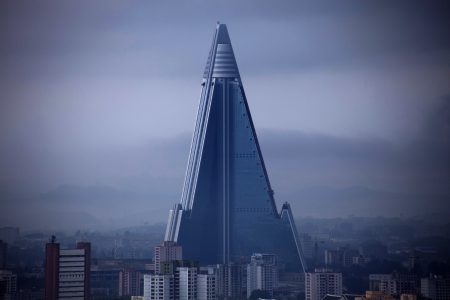
The Ryogong Hotel is likely the most famous landmark of Pyongyang, the capital of North Korea. That’s kind of funny because the hotel has never been completed.
Construction of the pyramid-shaped building started in 1987, but came to a halt in 1992 when the Soviet Union’s collapse ruined North Korea’s already abysmal economy. Work on the Ryugong has since continued on and off as the North Korean government finds the money for it.
The exterior was finally completed in 2011, but the inside is utterly unfinished. And even if the building had been completed on schedule, it likely would’ve still failed in its purpose.
We’re just asking: where would they have found 150 floors’ worth of tourists willing to go to North Korea?
7. Versailles, France
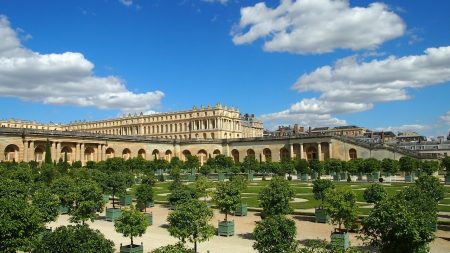
The palace of Versailles, the once-home of the kings of France, is world-renowned as the finest example of baroque luxury. Yet, when it was in use, it was anything but.
In its glory days, instead of being famous as the fabulous home of the king, Versailles was notorious for stinking so much you could smell it from miles away. That’s because the building was never intended to be a royal palace housing hundreds and hundreds of courtiers.
Versailles began as a simple (by a French king’s standards) hunting lodge where he would spend a night or two when he happened to be hunting in the region. However, Louis XIV — the Sun King — decided to convert it to his full-time residence.
He ignored such little things as Versailles sitting in the middle of a swamp with next to no drainage. Basically, there was no way to remove the daily filth that the French court produced. It certainly didn’t help that the palace had way too few toilets to accommodate all of its residents.
In the end, it didn’t matter how much gold, silver, silk, and marble the kings draped the palace in. The floors were still covered in human feces that had nowhere to go.