
- Because most of us could use more time for play in our lives...
For young children, playing a full-body exercise that aids in developing abilities necessary later in life. Running, climbing, dancing, and rolling help children grow muscle and fine-tune motor skills. Children also develop their mental and emotional muscles as they create sophisticated, imaginary worlds rich in laws that regulate the terms of play; this also allows for the development of the particular child’s self-worth.
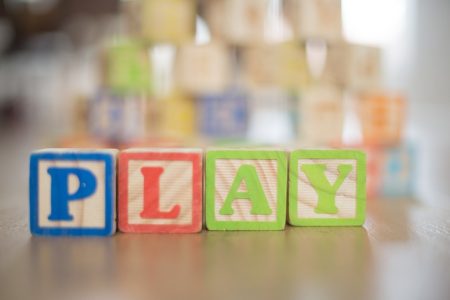
The right to play is believed to be critical to children’s development. It develops their concentration abilities, which are essential to future performance in the classroom, and supports everything from social relationships and customs to the beginnings of scientific thought. Play is especially critical for the younger child. Children in preschool or kindergarten benefit from a play-based curriculum.
It is the bedrock of childhood development regarding emotional intelligence, language development, self-regulation, creativity, and intellectual thinking.
What is Play-based Learning?
Children are by nature curious and like playing. Play-based learning programs employ children’s natural desire to play as the basis for learning. Rather than the traditional teacher-student interaction, creative and entertaining methods encourage learners to explore, experiment and comprehend concepts.
These programs combine teacher support and student-led learning. Because children naturally engage in exciting activities, such a learning program stimulates them to learn. They can increase their verbal and numerical skills, as well as their social skills, through it.
Children Learn Through Play With These Best Activities
Allowing children to play can be beneficial to them in various ways that they can utilize in the future. Here are some activities that can be used to assist children in learning through play:
Nature Play
When you move the play environment outside, the children’s learning is given a boost comparable to rocket fuel. That is one of the reasons why Forest Schools are so popular and well-regarded. Not only is it beneficial to one’s health, but it also teaches one to appreciate the environment and the fundamentals of biology. It also aids in the development of children’s independence and curiosity.
Pretend Cooking
Cooking and pretend cooking, serving, and shopping are all excellent play scenarios for children to engage in. Culinary activities, including cuisine, incorporate sensory play aspects, mathematical ideas, home safety, and following procedures.
Children learn basic arithmetic concepts, social interaction, and consideration of others, through role-playing activities such as pretend cooking, serving, and toy shopping.
Music, Dancing, and Singing
Singing and music are highly beneficial in the development of language and literacy skills and the development of fundamental arithmetic concepts such as counting. Furthermore, they begin to develop a sense of rhythm while honing their listening abilities and improving their comprehension—dancing aids in developing the child’s strength, flexibility, and coordination.
Role-Playing And Dress Up
Make several dressing-up costumes and accouterments, such as toy doctor’s kits, available to the children, and allow their imaginations to run wild. You’ll soon uncover the next great doctor, nurse, vet, astronaut, chef, or thespian in your midst.
Dressing up assists children, in the beginning, to make sense of the adult world, including adult interests and roles, as well as promoting social contact and connection with others. Last but not least, dressing up helps children reinforce the self-care parts of dressing themselves, which are critical for success in elementary school.
Sand
Sand play is a tremendous chance for the development of scientific learning foundations and the development of self-confidence and physical growth in children.
Scooping, excavating, pouring, and sifting are all activities that teach children how things function while simultaneously strengthening their muscles and improving their coordination. It becomes a game of teamwork, sharing, and social skills when done with a small companion.
Painting And Drawing
Allowing children to express themselves freely with paints and drawing tools will enable them to get a sensory understanding of their surroundings and develop self-expression while also developing pre-writing abilities. Furthermore, it serves as an invitation to learn about colors, combining, and, of course, cleaning!
Imaginative Play
All play should be imaginative, but we’re specifically speaking to the type of play that many children are naturally drawn to. If you leave a tiny child with nothing but a random assortment of objects, you will quickly discover that they have been lost in a world of make-believe.
Giving a child the opportunity and space to engage in imaginative play. It helps them build their creativity, which is vital for developing their reading skills and intellectual reasoning abilities.
Moreover, visit https://myhappyhelpers.com.au/ to look for interactive toys ad motor support tools that will help improve their sense of self and self-esteem and their ability to make sense of the world around them, and it improves their ability to deal with boredom.
Final Thoughts
Play-based learning differs significantly from academic learning and enables children to acquire knowledge uniquely. In comparison to educational programs, play-based learning does not emphasize instilling knowledge in children. Children who participate in play-based programs, on the other hand, outperform children participate in academic programs.