
- From toxic chemicals to human urine, you sure can find anything at a museum.
Museums and other archeological collections have a noble mission — preserving our past so that we won’t forget it. Usually, they carry out their task by collecting old objects and artifacts.
But as museums themselves get older, their collections begin to fill with all kinds of ancient junk, like a hoarding grandma’s attic. Occasionally, some pretty questionable or even downright dangerous stuff ends up sitting on museum shelves without anyone ever realizing it’s there.
The University of Idaho archeologist Mark Warner and chemist Ray von Wandruszka decided to delve into the seedier corners of various archeological collections. They tested more than 500 items over 15 years and discovered some… Shall we say, interesting objects.
Here are six examples of the gross and even toxic things they found lying around in various collections.
1. Rancid Animal Oil
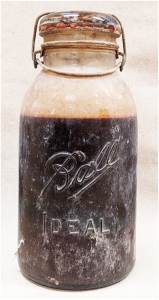
Let’s start with something that wasn’t necessarily dangerous, but it was definitely revolting. One sample Warner and von Wandruszka got their hands on was a glass jar recovered from a historical trapper’s cabin in Idaho.
Inside the jar was a dark, viscous liquid. The archeologists who submitted it for analysis said it was something the trapper had “brewed” to attract animals.
When Warner and von Wandruszka opened the jar, they probably closed it very quickly. They were immediately assaulted by what they described as “a most unpleasant, penetrating odor.”
Analysis showed that the jar contained nothing brewed. It was full of old oil — most likely of animal origin — that turned foul and rancid over the decades.
2. Toxic Veterinary Medicine
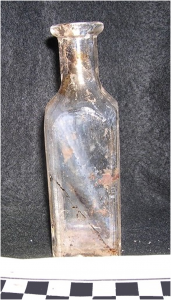
Another unusual object was a glass vial from the still-active Cranky Sam Public House in Missoula, Montana. During renovations to the historical building, somebody recovered an old glass vial with brownish stains that had been sitting around there.
Well, the vial was a veterinary medicine bottle. The anti-parasitic product in it was used to rid liver flukes from cattle and sheep.
However, the effective substance in the medicine was hexachloroethane. The substance is toxic to both humans and animals when absorbed through the skin and it’s widely considered to cause cancer.
It wasn’t even good at what it was supposed to do. It kills adult liver flukes but does nothing to their eggs, meaning farmers had to keep treating their animals over and over, repeatedly exposing both of them to the poisonous substance.
3. Kellog’s Ant Paste (with Arsenic)
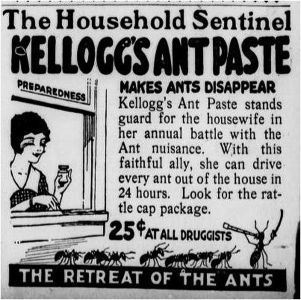
Kellog’s used to make a whole lot more than breakfast cereal. Case in point, their product catalog included ant paste.
No, it’s not a food paste made from ants. It was a pesticide that, according to its ads, “makes ants disappear.”
We bet it does. That’s because the paste jar from California State Parks’ State Archaeological Collections Research Facility contains traces of arsenic.
Yeah, the stuff sure will make ants disappear — alongside anything else that happens to touch it.
4. Medicinal Syrup with Phosphorus and Strychnine
The medical scene used to be kind of a Wild West before modern control and standardization. In the late 19th and early 20th centuries, various patent medicines were all the rage.
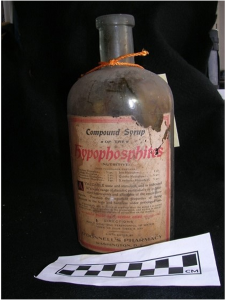
They could contain pretty much anything. Like the “compound syrup” from a collection in Washington, D.C.
As the label proudly proclaims, the bottle contains “nutritive” hypophosphites. In high temperatures, these phosphorus substances can form phosphine gas, which is toxic and could, in the worst-case scenario, fill your lungs with liquid.
Another ingredient in the syrup was strychnine, which is another fatally toxic chemical. The syrup sure must’ve been good for what ails you — after all, you can’t be sick if you’re dead.
5. Mercury-Laden Face Cream
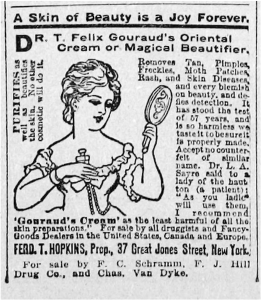
From a collection from Sandpoint, Ohio, Warner and von Wandruszka received a bottle that once contained Dr. T. Felix Gouraud’s Oriental Cream. This skincare product was touted as removing pimples, freckles, skin diseases, and practically every other blemish.
Bizarrely, the product was advertised as having been “tasted” to ensure it was “properly made.”
We sure hope no one ever actually tasted this stuff. Warner and von Wandruszka found that even after more than 100 years, the face cream bottle was still laden with remnants of mercury.
Just rubbing mercury all over your face is a spectacularly horrendous idea. But if some poor bastard’s job actually involved tasting it…
6. Whiskey (That Was Actually Urine)
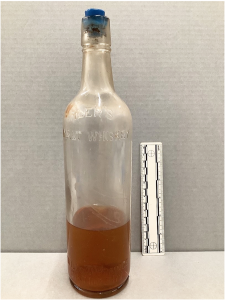
The final sample on our list is a bottle of Iler’s Malt Whiskey from the collection of the Burke Museum in Seattle. Inside the bottle is a brownish, if slightly cloudy, liquid.
It would make sense that it’s old whiskey. So, bottoms up, right?
You’d be better not doing that. The liquid in the bottle turned out not to be whiskey — it’s human urine.
Clearly, whoever emptied the bottle had to answer nature’s call and decided to use the now-vacant vessel. We can’t help but wonder how long the museum displayed the piss as whiskey.
We also wonder if anyone ever tasted the fine vintage.