
- This is why you always keep every door locked around monkeys.
South Carolina’s unique geography makes it a haven for wildlife. Roaming the state’s woods, you might see white-tailed deer, black bears, wild turkeys, bald eagles, monkeys…
Wait, monkeys?
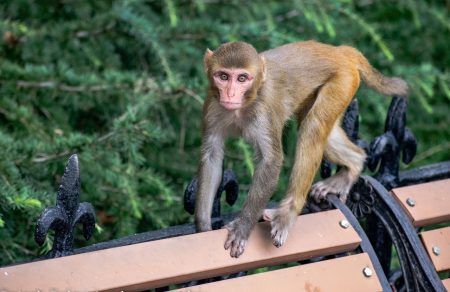
Indeed, a bunch of rhesus macaques recently decided to add themselves to the list of wild animals found in South Carolina. Dozens of monkeys made a break for it and escaped from a primate research center.
Fortunately, the macaques didn’t start wreaking complete havoc across the small town housing the facility. They’ve mostly stuck to hanging around the research center, but locals have still been encouraged to avoid the monkeys.
A monkey recovery operation is underway, but it’s slow-going — you can’t just pick monkeys off trees, after all. So far, more than half of the macaques have been returned to the facility, but the rest are still roaming around.
An Open Door
Yemassee is a small town in southern South Carolina, with roughly 1,000 residents. Despite its small size, however, there’s big monkey business going on in Yemassee.
The town is home to Alpha Genesis, one of the few commercial breeding and research facilities on non-human primates in the U.S. The animals are grown mostly for medical research purposes.
Among Alpha Genesis’ monkey species are rhesus macaques. These monkeys are clever, crafty, and curious creatures that aren’t afraid to go on a small adventure.
And that’s just what they did on November 8. According to reports, an employee at the facility entered the macaques’ enclosure on the day to feed and check on them.
Unfortunately, they didn’t fully lock the closure’s door behind them. And so, the monkeys decided it was time to take a field trip.
“It’s really like follow-the-leader. You see one go and the others go,” Greg Westergaard, Alpha Genesis CEO, told CBS News.
“It was a group of 50, and seven stayed behind and 43 bolted out the door.”
‘Playground Situation’
Once the news about the monkeys’ escape broke, it understandably caused some concern among the locals. After all, the macaques had run away from a medical research facility.
Were they violent creatures? Could they spread dangerous diseases through bites or their droppings?
Fortunately, there’s no risk of the monkeys infecting anybody. According to Alpha Genesis, the company doesn’t conduct any medical testing, and the young female monkeys that escaped would’ve been sold to other research companies.
Perhaps because they’re so young, the macaques haven’t ventured far from the facility they escaped from. They’re staying close to the Alpha Genesis grounds, sleeping in the trees and having a bit of monkey fun.
“They’re just being goofy monkeys jumping back and forth playing with each other. It’s kind of like a playground situation here,” Westergaard explained.
That said, the local police has strongly advised residents to steer clear of the monkeys and keep their doors and windows shut. That’s both to prevent the macaques from causing monkey mayhem in peoples’ homes, but also to keep curious onlookers from chasing the macaques away from the Alpha Genesis facility.
Right Where They Want Them
Speaking of the monkeys staying near the research center, that’s been a real boon for the staff trying to recover them. Since they haven’t run off, Alpha Genesis staff has been able to use baited traps to capture them.
There’s no need for them to chase the monkeys — not that it would do any good. We can’t imagine grabbing a scared monkey to be particularly easy.
“We’ve got them very close. This is all like what we want to see,” Westergaard said.
However, rhesus macaques are intelligent and quick, and they’re not just blindly walking into the traps. According to the latest reports, Alpha Genesis has captured 25 monkeys out of the 43 that escaped.
The rest are staying up in the trees. They occasionally come down to grab food from the traps or staff members, but so far have avoided capture.
“They’re jumping down and taking the food and then jumping back up on the fence and the tree line. They’re watching us the same way we’re watching them,” said Westergaard.
For the time being, the plan is to keep laying down traps and wait for the monkeys to fall for them. They don’t seem interested in going very far, so perhaps playing the waiting game is the smartest strategy.