
- Ever seen a Turdus maximus?
We know them as puppies, kitties, and bunnies. Biologists and some other kinds of nerds know them as Canis lupus familiaris, Felis catus, and Oryctolagus cuniculus.
The scientific naming system, or binomial nomenclature, helps researchers classify and organize different species. Developed by Carl Linnaeus in the 18th century, the system assigns each species a two-part name in Latin.
Sometimes, that results in noble and fancy-sounding species names. Other times, not so much.
Here are 10 examples of those other times when some species have received a strange or hilarious scientific name — either intentionally or by accident.
1. Green Iguana — Iguana iguana
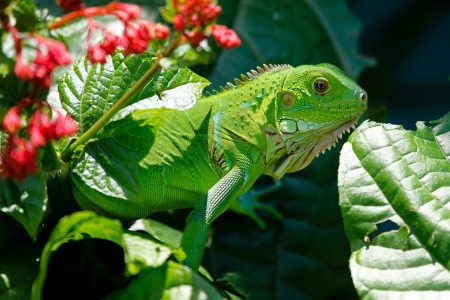
The green iguana is the archetypal iguana species. Described by Linnaeus himself in 1758, it is generally seen as the true, essential, OG iguana species.
All other kinds of iguana are just specialized subspecies of the green iguana. As such, it gets the incredibly unimaginative name of Iguana iguana.
You can’t get any more iguana than this. At least it’s kind of funny with how redundant it is.
2. An Australian Wasp — Aha ha
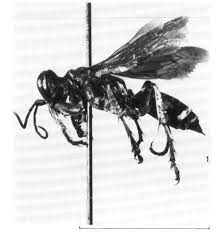
Not all species have a common name in every language. That’s the case with Aha ha, a further unspecified Australian wasp.
There’s a story behind the name. Entomologist Arnold Menke, who first described the wasp in 1977, received it in a box of various bugs.
When he saw the wasp, he shouted: “Aha! A new genus!” To that, his fellow researcher Eric Grissell responded with a derisive, “Ha!”
As a joke, Menke later named the wasp in honor of their exchange. Oh, and it was a new genus — hence why he got to name it.
3. Vampire Squid — Vampyroteuthis infernalis
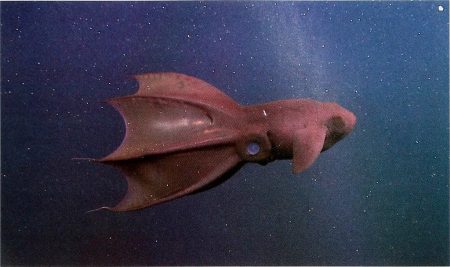
The vampire squid’s name is not that weird or funny, but it sure is badass. Reading the Latin name alone makes you feel like you’re trying to summon a demon.
It doesn’t get much better in English. The name translates to “vampire squid from Hell.”
Weirdly enough, this creature isn’t a squid. It’s a strange relic from a bygone age that has characteristics of both a squid and octopus.
We suppose “an unholy ancient hybrid of squid and octopus from Hell” would’ve been a bit too much for a name.
4. Western Lowland Gorilla — Gorilla gorilla gorilla

Did you think the green iguana’s scientific name was redundant? Oh, you’ve seen nothing yet.
The western lowland gorilla belongs to the genus Gorilla. Its species is also gorilla, making it Gorilla gorilla.
But its subspecies is also gorilla. Therefore, its full official name is Gorilla gorilla gorilla.
We suddenly have the urge to become brilliant biologists so we could revamps the current classification system — just to add another gorilla to this name.
5. Tibetan Blackbird — Turdus maximus
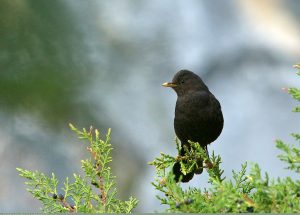
The Tibetan blackbird belongs to the thrush family of birds, known in Latin as Turdidade. That’s why its first designation is Turdus.
It’s also very big for its kind, so it gets called Maximus — “greatest” or “biggest.”
Look, the Romans couldn’t have known that 2,000 years later some of their random Latin words put together would sound like “giant turd” in a Germanic language that didn’t exist yet.
6. A Sumatran Stag Beetle — Dorcus titanus
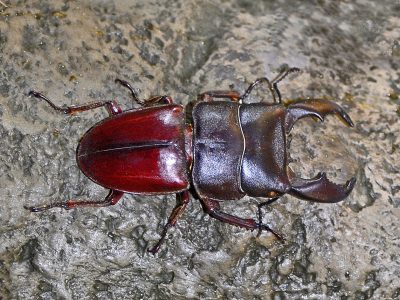
Like Aha ha, this stag beetle doesn’t have a common name in English. And like Turdus maximus, it suffers for it.
In Latin, Dorcus means “antelope,” which is a fitting moniker for this big beetle with huge, horn-like jaws. And the Titanus part means… Well, it’s a big beetle.
This might be one Dorcus you don’t want to make fun of.
7. A Genus of Small Sea Snail — Ittibittium
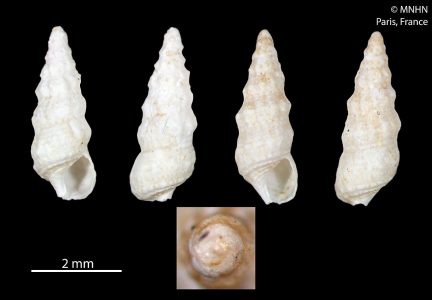
Bittium is a common, long-known genus of small sea snails commonly found around the world. Then, scientists found another genus of even smaller sea snails.
What would be a suitable name for a genus of snails even smaller than Bittium?
And that, children, is how we got Ittibittium.
8. A Fijian Snail — Ba humbugi

In 1983, Alan Solem established the new genus, Ba, for a snail from Fiji he had recently identified. The genus is named after the Fijian district of Ba.
But he still needed to name the species. In his own words, as he pondered the word Ba, Solem got an “irresistible impulse” to name the species Ba humbugi after Ebenezer Scrooge’s famous catchphrase from The Christmas Carol.
Look, let no one say science geeks don’t have a sense of humor.
9. Southeast Asian Soldier Fly — Parastratiosphecomyia stratiosphecomyioides
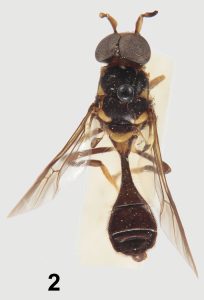
There’s no wordplay or a funny double entendre here. The southeast Asian soldier fly’s scientific name is just stupidly long.
In fact, it’s the longest valid scientific name out there. It won’t lose that title until somebody finds another new species and intentionally decides to give it an even torturously longer name.
(As a side note, I’m so glad copy-paste is a thing. I would not want to type that name out.)
10. Bogue — Boops boops
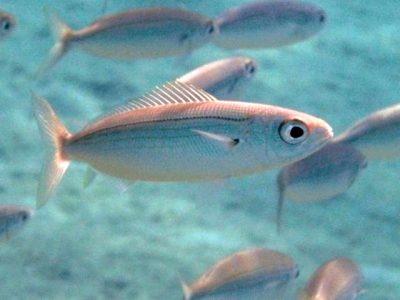
The bogue is an unassuming seabream living in eastern Atlantic waters. Its most defining trait is its big eyes.
The Ancient Greeks named the fish “boops,” which literally means “cow-eye.” When Linnaeus was giving the fish a scientific name in 1758, he got lazy.
The bogue has two eyes, so he just repeated the Greek name. That’s how we ended up with Boops boops.