
- Have you ever even heard of all of these national parks?
Do you know these national park fun facts? There are so many more that didn’t make this list, but how cool do these sound?
- The oldest park east of the Mississippi River is Acadia National Park. This park was also the first instance in which land was donated to the federal government.
- There are more than 2,000 documented arches in Arches National Park and
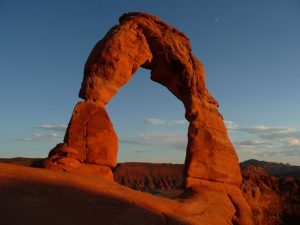 some of them span up to 300 feet.
 - Badlands National Park is home to the largest known cluster of both late Eocene and Oligocene mammal fossils.
- Big Bend National park is known for its Hot Springs Historic District, where people travel to heal their ailments. Today, water gushes out of the old fountain of a bathhouse at 105 degrees for visitors to soak in.
- In Biscayne National Park there are six shipwrecks that have been mapped out over nearly a century on their Maritime Heritage trail.
- Black Canyon in Gunnison National Park was sculpted for over two million years between the Gunnison River and the weather of the area. Black Canyon is 48 miles long!
- For the largest collection of hoodoos, or odd-shaped pillars of rock, in the world, visit Bryce Canyon National Park.
- In Canyonlands National Park, there’s Horseshoe Canyon. This canyon has some of the most significant rock art located in North America, including intricate, life-sized figures of the Great Gallery.
- The rocks of Capitol Reef National Park are up to 270 million years old.
- There are more than 119 caves hidden beneath the surface of the Chihuahuan Desert in Carlsbad Caverns National Park.
- The national park known for its abundance of sea turtles, loggerheads, leatherbacks and hawksbill turtles is Dry Tortugas National Park. These turtles nest in the area each year.

- In Channel Islands National Park, divers and snorkelers can explore the watered down remains of the Winfield Scott shipwreck. At least 33 ships were wrecked in the years between 1850 and 1900, in the Santa Barbara Channel.
- For the largest intact expanse of old growth bottomland hardwood forest in the southeastern United States, visit Congaree National Park.
- The caldera is almost 6 miles in diameter and 3,900 feet deep in Crater Lake National Park.
- It’s true that the Beaver Marsh wetland in Cuyahoga Valley National Park was made by beavers that moved alone remnants of canals.
- If you know any National Parks, Death Valley is probably one you have heard of. The rare rainstorms in this national park creates spectacular spawns of spring wildflowers.
- Denali National Park and Preserve can be explored via bus, bicycle or on foot, but there are not private vehicles allowed, reducing traffic and protecting the natural resources. (At least past mile 15 of Denali Park Road.)
- Gates of the Arctic is one of the national parks in the remote and roadless areas of Alaska. This is the northernmost national park of the United States and is only visited by a few thousand people in a year. (Making this on of the best places to view and experience wildlife.)
- Besides the 1.5 million acres of wetland in Everglades National Park, you can
 find alligators, manatees and white ibis. Though it’s harder to see, you may even spot a Florida panther. (This is the only breeding population of Puma in the eastern U.S.
 - The Gates of the Arctic National Park has hikes, but they aren’t really just walking. There aren’t any trails or services for visitors, so if you go here to hike or backpack, expect the unexpected.
- Glacier National Park, along with Waterton Lakes National Park (of Canada,) makes up the world’s first international peace park. Both countries work with each other throughout the parks to resolve natural resource issues, transcending the borders of the countries.
What were your favorite national park fun facts? Let me know what you thought in the comments!