
- Is there ever a bad time for more fun facts about the human body?
Do you think you know these intriguing intestine fun facts? Like that your intestines help you breathe, well, kinda?
Intestines Help You Breathe?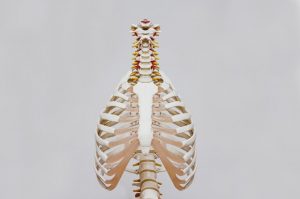
According to Leonardo da Vinci, your intestines do help you breathe. He thought this because he thought the digestive system aided in respiratory function. In 1940, he wrote among notes that “The compressed intestines with the condensed air which is generated in them, thrust the diaphragm upwards; the diaphragm compresses the lungs and expresses the air.” This isn’t really accurate to the human body but it’s also true that the opening of the lung is helped by the relaxation of the stomach muscles, drawing the diaphragm down.
It Moves or May Cure Disease
That is, by transferring bacteria from one gut to another, so to speak, the disease can be transferred, maybe even cured. “Studies in mice show that transplanting microbes from obese mice can transfer obesity to thin mice,” Colby Zaph, professor of immunology in the department of biochemistry and molecular biology at Melbourne’s Monash University, says. Transplanting microbes from healthy to sick people could work as powerful treatment for intestinal infections like Clostridium difficile or other diseases like multiple sclerosis, Parkinson’s and autism. What do you think of these intriguing intestine fun facts?
It’s Life Or Death
When it comes to your intestine, you really need it. Your small intestine “is the sole point of food and water absorption,” Zaph says. Without it, “you’d have to be fed through the blood.”
They Do Work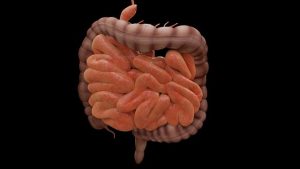
The intestines are an athletic part of your body, processing moving food through your intestines requires muscular action in a wave-like pattern called peristalsis. If you look on YouTube, you can see the process during a surgery.
They’re Very Long
Your intestines are long enough that you could cover two tennis courts. According to Zaph, “The surface area of the intestines, if laid out flat, would cover two tennis courts,” with the small intestine about 20 feet long and the large intestine about five feet long.
Your Intestines Are Sensitive
Many things change the composition of the microbiome including food we consume, stress, antibiotics and infections. In general, most people’s microbiomes can return to stable after going through these things. “The microbiome composition is different between people and affected by diseases. But we still don’t know whether the different microbiomes cause disease, or are a result in the development of disease,” Zaph says. What do you think of this as some of the intriguing intestine fun facts?
Medieval Anatomists Named The Intestines
Anatomists in medieval times understood the physiology of the gut and named the in sections that we still use today. In 1535, the Spanish doctor Andrés Laguna said that because the intestines “carry the chyle and all the excrement through the entire region of the stomach as if through the Ocean Sea,” they could be likened to “those tall ships which as soon as they have crossed the ocean come to Rouen with their cargoes on their way to Paris but transfer their cargoes at Rouen into small boats for the last stage of the journey up the Seine.”
“Fingers” Cover The Small Intestine
The lining in the small intestine is full of tiny finger-like protrusions called villi, which themselves are covered in microvilli, that helps to capture food particles which absorb nutrients and move food into the large intestine.
Your Microbiome Is In Your Intestines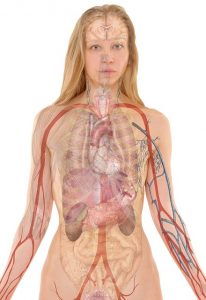
The microbiome is made of lots of different microorganisms like viruses, fungi, bacteria and protozans, and probably used to include worm parasites too,” says Zaph. So in a way, he adds, “we are constantly infected with something, but it [can be] helpful, not harmful.”
So which of these intriguing intestine fun facts do you think are the most interesting? Let me know what you think of these fun facts in the comments!