
- About 80% of us stand in awe of Christmas lights every year.
Christmas lights are beautiful and cozy and here’s a bunch of fun facts to celebrate them.
- Flashing modes are controlled by built-in circuits.
- Before electric lighting, candles were used on Christmas trees in Europe during the 17th and 18th centuries.
- Battery-powered lights are often used for small displays.
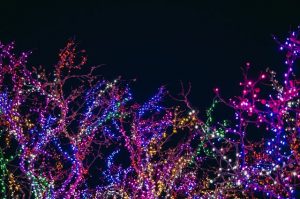
- Tree lights may be wrapped vertically or horizontally.
- Smart Christmas lights can connect to wireless networks.
- Indoor-only lights lack weatherproofing.
- Technological improvements continue to influence Christmas lighting products.
- The use of lights during Christmas is associated with winter celebrations and seasonal decoration practices.
- Some light sets include multiple lighting functions.
- Replacement bulbs are sold for some light types.
- They are manufactured in various bulb sizes.
- Common wire colors include green, white, and black.
- Digital timers use electronic programming.
- Christmas lights are tested for electrical safety.
- Micro lights use very small LEDs and thin wire.
- Rope lights consist of LEDs enclosed in flexible plastic tubing.
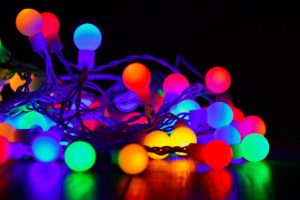
- Mini lights are smaller and commonly used for trees and railings.
- Timers are commonly used for seasonal lights.
- Christmas lights are commonly stored after use.
- Recycling separates metals, glass, and plastics.
- They should be unplugged before installation or removal.
- Christmas lights are produced in different wire colors.
- Public displays often involve professional installation.
- Solar lights store energy in rechargeable batteries.
- White lights may be classified as warm white or cool white based on color temperature.
- They are part of long-standing holiday decoration practices.
- Electric Christmas lights were first introduced in 1882.
- Net lights are designed to cover shrubs evenly.
- Mass production in the early 20th century made Christmas lights more accessible.
- LEDs produce light through electronic movement rather than heat.
- Not all recycling facilities accept light strings.
- Storage containers help protect lights from moisture.
- They are used on Christmas trees.
- Frayed wires increase electrical risk.
- LED lights have longer operating lifespans.
- Plastic clips are designed for gutters and shingles.
- Ladders are commonly used during outdoor installation.
- Christmas lights remain a widely used decorative lighting category.
- Large displays require electrical planning and permits.
- Lights are often wrapped around reels or cardboard.
- Clips are used to attach lights without nails.
- Ladder safety is an important consideration.
- Manufacturers specify the maximum number of strings that can be connected safely.
- People love to use them for photography setups.
- Rope lights are often used for outlining shapes.
- Christmas lights are regulated by electrical standards.
- Packaging includes safety instructions.
- Lights are used as background or accent lighting.
- Battery compartments must be protected from moisture.
- C7 and C9 bulbs are larger and often used outdoors.
- Burned-out bulbs can affect older incandescent strings.
- Safety certifications vary by country.
- These bulbs consume more electricity compared to modern alternatives.
- Incandescent lights generate heat during operation.
What were your favorite fun facts about Christmas lights? Tell us in the comments!