
- Always proofread everything you write.
Oh no, you made a typo in that important work email that went out to the entire office! You’ll definitely be hearing about this gaffe for the next few weeks.
It could be a lot worse, though. At least your spelling mistake didn’t lose your company millions upon millions of dollars, destroy an entire space shuttle, or accidentally create a heretical, unholy religious text. That has happened.
Here are six typographical mistakes that had some serious consequences.
1. The Comma That Cost U.S. Government Millions
In 1872, the U.S. government (led by then-president Ulysses S. Grant) was preparing to enact some tariffs on foreign products. However, they intended to exempt fruit trees imported for the purposes of planting and cultivation from the tariffs.
To this end, the government plan was to exempt “fruit-plants tropical and semi-tropical” from the taxes. However, that hyphen mistakenly became a comma in the text of the law.
Consequently, importers could claim that importing fruit was now tax-free. They didn’t hesitate to make use of this loophole and flooded U.S. markets with cheap fruit.
Congress finally fixed the error two years later, in 1874. By that time, the government had lost out on $2 million in tax revenue, amounting to around $40 million in today’s money.
2. Japan’s Stock Exchange Mix-up

Whether it’s an email or business contract, you should always double check the numbers before you hit “Submit.” Otherwise, you might end up like this Swiss stock trader in 2001.
The investment company had intended to sell six shares of the Japanese advertising company Dentsu at 610,000 yen each. However, they got the numbers the wrong way around.
The investors spotted the mistake immediately, but it was already too late. They had sent the trade in and accidentally sold 610,000 shares for 6 yen each.
Tokyo Stock Exchange refused to cancel the trade. In the end, Dentsu had to buy all its shares back at market price, losing more than $100 million in the process.
3. The Maori Translation Error

But let’s move away from the finance world and into international politics. In 1840, the colonial British Empire and the native Maori chiefs of New Zealand reached an official agreement on their relationship.
The Maori had intended to give up what they called “kawanatanga.” This word, roughly meaning “governance,” intended to give the British the right to law enforcement and military protection of the islands.
However, the British translated the word as “sovereignty.” As such, Great Britain assumed direct colonial control over all aspects of New Zealand’s governance – much to the Maoris’ chagrin.
This word lost in translation continues to affect New Zealand’s politics to this day, as it has been baked into the country’s constitution.
4. Venus Probe’s Fatal Typo
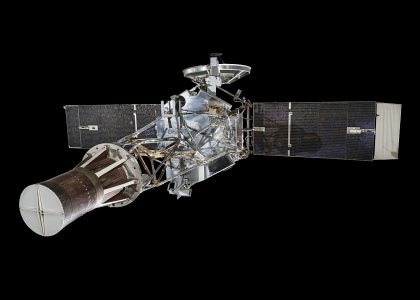
The year 1962 was supposed to be a big one for NASA. The space agency had just launched Mariner 1, a space probe that was supposed to perform a flyby of Venus, sending valuable data back to Earth.
On July 22, Mariner 1 took off from Cape Canaveral without a hitch. Soon, however, things went astray.
It turned out that the computer program managing the delivery rocket’s course finding had a tiny typo in it. Somebody had forgotten to input a single symbol in a mathematical equation, causing the rocket to lose its marbles.
With Mariner 1 veering dangerously off-course, NASA was forced to hit the self-destruct button and detonate it. Watching the failed launch, the world’s space agencies resolved to never make the same mistake again.
5. Mars Probe’s Fatal Typo

In 1988, they made the same mistake again.
This time, it was the Soviets’ turn to both their computer code. Similarly to Mariner 1, Phobos 1 was a space probe whose mission was to explore Mars and its moon, Phobos.
Unfortunately, one hyphen was missing from the piece of code controlling some of the probe’s thrusters. As the code malfunctioned, Phobos 1 lost its ability to orient its solar panels toward the sun.
Without them, the probe quickly ran out of battery. It shut down, lost contact with Earth, and is currently floating somewhere in outer space (unless it crashed into Mars).
6. A Missing Word Created the Sinner’s Bible
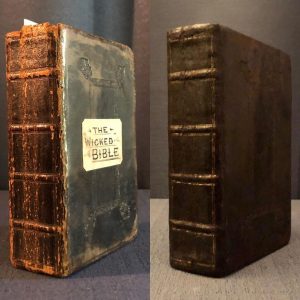
The Bible (or any other religious text for that matter) is one of those documents that you’d imagine people will proofread with the utmost care. However, as history proves, even editors in charge of the Good Book can get sloppy.
Perhaps the most notorious biblical typo comes from 1631. A British printing house working on an edition of the King James Bible forgot one word from the ten commandments.
As a result, the sixth commandment read, “Thou shalt commit adultery.”
This edition quickly became known as the Wicked Bible or the Sinner’s Bible. Needless to say, the error spawned a scandal, and the printers were heavily fined.
Yet, this isn’t even the only blasphemous typo in the book. In Deuteronomy 5:24, the printers ended up praising the Lord’s “great-asse” instead “greatness.”