
- Do you know about these crazy things that happened?
Do you know about these wild chain reactions? Like the park that was created by a shipwreck?
The Great Stink and London’s Sewer Revolution
In the summer of 1858, exceptionally hot weather caused the River Thames in London to become horribly polluted and foul-smelling. The stench became so overwhelming that politicians and members of the public could barely tolerate it. The crisis helped create pressure for engineer Joseph Bazalgette’s enormous sewer system, which transformed London’s sanitation infrastructure. What began as unbearable summer conditions helped accelerate one of the most important urban engineering projects of the Victorian era.
A Shipwreck That Created a Modern National Park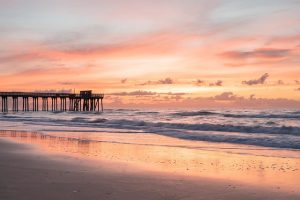
In 1907, the passenger ship SS City of Trenton ran aground near the New Jersey coast. The wreck itself was not historically extraordinary, but the publicity surrounding the disaster contributed to growing awareness of the dangerous and environmentally important New Jersey shoreline. Decades of preservation efforts eventually helped establish protected coastal areas, illustrating how individual disasters can sometimes influence much broader conservation movements. Did you ever hear about this as one of the wild chain reactions?
The Great Chicago Fire and a New City
In October 1871, a fire spread through Chicago, destroying thousands of buildings and leaving roughly 100,000 people homeless. The disaster was devastating, but it also removed large amounts of the city’s older building stock. Chicago subsequently became a laboratory for new construction techniques, fire-resistant architecture, and urban planning. The catastrophe helped create conditions in which the rapidly growing city could reinvent itself.
The Discovery That Changed the Refrigerator
Early refrigeration depended on chemicals that could be dangerous, flammable, or toxic. In the 1920s, scientists searching for safer refrigerants developed chlorofluorocarbons, or CFCs. They were remarkably stable and useful, and refrigerators and air conditioners adopted them widely. Decades later, scientists discovered that CFCs were damaging the ozone layer. A solution to one environmental and safety problem had inadvertently created another on a global scale, eventually leading to international restrictions on CFCs. Did you ever hear about this as one of the wild chain reactions?
The Potato Famine and Global Migration
In the 1840s, potato blight devastated Ireland’s potato crop, upon which millions of people depended heavily for food. The resulting famine caused enormous death and suffering and triggered mass emigration. Millions of Irish people eventually left for countries including the United States, Canada, Britain, and Australia. The demographic and cultural effects continued for generations, meaning a crop disease ended up reshaping communities far beyond Ireland.
The Accident That Helped Create Modern Safety Glass
In 1903, French chemist Édouard Bénédictus reportedly dropped a glass flask that had contained a plastic-like substance. Instead of shattering into numerous pieces, the coated glass cracked while largely retaining its shape. The observation inspired research into laminated safety glass. The material later became important in automobile windshields and other applications where ordinary shattered glass could be dangerous. Did you ever hear about this as one of the wild chain reactions?
A Failed Canal That Helped Create the Panama Canal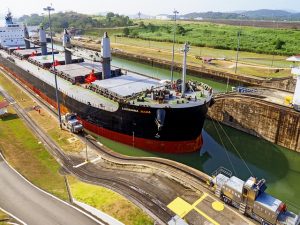
France’s attempt to construct a canal across Panama in the late 19th century failed amid engineering difficulties, financial problems, and devastating disease. The project collapsed, but its unfinished work and infrastructure later became valuable to the United States when it resumed canal construction. The eventual Panama Canal therefore emerged partly from the ruins of an earlier failed attempt—turning one country’s enormous failure into the foundation for another country’s success.
Which of these wild chain reactions surprised you most? Tell us what you thought in the comments!