
- It really is possible to return from the dead, at least figuratively.
Once an animal is declared extinct, there’s no coming back. Nobody comes back from the dead, after all.
Or so you’d think if it wasn’t for what’s known as Lazarus species. This appropriately named group of animals has returned from beyond the grave, either with human aid or simply because they weren’t quite as extinct as everyone thought they were.
Here are eight examples of animals that returned from extinction one way or another.
1. Przewalski’s Horse
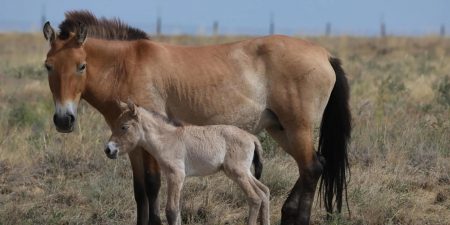
The Przewalski’s horse is the last remaining truly wild horse species. It’s a small miracle that it’s remaining, though, since it became extinct in the wild by the 1960s. Since then, the species has been maintained through the roughly 130 horses kept at various zoos and conservation facilities.
Its fortunes have recently turned, though. Since the late ‘90s, Przewalski’s horses have been reintroduced to various locations throughout Asia. The most recent success story came from Kazakhstan, where the first Przewalski’s horse foal in 200 years was born in the wild earlier this year.
If you’d like to know more about this bouncing baby horse, we wrote a whole article about it.
2. Wallace’s Giant Bee
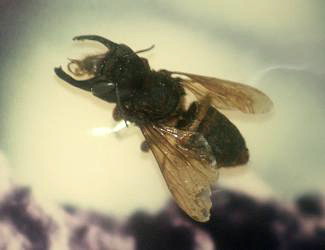
Wallace’s giant bee is the world’s biggest bee species, being more than four times larger than your average honeybee. As such, when it disappeared after its Western discovery in 1858, everyone thought it was dead and gone.
Then, in 1981, an American entomologist found six Wallace’s bee nests in Indonesia. Soon after, however, those nests vanished. Surely the bug was extinct now, insect experts believed.
Not so. In 2019, a biologist found a Wallace’s bee colony – concealed inside an active termite nest. It turns out that despite their massive size, Wallace’s giant bees are just extremely good at hiding.
3. Hawaiian Crow
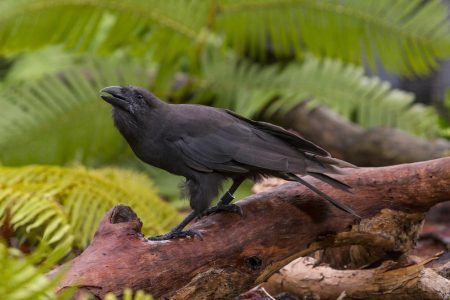
The Hawaiian crow, known in Hawaiian as ‘alala, is an important figure in the islands’ native religion. According to local beliefs, this pitch-black bird guides dead souls to the world beyond.
Considering that, it was kind of a bummer for them when the crows themselves left the world of the living. The last known wild Hawaiian crow died in 2002, and the species was declared extinct in the wild in 2016.
Fortunately, that declaration was short-lived. In 2024, five birds (two females and three males) were taken from the flock of 110 crows at San Diego Zoo and released back to the island of Maui.
Read more about that event here.
4. Attenborough’s Long-Beaked Echidna
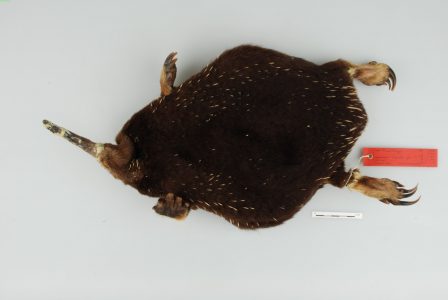
As you might guess, Attenborough’s long-beaked echidna is named after the famed naturalist and documentary narrator Sir David Attenborough. It was a bit of a questionable honor, though, because for his entire life, the echidna was extinct.
Only a single, partially damaged specimen of the animal existed, collected in 1961. Researchers analyzed it, described it as a new species that they named after Attenborough, and then declared it dead and gone.
In 2007, however, biologists discovered “nose pokes” on the island of New Guinea. These depressions in sand could’ve only been left by feeding long-beaked echidnas, indicating that the animal might still be alive.
And then came 2023, when an errant trail camera captured an Attenborough’s long-beaked echidna waddling across a forest path. They were still out there!
5. California Condor
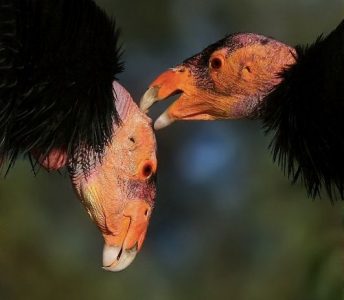
The California condor is an emblematic bird of the Western U.S. As such, it was a real shame when this huge carrion bird died out in 1987.
Fortunately, many condors lived in various zoos throughout the country. Soon after the birds disappeared, an intensive reintroduction program began figuring out ways to bring them back from the dead.
Today, more California condors live in the wild than in captivity, a major milestone for its reintroduction efforts. If all goes well, this butt-ugly bird will make an even more glorious comeback in the years to come.
6. Terror Skink
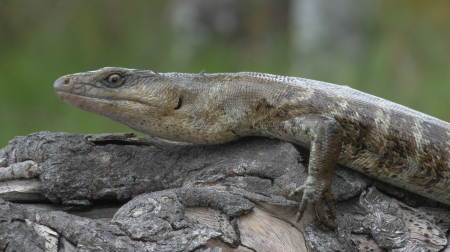
The terror skink received its intimidating name from its unusually large, sharp teeth. For the longest time, however, this two-foot-long lizard only menaced the imaginations of biologists looking into obscure dead species.
The skink was only known from a single taxidermy specimen dating back to 1876. No human being had seen the lizards since – until 1993.
That year, biologists discovered that the skinks are actually alive and well. They simply live only on two Pacific islets with a combined area of less than half a square mile. Nobody had considered that the fairly big skink could be restricted to such a tiny habitat.
7. Coelacanth
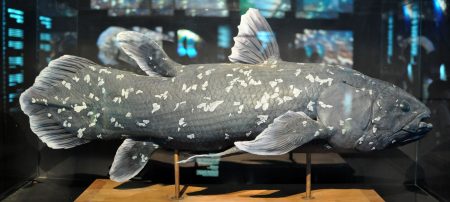
Most supposedly extinct animals on this list managed to hide for a few decades, or a couple of centuries at most. The coelacanth, however, is a real master of hide-and-seek.
This prehistoric fish lurked away from prying eyes for 65 million years.
For the entire human existence, the coelacanth was known only from fossils, and everyone believed it had died off with the dinosaurs. Then, in 1938, South African fishermen reeled in a bizarre fish.
It was a living coelacanth. These guys are doing just fine, having lived undisturbed in the depths for millions of years.
8. Pyrenean Ibex
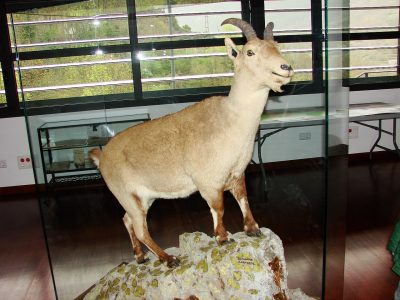
The Pyrenean ibex is a mountain goat that lived on the Iberian Peninsula (you know, where Spain and Portugal are). Sadly, the last ibex died in 2000, marking the species’ extinction.
But fret not! Researchers had harvested the DNA of the last ibex and decided to use then-new gene technology to bring it back to life through cloning.
The experiment was a success. A new Pyrenean ibex was born in 2003, making the Pyrenean ibex the first and so far only species that came back from total extinction.
And then the newborn goat died minutes later from birth complications. As such, the ibex also acquired the morbid honor of being the only animal in the world to have become extinct twice.
Interested in more creatures that straddle the line between the living and the dead? Check out our list of 10 forms of life that look exactly like they did millions of years ago!