
- Anything to pass an exam except study, right?
Remember Google Glass? If not, I can’t blame you. It was a short-lived, futuristic device in the mid-2010s that was supposed to integrate a computer into eyeglasses, allowing you to perform searches and such wherever you went.
The Glass died, partially because the technology just wasn’t there yet. Now, it is – and that’s becoming a problem for China’s universities.
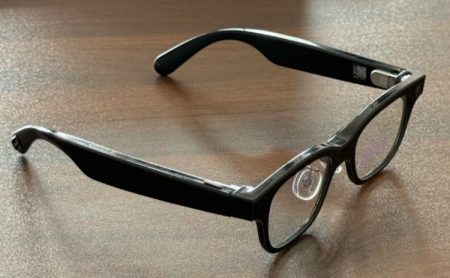
Chinese university applicants are increasingly using AI-equipped eyeglasses to cheat their way through colleges’ entrance and regular exams. The glasses are nearly indistinguishable from regular, non-smart ones, especially at the distances most lecturers see them from.
With the AI glasses, the students can easily waltz their way through exams as the glasses provide answers for them. If the proctors aren’t on the lookout for the telltale signs of AI-glass use, they’ll be none the wiser.
However, not every attempt at cheating has been successful, and with every caught student, the universities are coming up with new ways to detect the glasses. Still, the things are so popular that they’ve spawned an entire rental industry leasing AI glasses to college students.
High Scores
AI glasses aren’t all that complicated, and their operating principle is pretty simple. The glass frame is equipped with a tiny camera that sees what the wearer sees.
It can scan the text or object in front of the glasses and then perform appropriate searches over the internet. The device then feeds the results into a display integrated into the eye lenses.
There are many brands of these “smart glasses” on the Chinese market, such as Alibaba and Xiaomi, and they can be surprisingly sophisticated. For instance, glasses from Leqi, one of the most popular brands, support four Chinese LLM models, including Deepseek, Tongyi Qianwen, Zhipu, and Doubao. Others use services like ChatGPT.
And do they work well for cheating? Yes, shockingly so.
Investigating the AI glasses boom, researchers from the Hong Kong University of Science and Technology carried out an experiment. They sent a volunteer student to participate in a college-level exam.
Their guinea pig performed splendidly, according to Rest of the World. Without prior knowledge about the subject, the student was among the top five in a class of more than 100, scoring an average of 92.5 compared to the unassisted average of 72.
Signs of AI
However, the AI glasses are not foolproof. There are some signs proctors can keep an eye out for that give the devices away.
First, although the computer parts used in the glasses are impressively teeny-tiny, the glasses are still bulkier and heavier than regular eyeglasses. So much so, in fact, that one of the factors restricting AI glasses’ more widespread adoption in China – according to those that have used them – is their uncomfortable weight.
That said, some people just like thick glass frames for their looks. Additionally, proctors are usually not right in the students’ faces, so they may not notice suspiciously bulky frames.
University staff can also look for strange side effects from the components used in the glasses. One of the more noticeable giveaways is glowing lenses.
Recently, teachers busted a student at the South China Agricultural University for attempting to cheat in an exam with AI glasses. The student had certainly been cautious, as he had turned the glasses into silent mode and covered the LED light of the camera.
However, the proctors noticed that his lenses shone green when viewed from certain angles. When confronted, the student admitted to cheating.
Rental Market
Despite the risks, AI glasses are becoming a more and more prevalent problem at Chinese universities. Fortunately for academic integrity, there is another factor standing in the devices’ way: their price.
Although there are cheap versions available that cost only a couple of hundred dollars, more discreet glasses can have price tags of around $1,000. That’s not obnoxiously expensive, being about the same as a new high-end cell phone, but it is a lot of money on a college student’s budget.
Students have found a way to avoid getting priced out. There is now an entire rental industry around AI glasses.
It’s easy to find AI glasses up for rent on Chinese social media. The daily cost is usually around 40-80 yuan, or $6-$12.
Now that’s a much fairer price. Students can simply rent the glasses, take an exam, and then return them. Badabing, badaboom; they’ve passed with flying colors and the evidence of their cheating returns to the original owner.
Perhaps the university staff should be looking for students who become mysteriously shortsighted on exam days.