
- From raisins to maple syrup, you have to put something aside for a rainy day.
No resource lasts forever. That’s why governments across the globe hold on to stockpiles of various goods, products, and fuels.
Some of them make sense, like having reserves of oil, vital minerals, and local food staples. Others are more… Odd. Some countries hold reserves of seemingly bizarre products to cater to local necessities and cultural customs or as ways to regulate their markets.
Here are eight examples of unusual products held in national stockpiles and reserves around the world.
1. Cheese
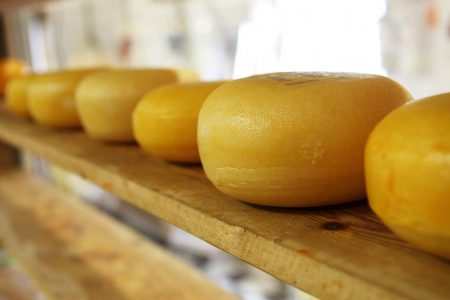
Deep underground in caves beneath Missouri, there is cheese. Nearly 1.4 billion pounds of cheese, to be exact.
This is the U.S. National Cheese Reserve. The improved caves are kept at a constant 36 degrees to keep government-owned cheese from spoiling.
America’s cheese reserve was created in the late 1970s during a national dairy shortage. The government encouraged farmers to increase production by buying unsold dairy, which was converted into cheese for long-term storage. Since then, the stockpile has ballooned into the current enormous size, despite the government regularly dipping into it to provide food aid to struggling families.
2. Pork
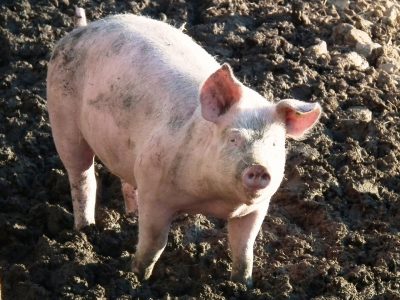
If the U.S. goes ga-ga for cheese, China does so for pork. The exact size of the pork reserve is unknown due to the Chinese government’s secrecy, but it’s estimated to sit at more than 400 million pounds.
China’s pork stockpile is relatively new, having been created in the aftermath of the 2007 swine flu crisis, which killed off immense numbers of pigs. The reserve consists of both frozen pork and live pigs.
Pork is considered the most delectable meat in China, and fluctuations in pork prices are a cause for concern both to the public and the government. Whenever prices spike, the Chinese government dips into the pork pile to bring them down to affordable levels.
3. Maple Syrup
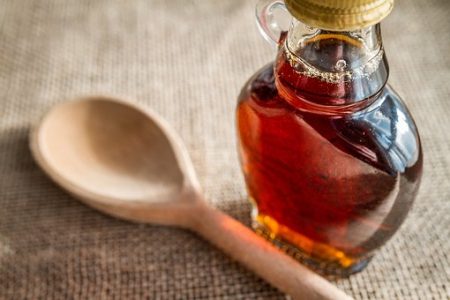
Hmm, what country could possibly maintain a maple syrup reserve? Of course, it’s Canada.
Canada’s maple syrup stockpile is a bit different from most others in that it’s not really maintained for emergency situations. Instead, it exists because of the market realities of maple syrup production.
The amount of syrup Canada is able to produce every year can fluctuate wildly simply due to nature. To ensure that there is always sufficient syrup on the market to keep both maple syrup producers and buyers from going out of business, the Canadian government puts some syrup aside to release at difficult times.
4. Helium

In addition to cheese, America has a stockpile of helium. While in our everyday lives helium is mostly used to fill balloons, this reserve doesn’t exist to ensure there’s always enough helium for presidential birthday parties.
The helium reserve was created in 1925 to hoard fuel for airships. Although the Hindenburg disaster put an end to the zeppelin era, the helium stockpile remained, as the chemical is crucially important for many industries, like computer chip manufacturing, MRI scanners, and aerospace development.
In 2024, however, the U.S. government decided to sell off the stockpile. Considering that the world is fast running out of helium (an unrenewable resource), some have questioned how smart such a move is.
5. Ice

Buried under the snows of Antarctica, there’s ice. No, I’m not talking about the southernmost continent’s naturally occurring glaciers. A combined scientific workforce of several major countries – including France, Italy, Russia, and the U.S. – is storing ice samples sourced from around the globe under Antarctica.
That’s because ice has a memory. Events from millions of years ago are recorded in the ice layers packed beneath glaciers and other ice sheets.
Global warming, however, is threatening to destroy this font of scientific data. So, in 2016, the countries came together to launch the project Protecting Ice Memory to safeguard precious ice core samples.
6. Raisins
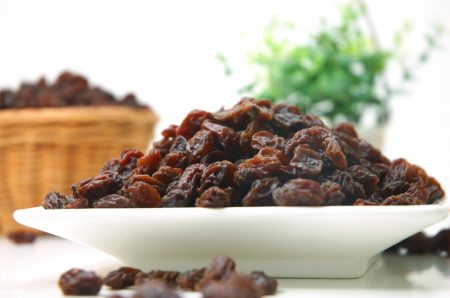
Alright, one more odd American stockpile. The U.S. maintains a national reserve of raisins. However, this pile of dried grapes has been the source of quite a bit of controversy.
The raisin reserve was created after World War II in 1949, after the domestic U.S. market flooded with excess raisins. To protect U.S. farmers, the government started buying up unsold raisins and did so until 2002.
Then, however, one farmer decided that he didn’t want to sell a part of his crop to the government at a low price. After the government forcefully seized some of his raisins, the farmer sued and kicked off a 10-year legal battle that eventually landed in the Supreme Court.
In 2015, the Supreme Court ruled that the government had no right to confiscate the raisins without paying a market price. The decision has put the future of the raisin reserve in jeopardy.
7. Rubber Bullets
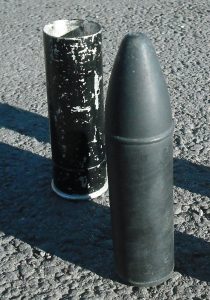
Which country do you think would keep a stockpile of thousands of rubber bullets? It’s not actually a repressive dictatorship, but good old Great Britain.
After riots against police brutality swept through London in 2011, the Metropolitan Police found itself unprepared. So, they responded to the calls for less harsh policing by purchasing 10,000 rubber bullets to keep in reserve.
That brought Scotland Yard’s rubber bullet stockpile to its highest level ever. Needless to say, the purchase didn’t exactly convince the public that the police would be gentler from then on.
8. Every Type of Crop
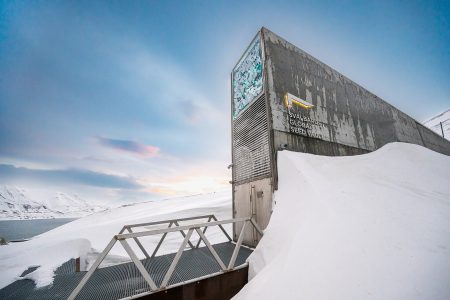
It’s common for a country to store staple crops commonly eaten by its people. Norway, however, has gone one step further.
The Scandinavian country has a stockpile of all agricultural products.
In the Svalbard Seed Vault, located underground on its titular Arctic archipelago, Norway stores seeds from more than 856,000 agricultural plants. This enormous seed archive isn’t just for Norway’s use, however.
The aim of the Svalbard project is to preserve current agricultural crops in case of some kind of natural cataclysm. If necessary, the preserved seeds can be retrieved and crops revitalized to feed future generations.