
- When traveling, watch what your hands are doing or it might get you in trouble.
What’s considered polite behavior varies wildly from country to country and culture to culture. Of course, the same goes for impoliteness.
Being cordial with others isn’t just about how you speak, though. Even little things you do with your hands can upset others — or earn you a fine or a punch to the face.
When traveling, it’s always good to check up on local customs and etiquette before you go. To help your travels, here are eight hand gestures that you might think are universally applicable but are actually grave insults in certain places.
1. Thumbs Up

Giving somebody a thumbs up means all is good or that they did a good job, right? Although this gesture has become widely recognized due to the proliferation of Western media, it’s not always considered a sign of praise.
In various parts of the world — from Greece to Russia, southern Italy, Nigeria, and even Australia — pointing an upward thumb at someone is considered rude at best and begging for a fight at worst. It can basically be the equivalent of flipping the bird at the person. In that context, it’s no wonder it might tick someone off.
2. V Sign
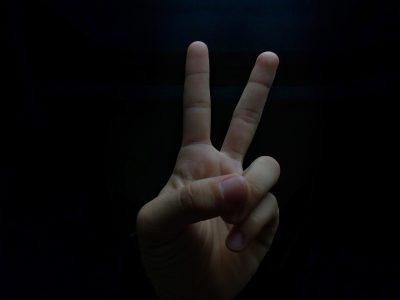
The V sign (“V for Victory”) was popularized during World War II when the British Prime Minister Winston Churchill flashed it as a sign of defiance. With that, it might surprise you that the same gesture can also (again) be comparable to giving someone a middle finger in the U.K.
It’s all about which way your palm is facing. Palm out, everything’s good. Palm in, and you will have a problem.
In addition to the U.K., this same rule applies in Ireland, New Zealand, Australia, South Africa, and some other parts of the world that were historically under English rule. Meanwhile, in Latin America, people might think you’re flashing a gang sign, so avoid this gesture there as well.
3. Come Over Here

Curling one or more fingers toward yourself can be taken as a harmless gesture of asking somebody to come to you. That is, unless you’re in Latin America or East Asia.
Folks in these parts of the world don’t appreciate your gesticulating to beckon them thither. That’s how you call a dog or another animal — not a human being.
You’re not comparing the other person to an animal, are you? Them’s fighting words. Or gestures.
4. OK Sign

“Was the food good?” the waiter asks, and you — with your mouth still full — pinch your thumb and index finger together to imply everything was great. But don’t do that if the restaurant is in France, Germany, or Brazil.
In those places, people don’t think this gesture resembles the letters OK. Instead, they think it looks like an anus, meaning you just called the waiter an assh***.
Fun fact: Richard Nixon once made this gaffe on a visit to Brazil when trying to communicate that his flight was okay. Let’s just say that wasn’t a great start to his diplomatic trip.
5. Open Palm
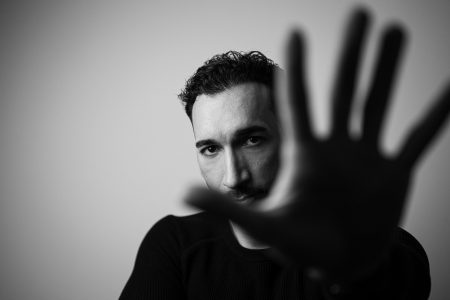
When there’s something dangerous happening, you might try to stop someone from coming closer by thrusting your open palm in their direction. Do that in Greece or the Middle East, though, and the person you’re trying to stop might start running at you with a very angry expression.
In these countries, thrusting your open palm at someone is called moutza. It’s one of the most offensive gestures in these countries, implying you want smear s*** all over the other person’s face. Moutza’s origins lie in Byzantine cultures, where apprehended criminals would be paraded through town while people humiliated them by rubbing feces all over them.
If you’re visiting Greece, absolutely do not tell someone to stop by using this gesture. You WILL get in a fight.
6. Bicep Flex

Flexing your bicep while grabbing it is a sign of strength and defiance. For an example of this gesture, just look at the famous Rosie the Riveter propaganda posters from WWII.
That poster wouldn’t have gone across well in France. Called bras d’honneur (arm of honor), it basically mean “up yours,” being once again roughly equivalent to a middle finger.
Similarly, it’s also considered very rude in Brazil, Germany, the rest of Southern Europe… Look, just play it safe and don’t flex when traveling, okay?
7. Crossed Fingers

You’re visiting Vietnam, and the guy you struck up a conversation with in the hotel lobby tells you he has a job interview tomorrow. You cross your fingers to show that you’re wishing him good luck and success.
Wait, why did he get so angry?
That might be because in Vietnam, crossed fingers is taken as a vulgar reference to female genitalia. You just called your would-be Vietnamese buddy the C-word in his face.
And let us tell you, that’s no way to make friends in any culture. Well, maybe Australia.
8. Pointing

Language barriers can be a real problem when traveling. To try and indicate you want something, you might consider pointing at it.
That can be a risky suggestion, though. Rules about pointing are extremely varied across the world, and can be completely different even within a single cultural sphere.
As a good rule of (a completely inoffensive, not upward-pointed) thumb, you should never point at a person anywhere you go. However, pointing in general, even when done at an object, can come across as rude in places ranging all the way from Saudi Arabia to Italy, Finland, Japan, and Tanzania.
Just don’t point that things. It’s a safer option to gesture toward things you’d like with an open hand.
Want to read about some more foreign customs? Check out our list of 10 unusual (but important) foreign etiquette rules.