
- When in Rome, do as the Romans do — no matter how weird it might seem to you.
So, you finally won the lottery and can realize your lifelong dream of traveling around the world. Of course, you don’t want to insult your hosts, so you decide to be on your best behavior wherever you go.
However, your “best behavior” might be gravely insulting in other countries.
What’s considered good manners can vary wildly, depending on the time and place. That’s why it’s always best to read a bit about local etiquette before traveling anywhere.
To get you started on your research, here are 10 etiquette rules from around the world that might seem odd to us, but are important to observe when traveling.
1. France: Don’t Ask the Waiter for Substitutions

Waiters all over Europe tend to frown upon substitution requests, but will generally acquiesce if you explain that you have a dietary restriction. But not in France.
In France, it’s understood that chefs have carefully crafted the recipes they prepare, according to the long traditions of French cuisine. By asking for substitutions, you’re essentially spitting in the face of their time and effort.
It’s like looking at a painting and telling the artist they should’ve painted the flowers another color. When in France, don’t order a dish if it has an ingredient you don’t like — no matter how good the rest of it sounds.
2. Middle East: Don’t Eat with the Left Hand

In certain Middle Eastern countries, utensils are rarely used and it’s customary to eat with your hands. Well, it’d be more accurate to say “eat with your hand” because you shouldn’t touch food with your left one.
In many Islamic cultures, the left hand is considered impure, partially because it’s supposed to be the hand you wipe with in the bathroom. The locals don’t use the left hand for anything in an official capacity.
This same rule applies also in India and some parts of Africa. Sucks to be you if you’re a leftie, but it’s better to eat clumsily with your right one instead of using your poop hand.
3. Chile: Always Use a Knife and Fork
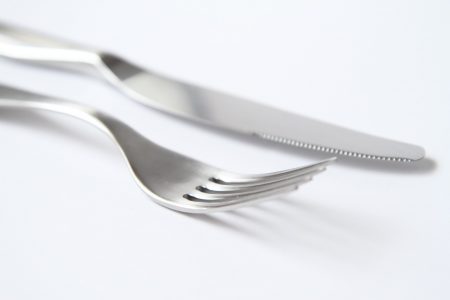
In contrast to the previous rule, you shouldn’t eat anything with your hands in Chile. Always use a knife and a fork (or a spoon if it’s that kind of a dish).
Even foods that we in the U.S. might eat with our hands, like fries or even sandwiches, are not finger food in Chile. Eating with your hands is considered ill-mannered and even vulgar.
Your host gave you the silverware for a reason, so you’d better use it. This same rule also applies in some parts of Brazil.
4. Russia: No Shaking Hands in the Doorway

Believe it or not, there was a time when Westerners could visit Russia, and perhaps such a time will come again. If it does, though, make sure you don’t shake your host’s hand at the door.
Russians consider shaking hands across the threshold disrespectful. This cultural aversion may stem from an old folk belief in house guardian spirits that would get upset and bring misfortune to the homeowner if a guest reached into their domain while still standing outside.
So, step inside and then shake your host’s hand. Oh, and don’t say no to the shot of vodka you’ll inevitably be offered — that’s another big no-no.
5. China: Burp After Dinner
In the U.S., belching at the dinner table is a faux pas at best. But in China, it’s the complete opposite.
The Chinese consider belching after a meal an involuntary admission that you enjoyed the food and had plenty to eat. If you really want to compliment your host, make sure that they notice you burping.
That said, you shouldn’t go at it like a college bro at a frat party belching contest. We’re just saying, you don’t need to go out of your way to hide a small burp.
6. Thailand: Be Careful with the Fork

At a Thai dinner, you would typically get served chopsticks, a fork, and a spoon. That fork has been the bane of many Western visitors.
You simply do not eat with a fork in Thailand — it should never go into your mouth. Instead, the fork is used kind of like a knife at a Western dinner table. It’s there for you to cut food apart and push it onto your spoon, and nothing else.
Fortunately, the chopstick rules are pretty simple. You use them to eat noodles and noodles only.
7. Finland: Don’t Talk Too Much

If you know anything about the Finnish people, it’s probably that they’re infamously introverted. As such, it’s probably no surprise that you shouldn’t run your mouth in this land of social recluses.
While silence between friends can be uncomfortable for us, the Finns are perfectly fine with it. In fact, pausing briefly during speaking or before responding to someone is taken as a sign that you’re paying attention to the conversation and choosing your words carefully.
Responding immediately may imply you’re just spouting whatever comes to your mind. And if not that, then speaking non-stop is certain to only annoy your Finnish hosts.
8. India: Don’t Thank Your Friends

You’d think it’s only good manners to thank your friends when they pass you the salt, for example. In India, however, that can be a serious breach of etiquette.
Indians believe that doing small favors for each other is just something friends do without a second thought. Of course they’ll pass you the salt — you’re their friend.
But if you thank them, you imply that they went out of their way to do something special for you. As a result, they might think that maybe you’re not friends after all.
9. Italy: Check the Time Before Ordering Coffee

Italians love their coffee, so it’s no wonder that they have some strict rules around the beverage. One of the most important guidelines is to be aware of what time of day you’re ordering coffee — especially if it has milk in it.
Cappuccino, for instance, is strictly a breakfast drink in Italy. If you try to order a milky coffee drink in the afternoon, you might get strange looks or the waiter might simply tell you that they’re done serving cappuccinos for the day.
You can order an espresso around the clock, but you don’t need to call it that. Virtually all black coffee in Italy is espresso, so asking for it specifically is just redundant.
10. Japan: Never Tip

On a global scale, our custom of always tipping our waiters is an anomaly. In Europe, for instance, people tip only when they receive exceptional, five-star service, if even then.
If you’re traveling in Japan, however, you should never, ever leave a tip. The Japanese take great pride in their customer service and leaving a tip is taken as a grave insult.
To a Japanese waiter, your tip basically says: “You’re not very good at your job so you probably don’t get paid much. Here, maybe you can use this money to take a class in customer service.”
Now that doesn’t sound too polite, does it?