
- These animals might be freaks of nature, but they’re pretty freaks of nature.
Many animals are instantly recognizable from their distinctive colors. A polar bear is white, a cardinal is red, the common fox is orange, and so on.
Occasionally, however, nature turns in a curveball and produces a bizarrely colored beast. Known as color morphs, these individual animals exhibit an unusual variation of the species’ normal coloring.
Albino animals are probably the most famous of all color morphs, but they’re far from being the only ones. There are many others that are equally, if not more striking.
Here are eight odd but beautiful color morphs of various animals.
1. Blue Lobster
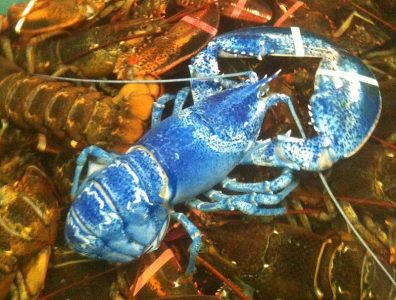
Lobsters are fairly colorful already, ranging from greenish to brown with splotches of yellow, red, and other colors. A blue lobster, however, is a strange and very rare color mutation in lobsters.
The blue coloration stems from the lobster producing excessive amounts of a specific protein. This protein combines with the carotenoid molecules normally responsible for the lobster’s red color, producing crustacyanin, which appears blue.
Blue lobsters are exceedingly rare, with only 1 in roughly two million lobsters developing the color morph. It’s good luck for them, though, as most caught blue lobsters are taken to aquariums or are released instead of ending up steamed on a dinner plate.
2. Golden Nyala
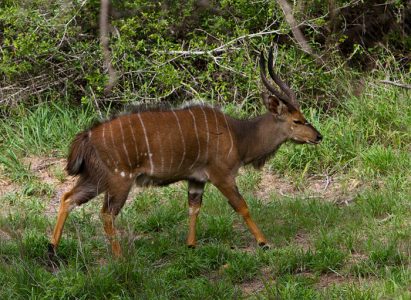
It’s very easy to distinguish a male nyala antelope from a female. The males have horns and are a dark brown color, while the females are a light, golden brown.
Sometimes, however, something strange happens and a male nyala shows up bearing female coloration. The fur of these golden nyalas is much more orange than that of normal males, making them stand out from the crowd.
It’s currently unknown why this color morph happens. However, considering that male nyalas are born with a light brown fur, it’s likely that golden nyalas have some kind of biological quirk that prevents their fur from darkening with age.
3. Pink Manta Ray
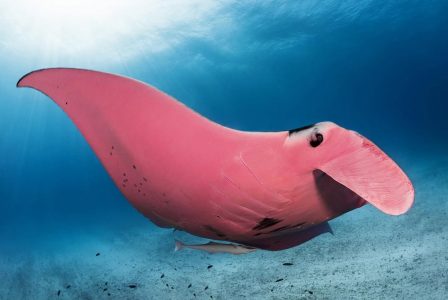
Inspector Clouseau is the hapless detective appearing in the Pink Panther movie series. That, or a striking pink-bellied manta ray swimming in the waters of Australia.
The only known pink manta in existence, Clouseau was first spotted off Lady Elliot Island in 2015. The same animal was spotted again in 2020 by marine photographer Kristian Laine.
The fishy inspector’s pink look is likely the result of a genetic mutation. It makes him stand out like a sore thumb but that’s fine — the huge rays have no natural predators so he doesn’t need to hide from anything.
4. Black Squirrel
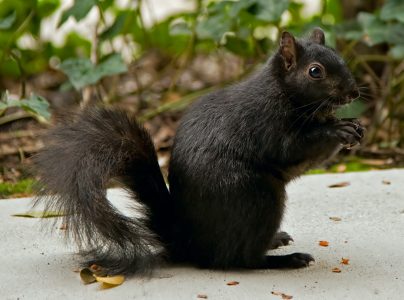
Black squirrels are a surprisingly common color morph of the regular gray squirrel. They can be found anywhere in the U.S. where gray squirrels live, but they’re unusually common in certain areas, such as around the Great Lakes and in northern Virginia.
The squirrels are melanistic, which means their bodies produce excessive amounts of melanin (the same stuff that causes light-skinned people to tan in the sun). The condition doesn’t cause the squirrels any harm, and it may even be beneficial in some situations.
Black squirrels living in thick forests may have a concealment advantage over their gray kin (who in turn survive better in more lightly forested areas). Additionally, the black squirrels may survive better in winter, with their darker fur absorbing what little heat the sun provides much more effectively.
5. Orange Shark
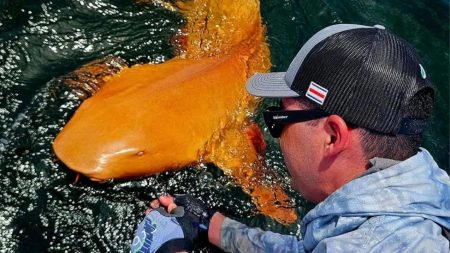
In August 2024, ocean anglers in Costa Rica caught one bizarre fish. It was a Caribbean nurse shark sporting a bright orange coloration.
Caribbean nurse sharks are typically dark brown, so this individual was certainly distinctive. Experts believe the shark has a condition called xanthism, which has caused its body to produce excess yellow pigments, resulting in the neon orange look.
This is the first documents instance of a xanthic nurse shark, so there’s no way to know how the condition affects the fish. Considering that it has survived to adulthood, it can’t be that big of a deal.
6. Yellow Cardinal
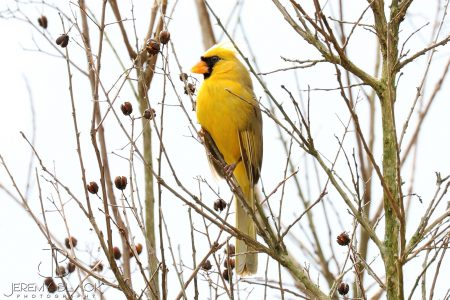
Cardinals are instantly recognizable birds due to their bright red feathers (well, the males are). In 2018, however, Charlie Stephenson in Alabama spat out his morning coffee when he spotted a yellow cardinal in his backyard.
Much like the orange shark, this bird most likely has xanthism that has turned it yellow. Being an odd bird doesn’t seem to have hampered his luck with the ladies, as Stephenson said he’s seen the bird nesting with a female in his yard on several summers.
Note that you shouldn’t confuse this yellow cardinal with the Yellow Cardinal found in South America. Those cardinals are supposed to be yellow (despite being named after cardinals, who dress in red).
7. White Impala
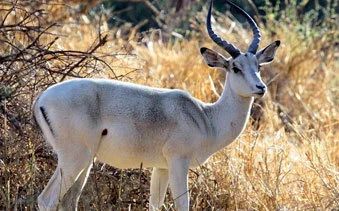
The impala is a famously fast African antelope that gave its name to a Chevy model. The beasts are usually light brown, but occasionally park rangers and hunters spot a white impala.
These animals, however, aren’t albinos. Their fur may be white, but they still have normal-colored eyes and black horns.
Instead of albinism, they have a condition called leucism. Leucistic animals lose most of their pigmentation but not all, resulting in the unusual white coloration.
8. Chimera Lobster
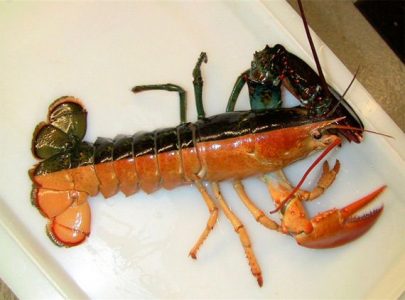
We started with lobsters, so let’s also end with lobsters. For some reason, these crustaceans are prone to a whole slew of color morphs, one of the rarest of which is the chimera or split lobster.
These lobsters sport a different color on either side of their body, with a neat center line dividing the two. There’s only a roughly 1 in 50 million chance for any given lobster to be born with split colors.
Such a bizarre look probably stems from each side of their bodies somehow developing independently of each other. This theory is reinforced by the fact that chimera lobsters often bear characteristics of both male and female lobsters.
There’s simply zero communication between each half of their bodies and both sides grow as they see fit.