
- Get ready to have your heart stolen by these strange pups.
These are the dog days of summer — quite literally. August 26 is National Dog Day.
On this day, we appreciate our best friends, the dogs (as if we didn’t do it every day of the year). It’s also a day to raise awareness of dog adoption, so that all pooches could find a forever home.
Of course, not everyone can adopt a dog, but this is a great day to make a small donation to your local shelter. Every little bit helps, you know.
If nothing else, though, you should celebrate dogs by learning about some strange pups you may not have heard of. Here are eight of the strangest but still lovable dog breeds out there.
1. Borzoi
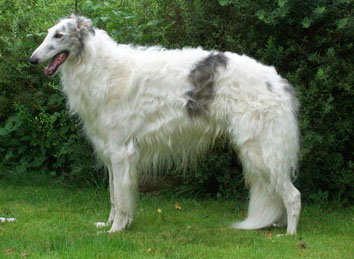
Let’s start with strange dog that you have likely heard of — the ever so bizarrely proportioned borzoi. These lanky pooches with fur as long as their faces hail originally from Russia.
Borzois look kind of like furred greyhounds, which isn’t that strange, considering their shared ancestry. Consequently, borzois are very fast dogs.
In fact, their name comes from the Russian term borzaya sobaka, which translates directly to “fast dog.”
In addition to their athleticism, borzois are famous for their… Shall we say, selective attention spans. You can certainly train them, but you’d better make it interesting, as the long-nosed borzois quickly get bored with repetitive tasks.
2. Xoloitzcuintle
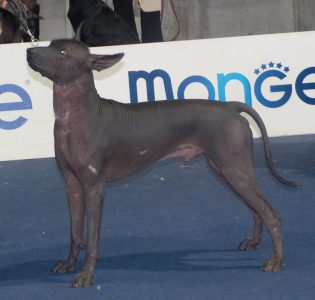
If you can’t pronounce the word Xoloitzcuintle, don’t worry. These dogs are also known in English as Mexican hairless dogs.
That’s because they’re entirely bald — or at least they can be. Xolos come in hairless and coated variants, and both can be born in the same litter.
This dog breed traces its roots to ancient hairless dog breeds, often depicted in Aztec artwork. However, the modern Xolos are only distantly related to these pre-colonial dogs.
In fact, in the early 20th century, this entire breed was at risk of going extinct. Fortunately, the Xolo now gets the recognition its strange hairless heritage deserves.
3. Peruvian Inca Orchid
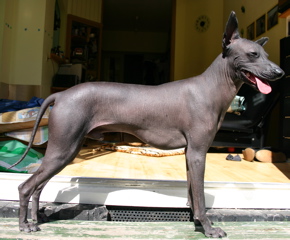
We couldn’t blame you if you got the Peruvian Inca Orchid (or Peruvian hairless dog) confused with the Xolo. They look quite similar, but represent two distinct lineages.
Then again, it’s not that surprising that they resemble each other. Both are likely descended from the same hairless dogs that traveled to South America thousands of years ago.
However, the Peruvian hairless isn’t always completely bald. They may have small tufts of hair on their heads, feet, and the tip of their tails.
But when it comes to having hair only on parts of their bodies, the Peruvian Inca Orchird has nothing on…
4. Chinese Crested
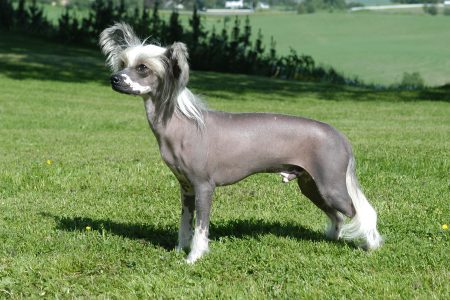
The Chinese Crested dog comes in two varieties — powderpuff and hairless. The powderpuff variety has quite the majestic long fur.
However, it’s the hairless variety that’s more famous. That said, calling them hairless is not quite right, since they do still have long hair.
All of that hair is just entirely restricted to their heads, tails, and legs. It makes these small pooches look quite funky, particularly when they start running around and trailing their long strands of hair behind them.
5. Azawakh
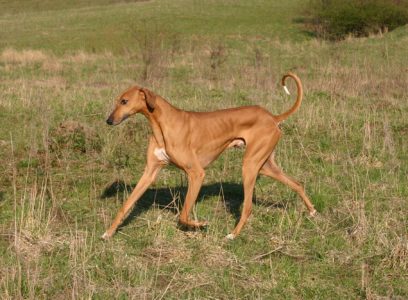
The Azawakh is a large, skinny dog breed from West Africa. It has naturally flat muscles, which give the Azawakh a somewhat emaciated look.
Don’t let that appearance fool you, though. This dog is not only stupendously fast, but it can keep running for extended periods of time.
It all makes sense when you consider that these dogs were originally bred for hunting gazelle on African grassland. As another curious trait, the Azawakh has one of the best memories out of any dog. They will remember their owners and friends after spending years and years apart.
6. Dandie Dinmont Terrier
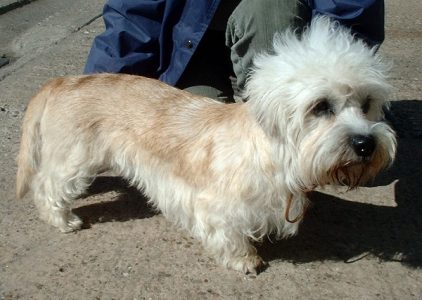
The Dandie Dinmont Terrier is a small Scottish dog breed. Its basic body plan is much like many other similar terriers’, although the Dandie Dinmont tends to have shorter legs and a longer body.
However, it’s the dandy hairdo that catches your attention. The hair of the Dandie Dinmont grows naturally longer and wilder on top of its head, resulting in the characteristic poof.
Dandie Dinmonts are generally friendly dogs, being the most laid back out of all terriers (although that’s relative, of course). If you’re now planning to get your own Einstein-haired pooch, we should warn you, though — they are known for being enthusiastic diggers that can quickly fill your backyard with holes.
7. Pharaoh Hound
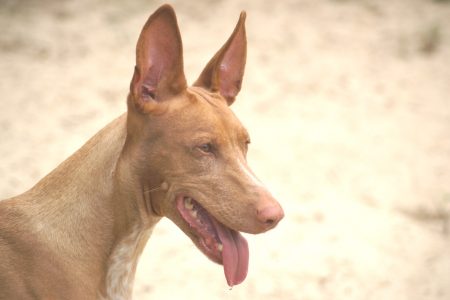
The Pharaoh Hound is a hunting dog breed famous for its large ears. Those ears are what give the breed its name, as it looks sort of like the Egyptian jackal-faced god Anubis.
It’s also often claimed that the Pharaoh Hound is one of the oldest existing dog breeds, depicted on the walls of pyramids and tombs. That, however is simply not true.
To begin with, the dog comes from Malta, not Egypt. Additionally, DNA studies show that the Pharaoh Hound is only about 200 years old as a breed.
But hey, that doesn’t make these strange pooches any less lovable.
8. Komondor
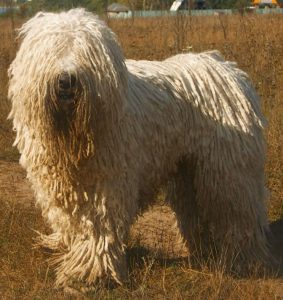
You really can’t mistake a Komondor for any other dog. These large Hungarian sheepdogs are instantly recognizable from their distinctive fur.
The Komondor’s coat naturally grows into thick cords. Their hair resembles dreadlocks or the strings of a mop — hence their nickname “mop dog.”
There’s a good reason why the Komondor has its strange coat. It developed as armor against wolf bites as Komondors defended their owners’ sheep herds.
For the most part, having the corded fur doesn’t bother Komondors. They can be bathed, but be prepared to have wet dog smell in your house, as the cords can take several days to dry.