
- It’s an idea that might seem nice on paper but simply doesn’t work in reality.
In Russia, it’s pretty easy to have a police officer get on your case. Fortunately, it’s also pretty easy to get that police officer off your case.
Just hand him a wad of cash and there’s a good chance he’ll look the other way.
Now, despite fairly common corruption among law enforcement officials, Russian authorities don’t like it. Believe it or not, they would like to enforce the rule of law appropriately (although you may not think much of the laws being enforced).
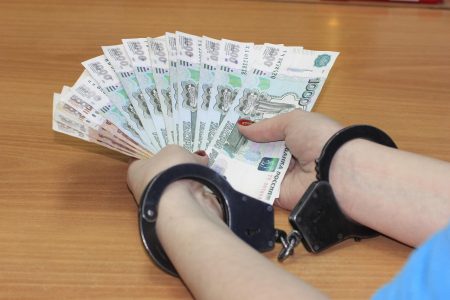
To this end, a region in southern Russia has gotten creative in its attempts to crack down on corruption. The authority has said that it will reward police officers who reject bribes.
Their reward will be as much money as the briber offered.
On the surface, this might seem like an effective method to steer less-disciplined cops toward the straight and narrow. However, Russia’s parliament is not excited about the plan and has more or less called it stupid.
After all, if a cop is already crooked enough to take a bribe, this scheme only lets him get away with twice the cash by accepting the bribe and then reporting the briber. And he comes out looking like an outstanding pillar of morality, too.
‘Steadfast Anti-corruption Position’
The new anti-corruption plan was put in place this spring in the southern Russian region of Rostov Oblast, bordering Ukraine to the west. It seeks to make police officers less likely to accept bribes by essentially gifting them with the bribe money by staying on the right side of the law.
To be sure, the region has an issue with bribery. According to the RIA Novosti news outlet, Rostov Oblast saw 767 corruption-related crimes in the first half of 2025, of which only 260 cases were attempted briberies.
That means 507 officials accepted the bribe and were only caught afterward. Not a good number.
While we don’t know how many of those officials were police, it must be a significant number for the Main Directorate of the Ministry of Internal Affairs of Russia for the Rostov Region to enact this new scheme.
(Also, can we point out that Russian agency names are hilarious?)
“Recently, we have introduced the practice of rewarding police officers with the money that was offered by bribe-givers during the illegal act for a steadfast anti-corruption position,” explained Alexander Rechitsky, the head of the… The agency overseeing the police. We don’t think there’s an acronym.
The scheme is fairly simple. Let’s say Boris the Burglar gets caught in the act, and he offers the cop a load of cash to let him go for $250 (or equivalent in rubles).
Under the new plan, the cop is encouraged to arrest Boris and, upon delivering him to jail, report that he attempted to bribe him. In the end, he will have upheld the law, and still receive that nice $250 bonus.
Not a Waterproof Plan
The police authorities’ anti-bribery scheme might seem like a good idea on paper. And indeed, Rechitsky said that in the last two months, the authorities had opened 25 new criminal cases against people who had attempted to bribe police officers.
“I emphasize that each proposed amount, in accordance with my order, was returned to the officer in the amount that the bribe giver proposed,” he added.
In practice, however, there’s a gaping hole in the plan. It relies entirely on the individual police officer’s honesty — which, if he considered taking a bribe in the first place, may be somewhat lacking.
Going back to the previous example, let’s say the cop agrees to take Boris the Burglar’s $250 bribe and lets him go. However, if Boris then gets arrested later by a more disciplined officer, the one who let him go might be in trouble.
But not anymore. The dishonest cop can simply say that Boris offered him a bribe and, when it wasn’t accepted, managed to escape. Oh, and that bribe, which the cop totally didn’t take, was worth $250.
Badabing, badaboom: the cop now gets another $250 and walks away from the incident looking like a hero.
Questions from Higher Places
We’re not just playing the devil’s advocate here. Members of the Duma — that is, the Russian parliament — have voiced similar concerns.
“This is an ambiguous initiative,” Duma member Andrei Alshevskikh told the Gazeta newspaper.
“Just think about it. Police bosses are allegedly pushing their subordinates to extortion. Moreover, any development of events is beneficial to a dishonest officer,” he stated.
Alshevskikh called for Rostov Oblast authorities to reverse their plan, as he believes it could undermine trust in law enforcement agencies.
Mikhail Starshinov, chair of the parliament’s anti-corruption committee, questioned where the officers’ reward money was coming from. After all, if they supposedly rejected the bribe, the reward would have to come from somewhere else.
“I am curiopus, where will they get this money to compensate officers for rejected bribes? From the budget or something? Or somewhere else?” he asked.