
- You’d be surprised how many things you know from history never happened.
There are events in history so important and momentous that everyone knows about them. But the thing is that many of those events never happened.
Even if they did, many times the events were vastly different from what we think today. You see, history is a centuries-long game of telephone and things often get distorted over the years.
We’ve written about some of these events before, but there are more to go. So, here are eight more historical facts that are anything but true.
1. Van Gogh’s Ear
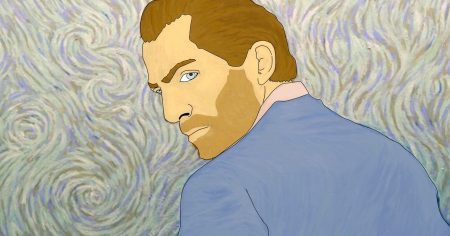
Vincent van Gogh is the definition of a tortured artist. Suffering from depression (among many other ailments), he once sliced his left ear clean off.
Except that he didn’t — not the whole ear, at least. Accounts from van Gogh and those who knew him state that he nipped off the bottom part of his left earlobe.
You know, the dangly bit you’d pierce for earrings.
No one is sure why he did even that. He was severely depressed at the time and his brother had just cut off his financial support, so maybe he just lost it.
2. Edison Didn’t Invent the Lightbulb

Thomas Edison was a scientific genius, responsible for many inventions that shaped the modern world. Among them is the gas lightbulb.
Not.
The (now obsolete) lightbulb was invented by British chemist Humphrey Davy in 1802 — more than 70 years before Edison made his “invention.” Before him, dozens of others had also tinkered on and improved the lightbulbs.
Is it possible that Edison made his own modifications to the lightbulb? Maybe.
Instead of science, was he a genius in marketing who — if not invented — popularized the lightbulb? Absolutely.
3. Martin Luther’s Theses
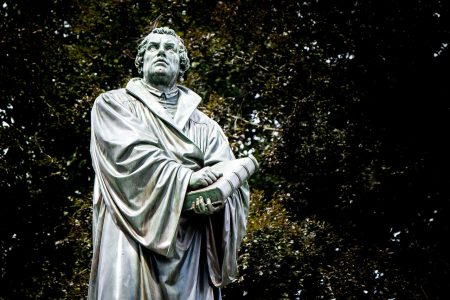
Martin Luther was the father of the Reformation movement, which resulted in the birth of Protestant churches. In 1517, he defiantly nailed his 95 Theses on the door of a church to protest its corrupt ways.
It’s a powerful story, but it’s not true. In fact, it didn’t crop up until more than 30 years after Luther’s supposed theses-nailing stunt.
Instead, he mailed his complaints to the local archbishop for his consideration. He never even wanted to break the Catholic Church apart, only change some of its practices he viewed as immoral.
Well, that’s not what happened. While it’s possible that Luther may have posted his theses publicly somewhere, it wasn’t as dramatic of an event as its made out to be.
4. The Names of Columbus’ Ships
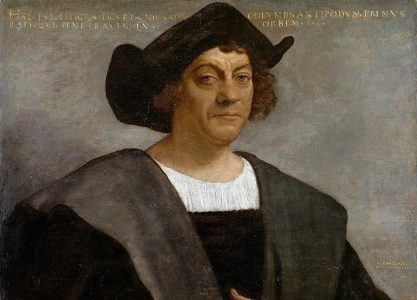
When Columbus sailed across the Atlantic to America, he did so on three ships. They were called Santa Maria, Pinta, and Niña.
Well, they kind of were, but not really. If you looked through official Spanish log books from the time, you wouldn’t find Pinta and Niña.
That’s because those were nicknames their sailors gave to the ships. Pinta means “painted” in Spanish, while Niña translates to “little girl.”
Niña was officially called Santa Clara, in all likelihood. Pinta’s real name, however, has been lost to history.
5. Columbus and a Round Earth

Speaking of Columbus, it’s a popular story that he proved the Earth was round by his misadventure to America. However, there was nothing for him to prove.
Everybody at the time (or at least everyone who had time to think about such matters) knew the Earth was round. In fact, the philosophers of Ancient Greece calculated that the planet must be round already in 300 BCE.
With that, Columbus would’ve looked like a complete clown if he’d come back declaring the Earth was round.
“Guys, the world! It’s round!” “Well, duh?”
6. Salem Witch Trials
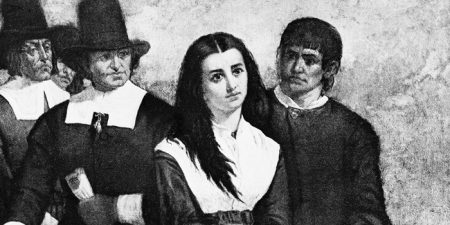
Think of the Salem Witch Trials. What comes to your mind? Probably kangaroo courts sentencing innocent women to be burned at the stake.
In reality, though, nobody was burned in Salem.
Now, 25 people did die as a result of the witch trials, but not by burning. Five of them died in prison, 19 were hanged, and one person was crushed to death with stones.
The burning of witches is more associated with the late medieval witch hunts in Europe, which probably got mixed with the Salem trials. Fun fact, the last woman executed at the trials wasn’t exonerated until 2022.
7. Catherine the Great’s Horse Incident
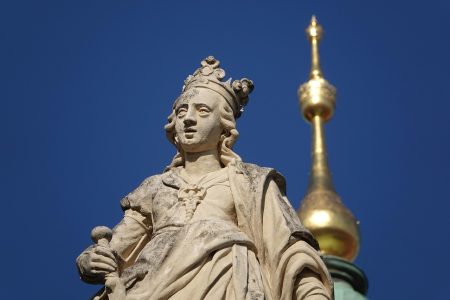
Catherine the Great was one of the most influential czarinas of the Russian Empire. Yet, most people only know her from how she died.
Or they know the rumor, at least. It’s said that Catherine died after trying to… Uh, get amorous with a horse.
Now, it’s probably true that Catherine did like to get banged hard and often. However, she never had to resort to trips to the stable.
Additionally, documents from the time detail that she died from a sudden brain hemorrhage — far away from the nearest horse.
8. Gulf of Tonkin Incident

The Gulf of Tonkin Incident involved two unprovoked attacks by North Vietnamese torpedo boats against U.S. Navy vessels. It was used as justification for the U.S. getting more closely involved in the Vietnam War.
Too bad the Tonkin Incident didn’t happen as the government claimed.
To begin with, in the first attack, the North Vietnamese boats weren’t the aggressors. Yes, there was a skirmish, but it was the U.S. boat that fired first — they just didn’t feel like reporting the fact.
And the second attack? It never took place at all.
Sure, American vessels launched torpedoes and fired at blips on their sonar. However, those blips were glitches caused by a storm, and Vietnamese records show there were no enemy boats anywhere near the area.
Essentially, the American ships fired at tall waves, and the government decided it was a good enough excuse to roll the troops in.