
- Whether they’re dead, lost, or just really good at hiding, these animals have only ever been seen once.
Every year, we discover more and more animal species roaming planet Earth. Just recently, we took a quick look at some strange creatures found in 2024.
Once a species has been discovered, you’d think it’d be easy to find it again. After all, we now know where it lives and what it looks like.
However, many animals have been seen once — and never again. Sometimes, we may find sick or lost individuals far away from their usual habitat, or we may be lucky enough to see the last remaining animal of its kind before it dies off forever.
Here’s a sampler of six (and a half) animals that have been discovered and promptly lost again.
1) Arunachal Pit Viper
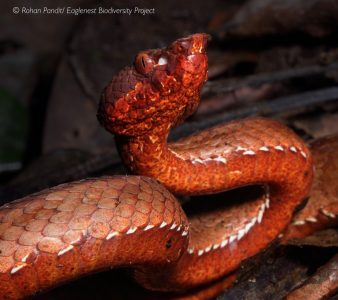
In 2019, a group of biologists performing a biodiversity survey around the village of Ramda in northeastern India discovered a strange snake. This viper was like nothing they’d seen before.
Its vivid red-orange scales had a distinct pattern that set it apart from other snakes in the area. But perhaps most strikingly, the snake had a bizarre pointed snout.
A later DNA test confirmed that the snake, now called Trimeresurus arunachalensis or the Arunachal pit viper, was a previously unknown species. It remains one of the rarest snakes in the world, considering it hasn’t been seen since (although researchers are fairly sure they’d find more if they went rummaging through the jungle).
2) Pocket Shark
In 1979, fishermen caught a bizarre-looking fish that had been swimming at a depth of 1,080 feet off the coast of Chile. It was the first — and last — known pocket shark, known scientifically as Mollisquama parini.
This small deep-ocean shark was only 16 inches long, although marine biologists believe it was a young female that would eventually grow larger. However, its most distinctive features were the large skin pockets next to its front fins.
No one has been able to figure out the pockets’ purpose. They could be storage pouches for hormones or bioluminescent goo, or maybe the shark keeps its change in there.
No other pocket sharks have been found since. In 2010, scientists thought they caught another one in the Gulf of Mexico. However…
2.5) American Pocket Shark
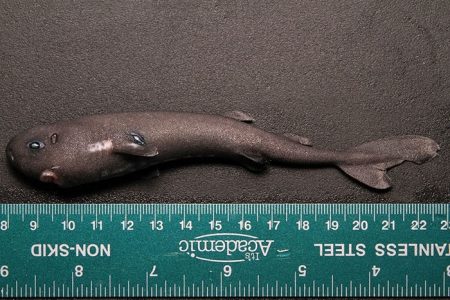
The pocket shark caught swimming in the Gulf waters turned out to be a separate species. This 5.5-inch-long fish is the only known American pocket shark or Mollisquama mississipiensis.
Its discovery confirmed that pocket sharks are found far and wide in the oceans, and that there are multiple species of them. And that’s about it, since these two loners are the only ones we’ve ever seen.
Now, technically we should’ve listed the American pocket shark as entry #3 since it is its own species. However, it’s so similar to its Chilean relative that we felt that would’ve been kind of boring.
3) Delcourt’s Gecko
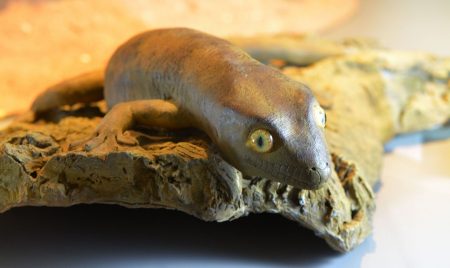
Delcourt’s gecko, officially known as Gigarcanum delcourti, is the largest of all geckos. Or, well, at least it was.
This giant gecko is only known from a single specimen taxidermized in the 19th century that was found sitting unlabeled and forgotten in a French museum. It’s quite a lizard, measuring 23.6 inches from snout to tail.
It was originally believed that the gecko came from New Zealand and was responsible for the legend of the giant kawekaweau lizard. However, a 2016 DNA study indicates that it’s instead from Australia’s New Caledonia.
Unfortunately, Delcourt’s gecko is likely extinct as no one alive has seen giant lizards roaming New Caledonia. At least we have the one dusty taxidermy to remind us that it did exist once.
4) Bullneck Seahorse
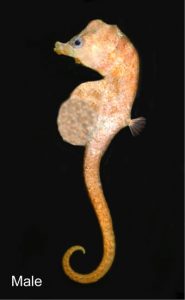
The bullneck seahorse carries the impressive scientific name of Hippocampus minotaur. The name refers to its large head-to-body ratio, which reminded its discoverers of the legendary bull-beast.
Speaking of its discovery, a few bullneck seahorses were found swimming off the coast of Eden, Australia, in 1997. Since then, no one has found them again — despite the seahorse being on the 25 Most Wanted Lost Species list.
Marine biologists believe the bullneck seahorse lives on the bottom of the ocean at depths of up to 300 feet. Considering that the most massive bullneck seahorse is probably about an inch long, it’s no wonder they’re hard to find.
5) Red Tigrina
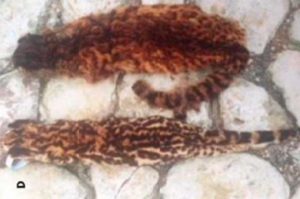
The red tigrine is also known as the Nariño cat or the Galeras cat. It’s known only from a single flayed skin, reportedly collected in 1989.
For years, the skin sat around in a research institute, labeled as an ocelot. In 2001, however, it caught the eye of Manuel Ruiz-Garcia, who finally identified the red tigrine as its own species in 2023.
This creature is a small, spotted wild cat that supposedly lives high on the slopes of the Galeras volcano in Colombia. As its name implies, its wooly fur has a deeper red hue than its relatives.
And that’s about all we know about the red tigrine. Although trap cameras have been set up on the Galeras since 2018, none of the cats have been seen, prompting some researchers to wonder if it has gone extinct.
6) Spotted Green Pigeon
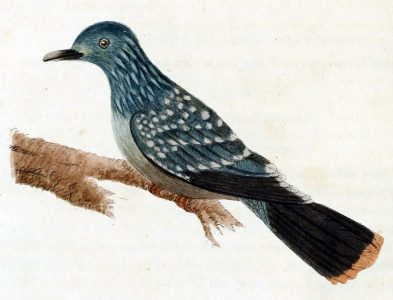
With the spotted green pigeon, you don’t have to wonder if it’s extinct — these birds are deader than a doornail. The big question, however, is where they lived.
The spotted green pigeon was described by British ornithologist John Latham in 1783. He got his hands on several preserved specimens of the bird that reportedly came from somewhere in the South Pacific.
However, there are no remaining records of the birds’ origins. Nothing like them has ever been seen in the wild, so it’s possible that Latham received the bodies of the last living spotted green pigeons.
In a way, that’s morbidly appropriate — considering that the pigeon is closely related to the famously dead dodo bird.