
- Some of these lakes you can swim in. Others, not so much.
If you thought lakes were just holes in the ground with some water in them, think again. The world’s lakes are extremely complex and diverse, ranging from completely sterile pools to ecosystems supporting thousands of plants and animals.
We’ve previously taken a look at some lakes whose waters are pure nightmare fuel. However, there are plenty of much less terrifying lakes that are quite weird for one reason or another.
Here are eight of the strangest lakes in the world, whether it’s for their color, location, or any other reason.
1. Diego de la Haya — The Lime-Green Lake
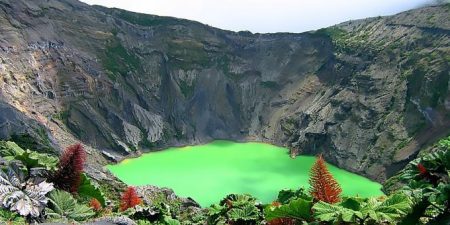
Diego de la Haya is a small crater lake, located on the Irazu Volcano in Costa Rica. You’ll know you’ve arrived at the correct lake when you see a bright lime-green body of water in front of you.
It’s not unusual for lakes to turn green if they get overrun with algae. Diego de la Haya, however, doesn’t support algae (or much else) because of the minerals its host volcano spews into the water.
The lake’s isn’t always bright green, though. Depending on what compounds the volcano belches up, it can change colors from green to red, pink, or gray — or a perfectly normal blue-green lake.
2. Spotted Lake — A Seasonal Mosaic
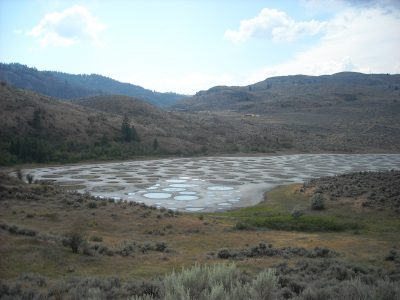
Spotted Lake (also called Khiluk in the region’s native languages) is an alkali lake in Canada’s British Columbia. In winter, it looks like your regular lake, but strange things start happening once summer arrives.
Every summer, Spotted Lake starts drying up until its waters retreat to the multiple round pools on its bottom. This appearance is what gives the lake its English name.
Spotted Lake is loaded with minerals, which harden into handy walkways around the remaining water pools. Once fall arrives, the lake fills up again until the next summer.
3. Pitch Lake — A Pit of Asphalt
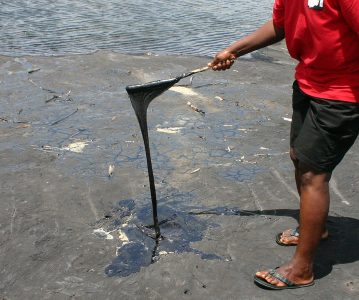
Pitch Lake is technically a lake — it’s a large depression in the ground that’s filled with liquid. Instead of water, though, this lake is filled with bubbling natural asphalt.
An ancient crack in Earth’s crust once allowed oil to encroach on the surface. Exposed to the sun and weather conditions, the oil eventually turned into the viscous hot pitch that now fills this 200-acre lake.
For the most part, the surface is solid enough that you can walk on Pitch Lake. You should watch your step, though, as the lake is dotted with softer, gooier spots. You really don’t want to fall into one of those.
4. Laguna Colorada — The Pink Flamingo Paradise
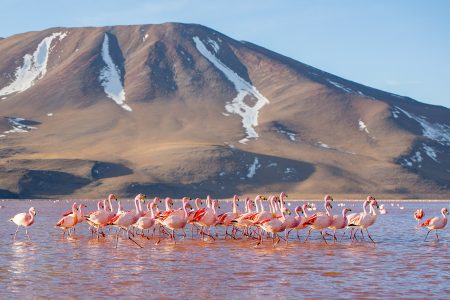
This salt lake in southwestern Bolivia looks like something out of a fantasy movie or an alien planet. Its shallow waters support massive amount of red algae that dye the entire lake red.
Adding to that, the lake is a regular breeding ground for flamingoes. It’s an ideal environment for them, with suitable weather and plenty of yummy algae to eat.
The pink birds and red water match each other perfectly, making for quite a surreal sight. Fun fact, the carotenoids in the red algae are what turn flamingo feathers pink.
5. Aral Sea — The Dying Lake
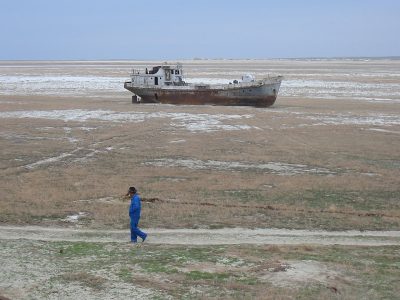
The Aral Sea was once a mighty lake in central Asia, the third-largest in the world. Today, it’s a collection of sad, saline lakes that are constantly under threat of disappearing completely.
The sea began drying in the ’60s as Soviet irrigation projects started draining its waters elsewhere. Today, only 10% of the Aral Sea remains, separated into four different lakes.
Local governments have started trying to dam the remaining waters, and some of the lakes have started filling up again. However, we’ll probably never again see the Aral Sea as it used to be.
6. Lake Balkhash — A Lake with an Identity Crisis
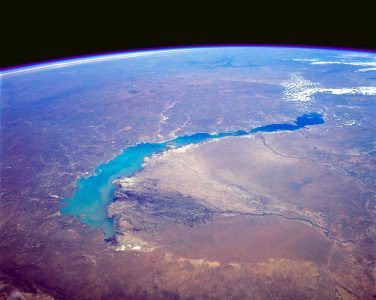
Although most of the world’s lakes contain freshwater, some of them are salty. Lake Balkhash in southeastern Kazakhstan, however, couldn’t decide which club to join — so it decided to be both.
This bizarre watery division is due to Lake Balkhash having an inlet but no outlet. The western side of the lake is fresh, as the Ili River constantly supplies this half with flowing water.
As the water flows east, however, it has nowhere to go. As such, it simply slowly evaporates, turning the eastern side of the lake into saltwater.
7. Don Juan Pond — Water That Won’t Freeze
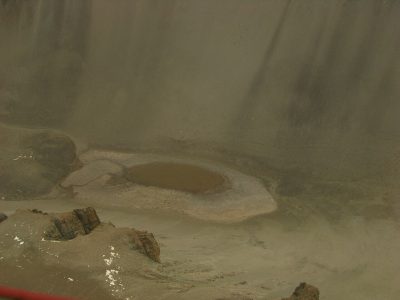
You probably wouldn’t expect to find liquid water in Antarctica. Yet, even this icy desert has a lake that stays ice-free all year round.
Don Juan Pond is a small, shallow lake in Antarctica’s Wright Valley. It doesn’t freeze because of how ridiculously salty the water is.
With a salinity level of 33.8%, this is the saltiest known body of water in the world. It simply doesn’t freeze even if temperatures drop to as low as negative 58 degrees.
8. Yathkyed Lake – A Lake on an Island in a Lake on an Island in a Lake
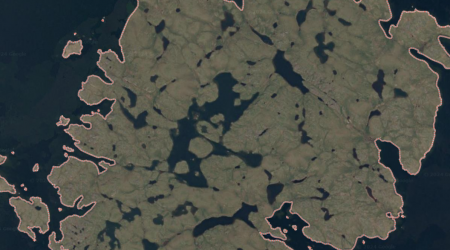
Yathkyed Lake itself isn’t particularly interesting, being one of the many, many large lakes dotting the wilderness of northern Canada. However, in Yahtkyed Lake, there is an island.
On this island, there is a lake. And in this lake, there is an island, and on this island, there is a lake.
This is what’s known as a recursive lake. This one is the deepest known recursive lake in the world — not in terms of water depth but because of many times the lake-on-an-island pattern repeats.