
- It didn’t work in the past, but if you fail, try and try again.
New York City has a rat problem. It’s no secret — anyone who has visited the city, let alone living in it, can vouch for that.
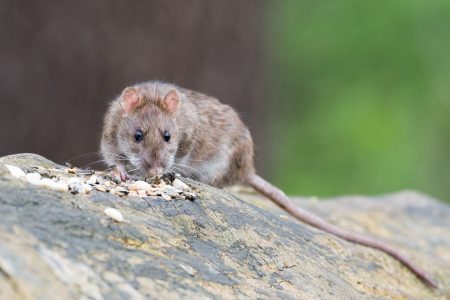
According to the latest estimates, there are more than three million rats sharing New York’s streets with its human residents. The rodents are so plentiful that they’ve even spawned a rat tourism industry and several internet memes, such as Pizza Rat.
With all that said, both NYC authorities and residents would love to get rid of the rampaging rats. To that end, the city recently greenlit a new and unusual rat control campaign.
NYC will start distributing rat contraceptives to the rodents.
The aim of the plan is pretty simple. If the rats can’t make babies, their numbers will eventually begin to dwindle as the current, and soon sterile, generation of rodents dies off.
That’s the plan at least. However, past experience shows that rat birth control isn’t very effective — both in terms of cost and reducing the number of baby rats.
But hey, it’s worth a try, we suppose.
The Tasty Goo
But what form will this rat birth control take? Are city staff going to start walking around the streets handing condoms to rats?
Not quite. The key to the city’s plan is a chemical cocktail known as ContraPest.
ContraPest is a sweet-tasting, fat-laden liquid. In other words, it should be irresistibly delicious to rats.
As rats consume ContraPest, the chemicals in it get to work, no matter what the sex of the rat is.
In female rats, the goo will decrease the number of eggs they are able to ovulate. Meanwhile, in male rats, the chemicals prevent sperm maturation.
Put together, the rats should become less fertile without disrupting their normal lives. In other words, they can still have all the freaky rat sex they want — it just shouldn’t produce babies.
According to the newly approved pilot program, the city will start placing ContraPest-laden bait stations in specific areaa of NYC within the next three months. The program will run for at least a year, during which workers will inspect the bait stations once a month to see if rats are eating the contraceptive.
They will also “track signs of rats” in the test areas. After the pilot program terminates, the city will draft a report to evaluate the method’s effectiveness.
Expensive and Ineffective
But is the ContraPest program expected to be effective? Well, if you ask experts…
Probably not.
You see, this is the first time NYC has turned to ContraPest. It has tried the rat birth control product in the past, and the results weren’t great.
According to veterinarians, rodent birth control products are often unreliable and ineffective. And even if the stuff worked, dosing every single rat in NYC with the contraceptive would be enormously expensive.
So, why is NYC back to using ContraPest? Couldn’t they just spread good old rat poison around?
They could, and they have. But the problem with rat poison is that it poisons other things as well — including humans.
In fact, that brings us to Flaco the Owl. The 13-year-old Eurasian eagle owl escaped from the Central Park Zoo in February 2023, but he wasn’t ready to leave the city.
Flaco stuck around and became a small celebrity among New Yorkers. There certainly were enough pigeons and rats in the city to keep him well fed.
And that’s what they did, until last March. Flaco died earlier this year after flying into a building in a rat poison-induced stupor.
If there is one way to try and reduce the number of rats in NYC, it would be to improve sanitation and garbage collection. But that would require both money and political will, so how likely is that to happen?
Also Good for Squirrels
New York is a fan of rodent contraceptives, but it’s not the only place to use them. The U.K., too, has resorted to birth control.
They, however, have a problem with squirrels instead of rats. The British Isles are being overrun by American gray squirrels that are threatening to wipe out the native red squirrel population and various trees.
So, in 2022, U.K. authorities decided to start controlling gray squirrels with a contraceptive. Mixed into a hazelnut spread, the stuff is supposed to render the squirrels temporarily sterile to give U.K.’s ecosystem a small breather.