
- Ever wanted to know what life on ancient Earth looked like? Check out these critters.
Life on Earth has been around for a long, long time. Over all those years, many creatures have changed so much that they barely resemble their ancient ancestors and relatives.
But not all. Some life forms — often dubbed “living fossils” — look pretty much exactly like they did dozens and even hundreds of millions of years ago.
Now, none of them are precisely the same creatures down to the last gene simply because of how life works. That said, if you saw any of their ancestors from way back when, you could instantly recognize them as their living relatives.
Here are 10 forms of life that give us a small glimpse into what Earth looked like millions of years ago.
1. Platypus
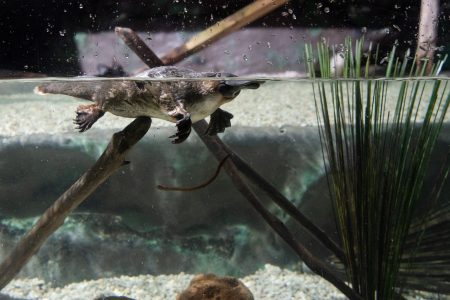
The platypus is such a bizarre creature that it’s easy to imagine it being a still-living ancient experiment of evolution. Still, researchers used to believe it was only around 100,000 years old.
That was until this year, when they found early platypus fossils dating back to the late Cretaceous era roughly 95 million years ago. That means the platypus’ early ancestors shared the planet with the last dinosaurs.
These platypus ancestors differed in some ways from the version we know today — for example, they had teeth in their duck bills. Still, you’d go, “Yep, that’s a platypus,” if you saw one.
2. Ryukyu Rabbit
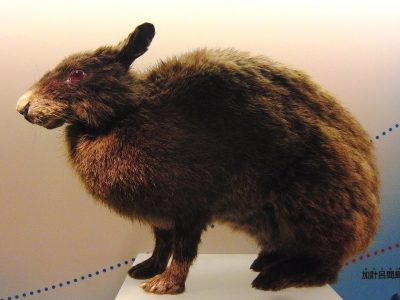
The Ryukyu rabbit, also called the Amami rabbit, is the last living remnant of an ancient rabbit lineage stretching back nearly three million years. Once found throughout Asia, the Ryukyu rabbit lives only on two small islands between the southern Japanese mainland and Okinawa.
These rabbits retain many primitive features that have disappeared from more modern rabbit species. Their ears are short, their bodies relatively bulky, and they have thick, strong claws.
Sadly, the Ryukyu rabbit faces immense threats from invasive predators introduced to its home islands. Despite conservation efforts, the rabbits are well on their way to join their extinct relatives.
3. Goblin Shark
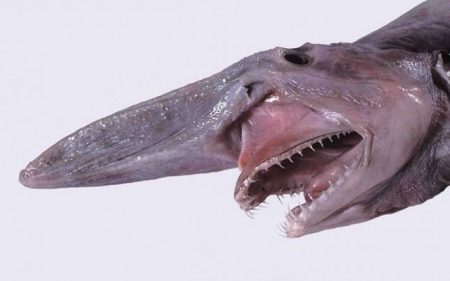
Sharks in general have changed very little over millions and millions of years. Take any of them, drop them in an ancient ocean, and they’ll be right at home.
That said, the goblin shark has changed even less than most sharks. These bizarre fish with a long, flat snout and an extendable set of jaws have swum in Earth’s oceans for at least 125 million years ago.
Fossils of the goblin sharks’ ancestors are pretty much indistinguishable from its modern iteration. But hey, if it works, don’t reinvent the… Weird long jaw thing.
4. Horseshoe Crab
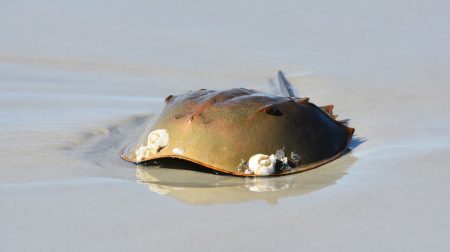
Take one look at a horseshoe crab and you know this thing is not from this time. And indeed, the horseshoe crab has existed, and looked much the same, for 300 million years.
Honestly, the only surprise is that horseshoe crabs aren’t older than that. All that said, you’d imagine that over all those years, they would’ve learned to swim without having to flip themselves upside down.
Here’s a fun fact — despite its name and looks, the horseshoe crab is more closely related to spiders than crabs. Life is weird like that.
5. Komodo Dragon
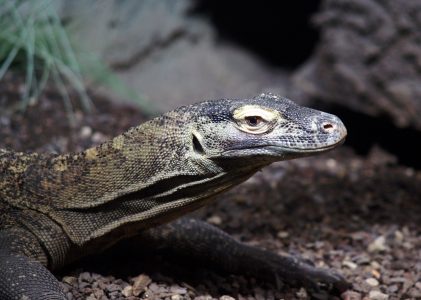
When we think of ancient reptiles, we usually picture dinosaurs. But while they ruled the roost, many other kinds of reptiles lived on the planet together with dinosaurs.
Reptiles like the Komodo dragon.
The largest lizard in the world today, the Komodo dragon looks pretty much like those that competed with dinosaurs. The fossil record of very similar related lizards shows very similar looking reptiles lived in Australia some 100 million years ago (possible munching on the aforementioned early platypuses).
6. Purple Frog
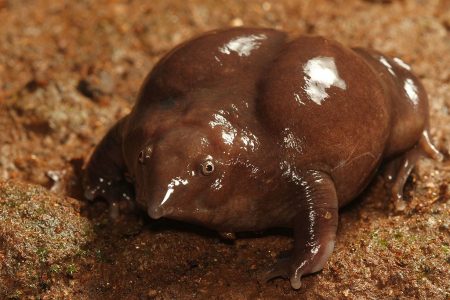
The purple frog is a bizarre amphibian living in the jungles of coastal southwestern India. It looks like nothing like most other frogs — but that’s for a good reason.
This little weirdo diverged from other primitive frogs some 100 million years ago. It hasn’t felt the need to change much since then.
And really, why would it? It might be ugly and blobby, but it lives most of its life underground, so who’s to judge?
We can just imagine one of them poking its strange head out of the ground and wondering where all the dinosaurs went.
7. Nautilus
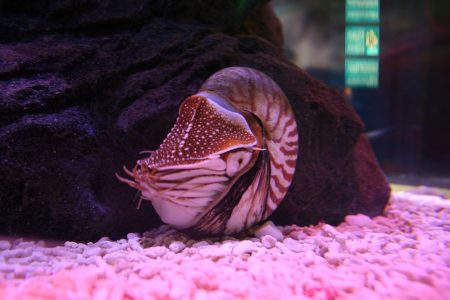
Once open a time, a group of cephalopods called nautiloids dominated the oceans. In Earth’s primitive waters, these shelled creatures loosely related to the octopuses dominated the food chain.
Today, they’re gone — all except one. The small nautilus lives on and has remained virtually unchanged for 500 million years.
If you want to know what life looked like on ancient Earth, you can’t get much more ancient than this.
8. Coelacanth
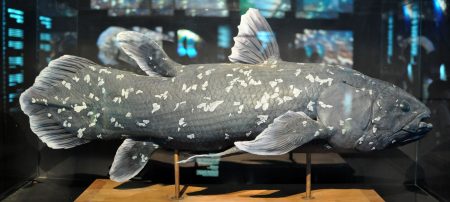
The coelacanth is a true survivor. For the longest time, researchers considered these large fish to have gone extinct 65 million years ago, around the same time as dinosaurs, after being around for about 350 million years.
Then, in 1938, they found a coelacanth swimming off the coast of South Africa. Just in case you don’t understand how insane that is, imagine seeing a T. Rex walking down the street — that’s about the same thing.
Nonetheless, the coelacanth lives. And it looks just like it did 400 million years ago.
9. Ginkgo Tree
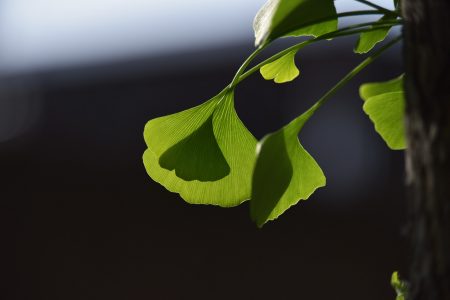
It’s not just animals that lived on ancient Earth. Trees were around back then, too, and some of them looked like the ginkgo tree.
The ginkgo tree is the last surviving member of its family, which appeared some 290 million years ago. Yet, already back then, the trees looked very much like the modern ginkgo.
Then, the Ginkgo genus of trees showed up 170 million years ago, and it wouldn’t have none of this “changing with the times” garbage. The gingko tree figured it looked perfectly good as it is, and that’s how it remains to this day.
10. Cockroach
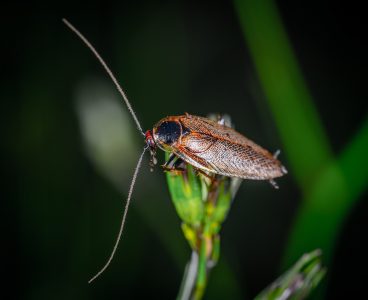
Cockroaches — you know them, you hate them. They say cockroaches will inherit the land, but are they really inheriting it when they’re its original owners?
Animal life on land has existed for about 390 million years. Fossil records show cockroaches have been around for about 350 million years.
They have varied in size and shape over all those millions of years, but in the end, a cockroach is a cockroach. They have skittered around, grossing other creatures out, for a longer time than we care to comprehend.
And, in all likelihood, they will continue to do so long after the last human has gone.