
- At least the astronauts are doing great, given the circumstances.
Stranded in Space sounds like the title of a classic science fiction movie. Honestly, we’re kind of surprised it’s not an actual thing.
For Barry Wilmore and Sunita Williams, however, this scenario has become regrettably real.
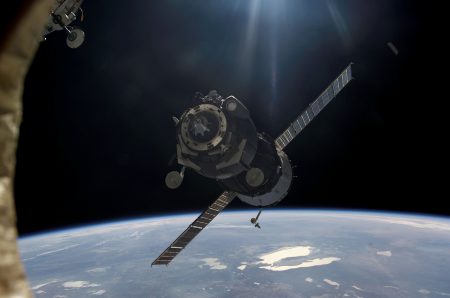
The two NASA astronauts traveled to the International Space Station (ISS) in the Boeing Starliner. With more than a decade in the making and a price tag above $1 billion, the reusable spacecraft is supposed to become NASA’s new primary vehicle for delivering astronauts to orbit.
And then it broke — right before getting to the ISS.
Luckily for Wilmore and Williams, they were able to dock with the space station. The bad part, though, is that the broken Starliner can’t guarantee they’ll get back to Earth safely.
So, they’re stuck on the ISS. Meanwhile, their originally week-long mission has now lasted for two months — and it may continue until the next year.
Sprung a Leak
The Starliner launched for its third test flight on June 5. This is the spacecraft’s first manned flight, and the honor of acting as guinea pigs fell on Wilmore and Williams.
However, the Starliner’s third mission had been plagued by problems for years. It was originally supposed to take place already in 2017, but various technical issues and other delays (such as insulation tape catching fire) pushed the launch back by years.
But hey, the thing finally worked and carried the spacefaring duo into orbit. The plan was for Wilmore and Williams to spend eight days on the ISS and return to terra firma on June 14.
As the Starliner approached the ISS, though, the crew radioed in: “Cape Canaveral, we have a problem.”
The spacecraft suddenly started leaking helium. That’s not particularly good news, since that helium provides pressure the Starliner’s maneuvering thrusters need to work.
Consequently, five of the craft’s 28 thrusters stopped working. That might not sound that bad on paper, but it’s more or less comparable to your car blowing a tire.
Sure, you might still be able to limp a block or two to a garage. But you sure aren’t doing a road trip from orbit back to the ground.
Fortunately, the incident didn’t spiral into an immediate nightmare scenario. The remaining thrusters gave the Starliner enough maneuverability to hook up with the ISS.
And that’s where it’s stayed since.
Welcome to the Crew
Wilmore and Williams have spent the past two months on the space station. While their mission is running seriously overtime, they luckily don’t have to worry about starving.
The two have joined the ISS’ existing crew, consisting of four American and three Russian spacefarers. They have sufficient food to keep everyone’s bellies full and enough work to keep their minds active.
That said, space is tight for now nine-person crew. The ISS only has six sleeping chambers, so three members have to sleep on the floor in improvised modules.
We assume they have a rotation system in place.
Meanwhile, Boeing’s engineers are trying to analyze what went wrong with the Starliner and whether it’s reparable. That’s a difficult job, though, since they can’t exactly crack the shuttle open and see what’s going on.
At the same time, Boeing and NASA are weighing their options for getting Wilmore and Williams back down to solid ground.
Many Options, All Difficult
Ideally, the two astronauts would return on the Starliner. However, trying to ride it back to Earth in its current condition may be too risky, as there’s no guarantee more thrusters won’t fail on the way down.
The idea of the ISS crew performing spacewalks to repair the damaged spacecraft was briefly floated, but that option has been largely dismissed at this point. The reason is rather simple — the astronauts aren’t master engineers and wouldn’t know what they’re supposed to do.
There’s also a third option; one that Boeing really doesn’t like. This one includes hiring the company’s rival SpaceX to launch their craft and pick up the stranded astronauts.
This sounds like the most feasible solution on paper. However, Wilmore’s and Williams’ spacesuits aren’t compatible with SpaceX’s systems, which can once again make entering Earth’s atmosphere dangerous.
We can only hope NASA and Boeing come up with some solution soon, because time is running out. The Starliner’s batteries last only 45 days and the astronauts can recharge them only once or twice before they die for good.
As a last resort, there is a spacecraft launch scheduled for September that’s supposed to bring four fresh crew members to the ISS. That flight could launch with only two people onboard, leaving the other seats free for Williams and Wilmore.
Yet, even this approach isn’t without its issues. Space missions are required to last six months, which would mean the two wouldn’t come back home until 2025.
They say no one can hear you scream in space. But we wonder if some extraterrestrial can hear Wilmore’s and Williams’ frustrated groans.