
- These are the things that keep sailors awake at night.
A calm ocean at sunset is one of the most beautiful sights in the world. But under that serene surface lies an often terrifying entity.
Oceans are home to bizarre creatures and unexplained mysteries. There are also plenty of weird, creepy, or straight-up horrifying phenomena.
Here are eight things that oceans might throw at you, either on the surface, beneath the waves, or on the shore.
9) Striped Icebergs
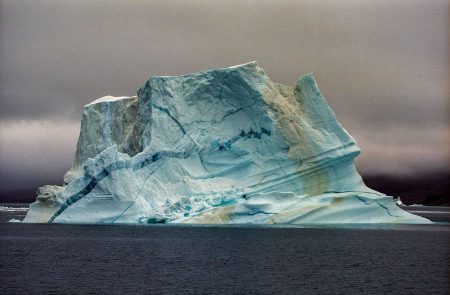
We often think of icebergs as being bright white or translucent blue. But they can also sport colorful stripes that would put a zebra to shame.
Striped icebergs are born when a part of the berg’s surface melts and then re-freezes. This cycle traps dirt, metals, and other particles in the translucent ice.
As the melt/freeze process repeats over and over, old icebergs can end up shockingly colorful. The stripes can range from near pitch black to bright green or rusty red.
8) Pyrosomes
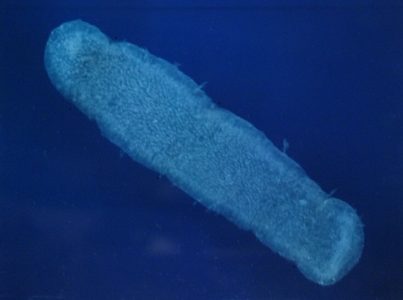
Pyrosomes are one of those things you might not want to run into while diving in the open ocean. It’s not that they’re dangerous — they’re just incredibly creepy.
These slimy, free-floating things look like a single organism, but they’re in fact colonies formed by thousands upon thousands of individual zooids. The largest observed pyrosome colonies have been 60 feet long, and there may be even bigger ones out there.
7) Denmark Strait Overflow
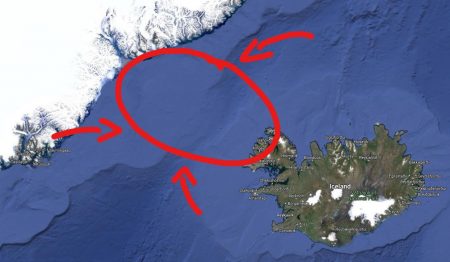
The Denmark Strait overflow is technically the world’s biggest waterfall. It will never have that title, though, because it’s underwater.
Warm and cold currents crash into each other in the Denmark Strait between Iceland and Greenland, forming an enormously strong downward-angled water flow. The cold water plunges 2.2 miles into the Atlantic depths before the current stops.
Awesome as it might be to see the underwater waterfall (they are often visible), you really don’t want to go anywhere close to the overflow. The current and pressure are so strong that they would quickly crush a person to death.
6) Brinicles
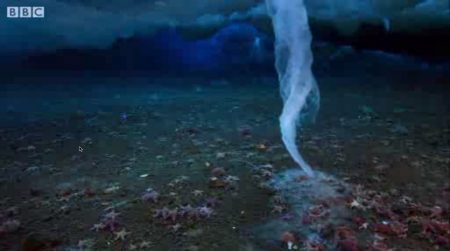
A brinicle is a bizarre, downwards-growing icicle that reaches deep into the water from the originating surface ice sheet. They’re formed when a plume of descending, incredibly cold brine begins to freeze ocean water around it.
Brinicles are also called ice stalactites or “fingers of death.” That’s because they’re terrible news for anything crawling beneath them.
If the brinicle reaches the bottom, the plume of freezing brine spreads across the ocean floor, freezing every crab, starfish, and other creature it flows over.
5) Maelstrom
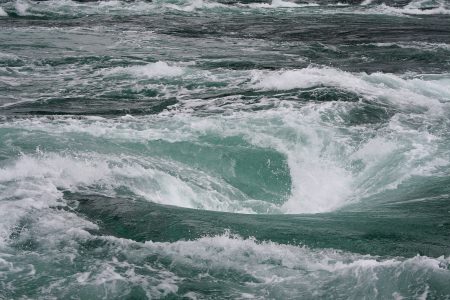
You might think giant oceanic whirlpools are restricted to pirate tales and fantasy stories. But maelstroms are terrifyingly real.
These enormous whirlpools form when two ocean currents traveling in opposite directions meet. The water may start flowing in circles, creating a powerful current.
Some maelstroms may be strong enough to suck things down from the surface. Yet, even weaker ones will certainly pull anything diving into them down into the depths.
4) Globsters
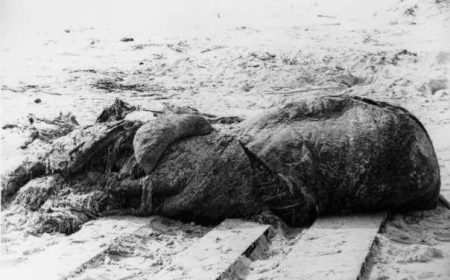
Globsters are stinking, hairy-looking masses of… Stuff that sometimes wash up on beaches around the world. For a long time, people assumed these shapeless, unidentifiable piles of meat were carcasses of unknown sea monsters.
Well, they got the carcass part right. Globsters are usually dead whales or large sharks that are so rotten and decomposed that it’s hard to say what the reeking blob originally was.
You can’t really blame anyone for thinking the disgusting, stringy mass came from an enormous octopus or some even more bizarre sea creature.
3) Red Tide

The Red Tide is a very beautiful sight — a bright red or orange wave washing in from the open ocean. If you spot one, though, you should get as far from the shore as you can.
Red tides are formed by colonies of incredibly toxic algae drifting ashore. The crimson tide is likely to leave all but the hardiest sea life dead in its wake.
In fact, the algae can be so toxic that they make the surrounding air dangerous to breathe. That’s why you should get off the beach if the water starts looking like it’s rusty.
2) The Bloop
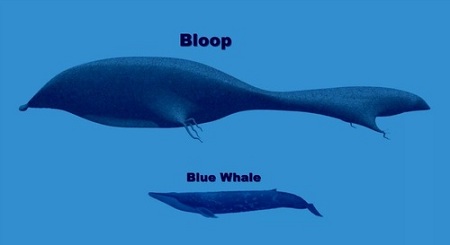
In 1997, undersea microphones operated by the NOAA recorded a bizarre sound. It was an incredibly loud, rising rumble that, when sped up multiple times, sounds like a bubble surfacing.
The thing is, the sound’s profile kind of resembles that of one made by an animal. But to make a sound this loud, the beast would have to be 250 feet long — at the smallest.
In the end, however, it turns out there’s no horrendously-sized monster lurking in the depths. Later research has all but confirmed that the Bloop was just the noise of enormous ice masses scraping the ocean floor.
Or that’s what they want you to think.
1) Rogue Waves
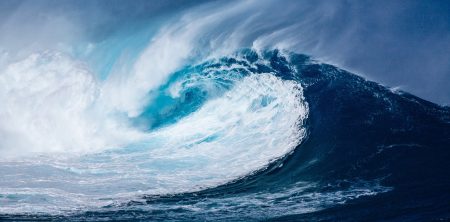
Picture yourself as a sailor, standing on the deck of a ship traversing a calm sea out in the open ocean. All of a sudden, the most massive wave you’ve ever seen rises up to the skies, rips your ship to shreds, and dooms you to Davy Jones’ Locker.
Congratulations — your ship just ran afoul of a rogue wave.
Rogue waves are enormous waves up to 80 feet tall that occur in the middle of the sea seemingly for no reason. Despite decades of research, nobody has any idea why these things suddenly appear.
The best guess is that multiple small waves begin coalescing into a larger one until they reach titanic proportions. Or maybe they’re caused by the Bloop taking a peek at what’s going on at the surface.