
- It’s pretty amazing what kinds of weird creatures people are ready to believe in.
There are many amazing and bizarre animals out there in the wild. Many creatures are strange as they are, and things can get even weirder if they produce a hybrid.
But occasionally, news breaks of animals that seem just too weird to be real. That’s often because they are.
We’ve seen a lot of hoaxes over the years about many kinds of beasts, from giant fish to supposed dragons and mermaids. In some cases, it’s hard to decide which is more incredible — that such an animal could live somewhere or that people actually believed it does.
Here are six animal hoaxes, both old and recent, that fooled a surprising number of people.
1. Gellisoni Fabricata
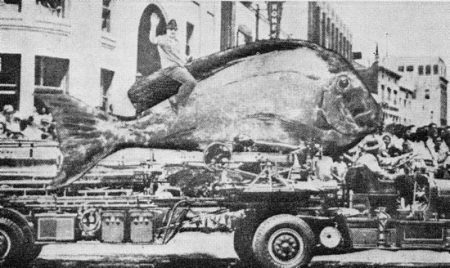
In 1939, the Honolulu Star-Bulletin newspaper in Hawaii reported of a peculiar visitor. Famed Norwegian scientist Dr. Thorkel Gellison had arrived and he had brought with him Gellisoni fabricata — the largest known fish in the world.
The news report detailed how Gellison took to the sea armed only with dry bait (a copy of the Congressional Record) and regular fishing line. The fish took the bait and Gellison battled it all through the following night.
Finally, he pulled the fish onboard, at which point it died. Reportedly, the cause of death was “a broken heart” due to having been captured.
Gellison paraded the fish through Honolulu, riding on the enormous creature’s back. As he left, he bid farewell to the onlookers with the traditional Norwegian greeting of “Lirpa loof!”
Yes, the story was published on April 1.
2. Smaugia Volans
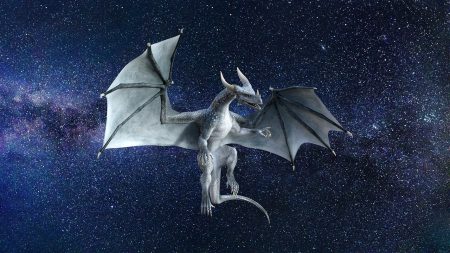
A group of researchers from the University of Southern North Dakota announced a fantastic find in 1999 in the journal Nature. They had discovered the skeleton of a dinosaur previously unknown to science.
This dinosaur was wholly unique. To begin with, it had six limbs.
The third pair of limbs wasn’t legs, though, but a pair of enormous wings that the researchers posited would’ve allowed the animal to fly. Its ribs also showcased strange burn marks associated with repeated exposure to high heat.
Due to its draconic features, the creature was named Smaugia volans, after the famous dragon from The Hobbit. Of course, it never existed and the whole thing was yet another April Fools joke — but it sure caught the attention of fantasy nerds.
3. Archaeoraptor
Another renowned scientific publication announced a remarkable discovery in 1999. This one, however, wasn’t an April Fools joke.
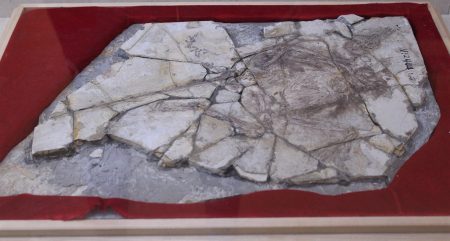
National Geographic printed an article that year that proclaimed the discovery of the “missing link” between birds and dinosaurs. Dubbed Archaeoraptor, the creature’s anatomy clearly showed that birds evolved from dinosaurs.
Sadly for National Geographic, they had been had. Archaeoraptor’s fossil was cobbled together from various other dinosaurs by Chinese scammers.
National Geographic later published a confession that they’d fallen for a con. Ironically, actual scientists have later found genuine fossils displaying many of the supposed Archaeoraptor’s features.
4. Pacific Northwest Tree Octopus
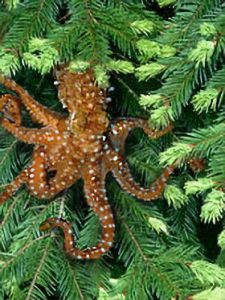
In 1998, a website appeared on the then-new and wonderful internet detailing the life of the Pacific Northeast tree octopus. This creature, known to science as Octopus paxarbolis, is remarkable for its ability to live on land.
Although it spawns in water, the octopus regularly climbs trees in search of food and safety. Up on the branches, it has a better chance to avoid its major predators, such as large cats and the Sasquatch.
As you’ve surely guessed, this octopus doesn’t exist. The website was a practical joke created by a humor writer going by the nickname Lyle Zapato.
Still, a surprising number of people believed the story — it was on the internet so it had to be true! Funnily enough, this hoax has been used to study the spread of hoaxes and fake news on the early internet.
Not much has changed since then, apparently.
5. Ompax Spatuloides
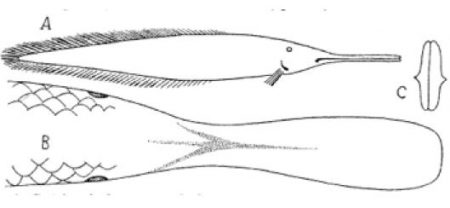
In 1872, Karl Theodore Staiger, the director of the Brisbane Museum in Australia, was attending a dinner party when the main dish left him flabbergasted. The fish served at the table was unlike anything he’d ever seen.
It had a wide body and a long tail without clear tail fins. Yet, the most incredible part was its face — the fish had a long, duck-like bill.
Staiger made a sketch of the fish and sent it to French biologist Francis de Laporte de Castelnau. Castelnau named this unique species Ompax spatuloides.
The fish was supposedly very rare, so no one questioned why it appeared on lists of Australian fish until the 1920s. It wasn’t until 1930 that one of the original pranksters admitted that the Ompax was cobbled together from the pieces of an ell, mullet, lungfish, and platypus.
It’s kind of impressive that they managed to make their hoax edible, though.
6. Feejee Mermaid
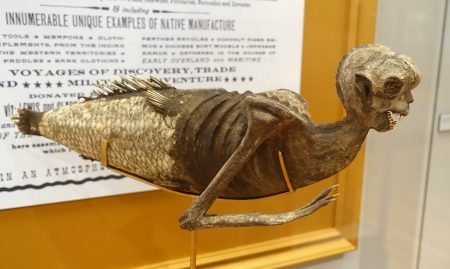
Feejee mermaids (also known as Fiji mermaids) are a collection of bizarre animals supposedly caught from the deep sea. They all feature a small, mean-looking humanoid head and torso and a fish-like lower body.
These creatures have been known since at least the early 1800s. They’ve been displayed at various shows and museums, including P.T. Barnum’s Museum.
Yet, none of them have ever been real. Many of them are sewn together from various animal components, like monkeys and fish, while others contain no flesh at all and are made of paper mâché.
Although no one actually believes they’re real, the Feejee mermaids keep cropping up. For example, scans of a recent specimen showed it was a macabre conglomeration of monkey, fish, and reptile body parts.