
- See how well you know the Emerald Isle with these facts.
Happy St. Patrick’s Day, everybody! We hope you’re wearing something green.
Outside of whiskey, St. Paddy’s is probably one of the most famous exports from Ireland. But there’s more to the Emerald Isle than alcohol and celebration that resulted in rivers dyed green.
Here are six facts about Ireland to celebrate this most Irish of days. Some of them you may even not have heard of before.
1) There Are No Snakes in Ireland — And There Never Were
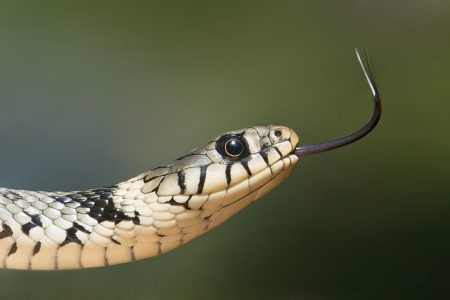
It’s St. Patrick’s Day, so we should probably start with the legend of him banishing all snakes from Ireland. And the story is partly true — Ireland is completely snake-free.
At least, there are no native snake species on the Emerald Isle. But that has nothing to do with St. Paddy, or any other saint for that matter.
Simply put, snakes don’t like the Irish climate. As long as Ireland has existed as we know it, there hasn’t been a single snake slithering on its.
As a result, St. Patrick couldn’t have thrown Irish snakes away because there never were any. Instead, the snakes of the legend are actually an allegory for the native pagan faith that disappeared after St. Paddy brought Christianity to the island.
But while there may not be any snakes, there is a small slow worm population on Ireland. This legless reptile resembles a snake, but is actually a lizard that got introduced to the island sometime in the ‘70s.
2) Halloween Originated in Ireland
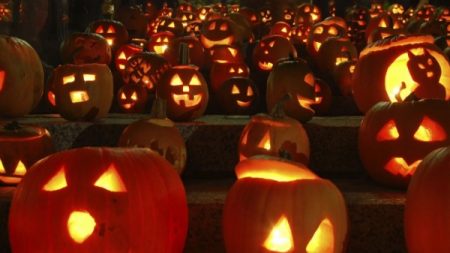
While St. Patrick may have rid Ireland of its pagan faith, he couldn’t get rid of every ancient tradition. Case in point — Halloween.
Halloween is based on the ancient Celtic festival of Samhain, which has been celebrated potentially for over 2,000 years. The festival originally celebrated the conclusion of the harvest season and the beginning of winter.
Irish mythology states that on Samhain, the boundary between our reality and the world of the spirits was at its thinnest. So, when Christianity conflated the festival day with All Hallows’ Day, it made for a prime time for all manner of spooky shenanigans.
Fast forward a few hundred years, and we get the modern Halloween.
3) The Shamrock is Not Ireland’s National Symbol
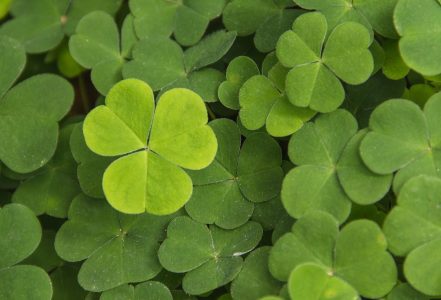
If somebody asked you to think of something related to Ireland, you might picture the shamrock. And while it is strongly associated with St. Patrick, who used it to illustrate the Holy Trinity, it’s not actually any kind of a national symbol in Ireland.
Instead, the actual official Irish national symbol is the harp. And for a good reason — the instrument was paramount to Irish society all the way until the end of the 19th century.
Harpists in medieval Ireland enjoyed a high social status. Even after the medieval societal order declined, it remained a proud emblem of Irish national identity.
The 15th-century harp that the official national symbol is based on is today housed in the Trinity College Library in Dublin. You can go see it, if you’d like.
4) The Irish Invented the Submarine
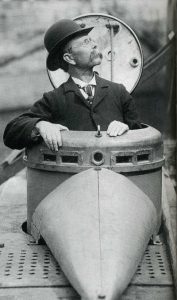
Ireland is an island nation, so you would need a boat (or a plane) if you’d like to visit anywhere else in the world. From that perspective, it’s not that surprising that the Irish invented the submarine.
The inventor of the submerged watercraft was the engineer John Philip Holland, or Seán Pilib Ó Maolchalann by his Irish name. Born in Liscannor in County Clare in 1841, Holland moved to the United States in 1873.
He submitted the first designs of a submarine to the U.S. Navy in 1875, but these early drafts were quickly rejected. However, Holland continued to work on his designs until finally in 1900, the U.S. Navy commissioned USS Holland, the first officially commissioned submarine.
Holland ended up working on submersibles for 56 years until he died at age 73 in 1914. Today, there are several buildings and monuments commemorating him on the Emerald Isle.
5) The Word “Boycott” Comes from Ireland
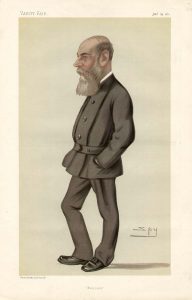
Boycotts are a popular method to protest the actions, views, or statements by individuals and organizations. And like the submarine, the Irish invented it.
The protest method is named after Captain Charles Boycott. He was an English land agent for a landlord living in County Mayo, Ireland.
In 1880, the Emerald Isle experienced poor harvests all around the country. The landlord, Lord Erne, lowered his tenants’ rents by 10%, but the beleaguered farmers demanded a reduction by a whole quarter.
Lord Erne refused their demands. In retaliation, local leaders in Ireland decided they wanted nothing to do with Boycott when he came around to manage the estates — and that’s just what they did.
Farm workers and housekeepers refused to work for him, local businesses wouldn’t buy or sell anything to him, and the mailman wouldn’t even spit on his letters. The protest caught worldwide attention, and newspapers in the U.S. and England soon started reporting of this newfangled thing they called a “boycott.”
6) Being Drunk in Public is a Criminal Offense in Ireland
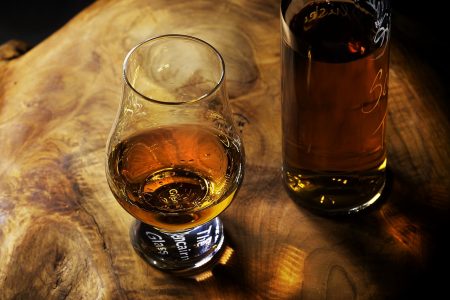
There’s a persistent stereotype that the Irish are heavy drinkers. That is partially true — Ireland has the seventh highest alcohol consumption per capita in the world.
But while they might like their whiskey and Guinness, you better keep it in the pub. Otherwise, you might get unwanted attention from Irish police officers.
According to Irish law, it’s a criminal offence to “be so drunk in a public place that you could reasonably be assumed to be a danger to yourself or to anyone around you.” If caught, you can get fined up to 500 euros.
Even drinking alcohol is public is an offense that might get your whiskey confiscated. So, if you’re celebrating St. Patrick’s Day in Ireland, don’t take it to the streets.