
- Professional singing requires good genes and lots of practice...
If you’ve ever thought about becoming a professional singer (or just a sensation at your local karaoke bar), you’ve likely wondered whether you had enough natural talent to sustain you. It seems like some people are “natural” singers, able to carry a tune from a young age, while others are naturally tone deaf (and often, quite permanently).
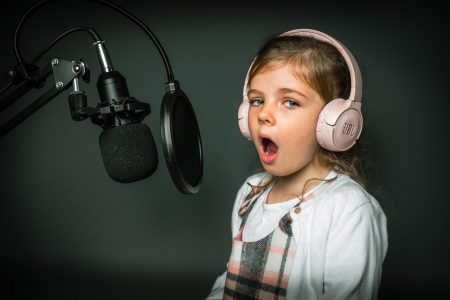
On the other hand, most professional singers train and practice regularly, conditioning their voices and improving their potential.
So is high-quality singing the product of genetics? Or does it take hard work to succeed? And if you don’t have a natural predisposition for singing, is it possible to become a better singer?
The Case for Natural Talent
There are some pieces of evidence and good arguments for the case that singing is a result of natural talent.
For example:
- Vocal shape and development. The shape, size, flexibility, and development of your vocal cords are attributable to genetic factors. Some people have naturally longer and more flexible vocal cords than others, simply because of their DNA; this is an inherent physical advantage that gives some people greater range and control from their first day of life. However, the impact of this is somewhat limited; having long, flexible vocal cords doesn’t automatically make you a good singer and it’s possible to improve as a singer even with “awful” vocal cords.
- Genetic predisposition. There are other genetic factors that could set some people up for greater success in the singing world. For example, there’s some scientific evidence that certain genes may predispose a person to have an easier time learning absolute pitch; in other words, certain genes may make it easier for you to identify different notes by ear.
- Natural affinity and environment. It’s no secret that some people are naturally better learners than others, and they may learn some things more easily than others. For example, you might know someone who learned math quicker than the other students in your class. For this reason, some people naturally have an easier time learning how to sing.
- Personal interest and dedication. Similarly, some people are naturally predisposed to have a personal interest in singing – and will likely be much more dedicated to practicing consistently.
The Case for Hard Work and Practice
However, it’s also clear that hard work plays a role in determining your abilities as a singer.
- Evidence for “use it or lose it.” Studies suggest that children involved in choir practice, singing classes, or other environments that encourage them to sing regularly have better affinity for singing than their peers. However, by college, if these students no longer continue their practice, they revert back to baseline. This suggests that singing ability is, in large part, a direct result of the amount of time you spend practicing – and if you stop practicing, your singing abilities will eventually decline.
- The ease of basic practice. We also need to acknowledge how easy and straightforward it is to become a better singer through practice alone. The mere act of singing regularly can loosen up your voice, give you more control, and help you develop a keener ear for music. Even with short sessions, repeated consistently, most people can eventually fine-tune their singing skills.
- Anecdotal reports from talented singers. There are also many examples of excellent singers who showed little to no natural talent for singing. Even superstars like Ed Sheeran have early recordings suggesting their singing voice wasn’t always good. This doesn’t eliminate the possibility that some people are naturally talented singers, but it does demonstrate that you don’t have to be naturally talented if you want to become a great singer eventually.
Genetics vs. Experience: The Bottom Line
Here’s the simple conclusion: while genes and other factors can make you a “naturally” better singer, natural singing ability is only a small part of a much bigger equation. On some level, it doesn’t matter how naturally talented you are – everyone has the potential to improve their singing ability. And having some natural talent doesn’t mean you can get by without working hard.
Tips for Becoming a Better Singer
If you’re interested in becoming a better singer, there are some important steps you’ll need to take:
- Try to forget the past. Just because you’ve historically struggled with singing doesn’t mean you always will.
- Be consistent. Consistency is key. Make time to practice every day.
- Set achievable goals. Goals provide direction and motivation; set achievable, yet challenging goals to keep improving.
- Learn from a variety of sources. There are many free and inexpensive resources you can tap to learn more about singing. Take advantage of all the resources you can.
Singing is a skill like any other. With ample discipline and focus, you can polish your abilities and eventually become a master.