
- No matter when or where you are, some things will never change.
Oh, to live in the simpler days of the past! Life was so much more pleasant then without all the everyday little annoyances and excesses of modern society.
Or that’s what you might think. But the truth is, many of the things and issues we consider endemic to modern society are much, much older than you realize.
Here is a collection of six phenomena people deal with today, just like they did ages ago.
1) Irritating Advertisements

Try to watch something on TV or YouTube, there’s ads. Open a newspaper or magazine, more ads. Go check out your favorite website — that’s right, more ads.
But advertisements creeping into ever facet of our lives is hardly modern. For example, newspapers and books in Victorian England were chock-full of ads, not to mention all the leaflets and billboards covering walls everywhere.
Advertising is even older than that, though. The Acta Diurna publication, established by Julius Caesar and considered to be one of the first newspapers, already had ads in it.
“For rent … second story apartments fit for King and house,” read one such ad. And we can promise you, no Roman city apartment was fit for a king.
That’s the good thing about modern ads, at least we have laws and standards for it. Before that, you could say pretty much whatever you wanted about your product — until an angry mob showed up at your door.
2) Overpaid Athletes
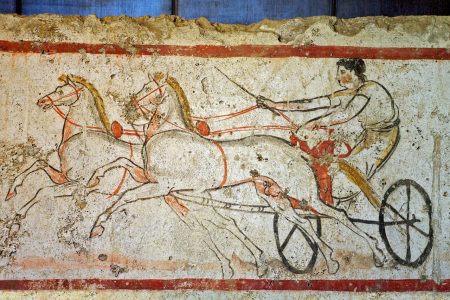
Now, we’re not at all trying to discredit the hard work and dedication that goes into being a professional athlete. But ball game stars, race car drivers, and so on get paid absolutely filthy sums of money.
But that’s not new, not by a long shot. Already the winners of the original Greek Olympic games got a lifelong pension for bringing glory to their home polis.
As such, they didn’t really have to worry about running out of money, and being a famous athlete also allowed them to mingle with rich patrons. But nobody can beat chariot racer Gaius Appuleius Diocles.
Over his 24-year racing career, Diocles amassed a fortune of nearly 36 million Roman sesterces. Converted to modern U.S. dollars, his net worth was around $15 billion.
Historians aren’t sure if Diocles was a free man or a slave, and as such he may not have been able to keep all his winnings for himself. But even then, he is the single highest-paid athlete of human history.
3) Sponsorship Deals

Speaking of overpaid athletes, many of them make a good deal of their income from sponsorship deals. Not only that, almost all YouTubers these days start their videos with: “This video is sponsored by…”
But people in the public eye being in the pocket of big companies is about as old as society itself. For an example, we once again can hop back to the good old Roman Empire.
Historians have found evidence that both businesses and rich individuals paid gladiators to put in a good word for them for the crowd. Imagine what that must’ve been like.
“Hercules Brutallus, it was a tough fight. You lost an arm and an eye, but finally managed to kill your opponent. Is there anything you’d like to say?”
“Remember to try the Spicy Orgy Sandwich, not available at Burger Caesar.”
4) Fast Food

Alright, Burger Caesar wasn’t an actual Roman fast food restaurant. But the Romans absolutely had fast food.
In fact, a good portion of the Roman population relied entirely on fast food. Many citizens and residents of Rome lived in tiny apartments that had no space for cooking whatsoever.
So, their only option to get a hot meal was to visit a thermopolium — or “a place where hot foods are sold.” These restaurants lined Roman streets and served warm food that Romans could eat on the way to work.
But instead of burgers or tacos, thermopolia served bread, nuts, porridge, cooked vegetables, and sausages. Vendors also operated similar food stalls in ancient China and the Middle East.
5) Selfies

Well surely selfies are a modern phenomenon. Before digital cameras, teenagers simply couldn’t go around narcissistically snapping photos of themselves at any given moment… Right?
Nope. Selfies are about as old as cameras.
The oldest American selfie dates back to 1839. A man called Robert Cornelius set up an old-timey camera and patiently stood in front of it for roughly 10-minutes to allow for proper exposure.
We also know of a mirror selfie that Russia’s Grand Duchess Anastasia Nikolaevna shot in 1913. Yes, it’s that Anastasia that they’ve made so many movies of.
She was 13 years old at the time she took the selfie. And like any modern teenager, she looks appropriately sullen in the picture (just see the entry picture).
6) Stupid Social Media Posts

People didn’t need Facebook or Twitter to stir drama among complete strangers. We’ve been letting everyone who didn’t ask know our inane opinions for thousands of years.
For example, in the 16th century in what is today the Netherlands, youths had something called “alba amicorum” — or “friends’ books.” If that sounds like Facebook, that’s because that’s basically what it was.
Instead of an internet service, alba amicorum was an actual book that a group of friends regularly passed around amongst each other. On their turn, every member of the group added gossip, news, opinions, jokes, and whatever else they might think of to the book.
We can also, once again, go back to ancient Rome for another example. The walls of Roman cities were filled with messages that aren’t really all that different from Twitter posts.
“Successus, a weaver, loves the innkeeper’s slave girl named Iris. She, however, does not love him. His rival wrote this,” one graffiti from Pompeii reads.
The unknown writer even ends the message with a hashtag-worthy, “Bye, loser!”
And what do you know, the message got a reply. Underneath is scrawled: “Envious one, why do you get in the way? Submit to a handsomer man who is being treated very wrongly and is darn good-looking.”
Yep, just like Twitter.