
- ‘Amoeba’ is a funny word, but there’s nothing funny about finding these ones in your tap water
We in the Western world often take running water for granted. But if you look at the big picture, being able to get a drinkable glass of water from a tap in your own home is really a luxury.
In many parts of the world the water just isn’t safe to drink – if you have running water at all. Making a 10-mile roundtrip to a well at least once a day really makes you appreciate clean water.
In some parts of the U.S. people have also gotten an unfortunate taste of not being able to trust tap water. The most famous case is Flint, Michigan, where the water is still iffy at best, and has been since 2014.
Last week, eight cities in Texas also got to enjoy the questionable pleasures of unsafe tap water. This time it wasn’t because of lead or other chemical contaminants, but a charming little fellow who is after another resource we value so much – our brains.
This fellow is known as Naegleria fowleri. On Friday, September 25, the Texas Commission on Environmental Quality (TCEQ) issued a water advisory to residents served by the Brazosport Water Authority.
The advisory was simple, but terrifying. Don’t use tap water for anything apart from flushing the toilet, or you might end up with someone chewing on your brain tissue.
Zombies? In my tap water? It’s more likely than you think.
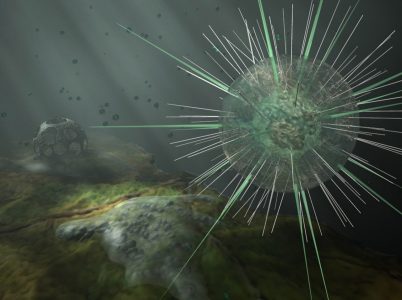
The Foul Fowleri
Naegleria fowleri is an amoeba, a free-living microscopic single cell organism. According to U.S. Centers for Disease Control and Prevention, it’s also known as the “brain-eating amoeba”.
Those are both long names. Let’s call this thing Naggy for the purposes of this article.
Naggy might sound like something out of a B-class scifi movie, but believe us, it is disturbingly real. And just like it reads right on the label, Naggy wants to eat your brain.
It is usually found in warm freshwater, such as lakes, rivers, and hot springs. There, it will swim around until some poor soul decides to jump into the water.
Naggy usually enters the human body through the nose. Once in, it will start its journey towards the brain.
If reading this has made you wonder whether one or more Naggies might be in your brain, ask yourself this question: have you lapsed into a fatal coma? If not, good news, you don’t have Naggy.
In the brain, Naggy causes a condition known as primary amebic meningoencephalitis, or PAM. PAM has two stages, with the first one beginning one to nine days after catching the amoeba.
In this stage, you can expect massive headaches, nausea, vomiting and fever. Stage two kicks in shortly after with a stiff neck, seizures, hallucinations, altered mental states, and coma.
“PAM is difficult to detect because the disease progresses rapidly so that diagnosis is usually made after death,” the CDC says.
On average, after five days from the initial symptoms, the victim will usually be dead. Out of 145 people infected with Naggy in the U.S. between 1962 and 2018, only four survived.
Tragic, but perhaps it’s a small mercy considering what the amoeba does to you.
A Sad Wake-up Call
There is a small silver lining about all this for the Texans whose water supply caught a case of Naggy. According to the CDC, you can’t become infected by drinking the contaminated water.
Showering, bathing, or any other activity where the water might get into your nose on the other hand are terrible ideas. Sadly, we found that out the hard way when Naggy was first detected in Texas.
Josiah McIntyre, a 6-year-old boy from Lake Jackson, died earlier this month after contracting the amoeba. Official investigations found that he’d likely caught the infection after playing at a local splash pad.
As a result of the investigation, the TCEQ issued the do-not-use water warning. According to the authority, it would need three days to clear the water system of Naggy contamination, wrote CNN.
By now, those three days have passed. According to a TCEQ tweet earlier today, all affected areas have lifted the do-not-use warning, but in Lake Jackson a Boil Water notice is still in effect.
Water is vital to us all, and this sad case demonstrates just how fragile our water systems really are. We’re not saying that you shouldn’t trust your tap water. In most of the U.S., it is perfectly safe.
But what we are saying is that maybe we should be more appreciative of how good we actually have it with clean running water.
Have you ever had to deal with contaminated water? Got any stories to share about water warnings in your city? Share them with us in the comments!