
- Are you familiar with these strange kitties?
Fluffy hair, whiskers, claws, a heaping helping of attitude, and a purring engine in the chest cavity… That’s what makes a cat.
Well, an average housecat, anyway. But the world of felines is wild and fascinating, from lions to ligers and even stranger creatures.
Here are nine domestic cat breeds and wild cat species that are certainly not your normal feline friends.
9. Sand Cat
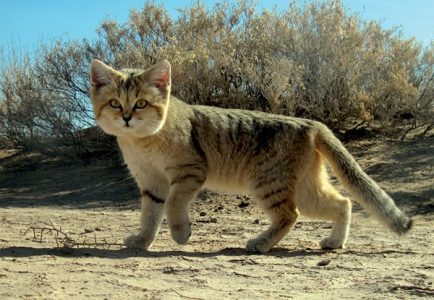
Let’s start with something utterly adorable. Sand cats are essentially eternal kittens.
These wild cats live in the deserts of Africa, Central Asia, and the Middle East. They’re fairly small, with their body length reaching only about 20 inches (although you can almost double that if you count their long tails).
Sand cats grow old just like every creature, but they retain their kitten-like appearance for almost their entire lives. It’s all thanks to their large heads and fuzzy fur, which actually helps shield them from harsh desert conditions.
8. Selkirk Rex
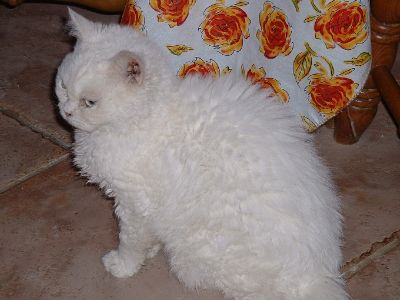
The Selkirk Rex looks like someone it went through a round in the washing machine. Don’t worry — that curly look is natural and not a result of taking a cat nap in the laundry basket.
The curliness of the Selkirk Rex’s fur changes as it ages. After being born, they initially lose the curls but they reappear around their first birthday.
Sometimes they don’t, though. Some Selkirk Rexes never get their curls back for some reason.
7. Flat-headed Cat
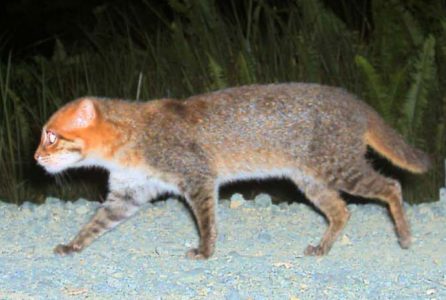
It’s a generally accepted fact that (most) cats hate water. Not the flat-headed cat, though — these wild felines are semi-aquatic.
Apart from their skull shape which makes them look like they ran into a wall, flat-headed cats’ fondness of water makes them unusual. They live near (and often in) bodies of fresh water in the jungles of Southeast Asia where they catch fish for their food.
Sadly, these wet kitties are endangered due to habitat loss.
6. Cornish Rex
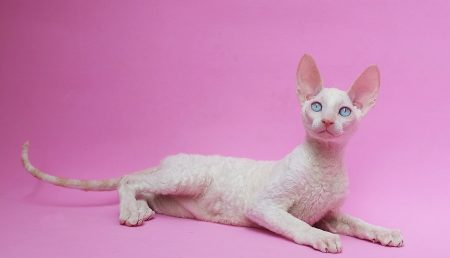
Looking at the Cornish Rex’s face, you might think it was glued together from pieces of other cats. This breed is best known for their disproportionately huge ears and large eyes.
Another distinctive feature of the Cornish Rex is their fur. Unlike most other cats which have three layers of fur, these kitties have only the undercoat, called down.
The lack of the two top layers of fur has lead to a widespread belief that Cornish Rex’s are hypoallergenic. That’s a myth — they can trigger cat allergies like any other cat, so keep that in mind if you’re looking for a hypoallergenic cat.
5. Caracal
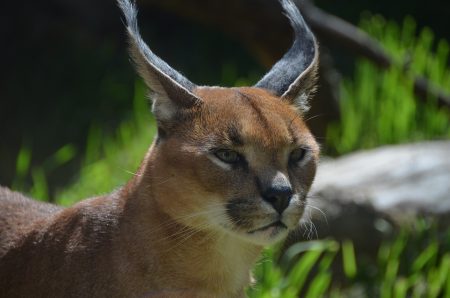
The caracal is a wild cat species whose habitat stretches from Africa to India. Its name, which comes Turkish, means “black ears” — and that name is accurate.
Although there are other wild cats that sport ear tufts, none are as majestic as the caracal’s.
The caracal is also a ridiculously acrobatic animal. These 20-inch-tall cats have been observed to leap 10 feet directly upward to snatch birds out of the air.
4. Serval
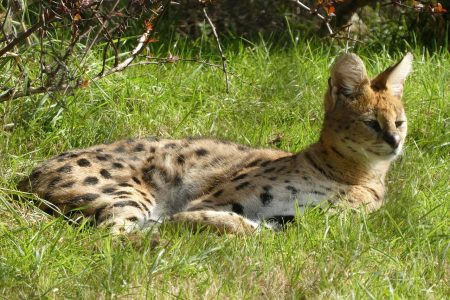
Take a picture of a normal cat, open it in a picture editor, and stretch it vertically by about half. You just might end up with something that look like the serval.
This wild cat is well-known for its lanky appearance, with its disproportionately long legs and huge ears. They need those adaptations to catch prey in the African grasslands where they live.
Like the caracal, the serval is quite the hunter. They can leap 10 feet forward and drop precisely on top of their unsuspecting prey.
3. Egyptian Mau
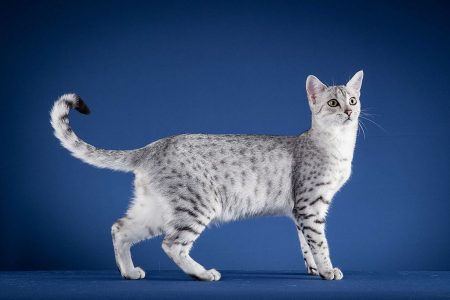
The Egyptian Mau is unusual for a number of reasons. They like playing in water, are faster than the average cat, and they’re also one of the few naturally spotted domestic cat breeds.
But perhaps the most fascinating part of the Mau is its history. The Mau is one of the oldest existing domestic cat breeds and is most likely the closest thing to the sacred kitties of ancient Egypt.
There’s just something knowing that you could pet a cat whose ancestors purred around the throne of King Tut.
2. Lykoi
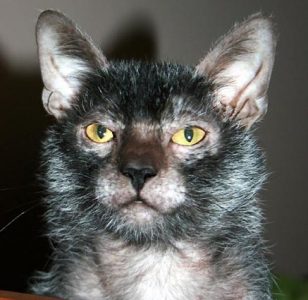
We wouldn’t blame if you thought a Lykoi cat was somehow sick. But that splotchy fur and grumpy expression just come naturally to these cats and are among their most attractive features.
The name Lykoi comes from Greek, where it means “wolf.” The breed received the name because they kind of look werewolves from a horror movie.
As a curious quirk, Lykoi may begin to grow a thicker fur as they get old instead of going even balder.
1. Elf Cat
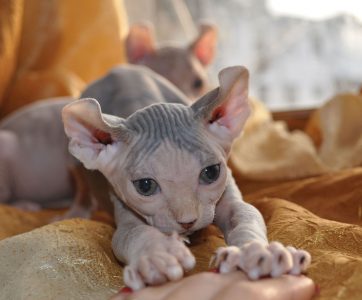
The elf cat is an experimental cat breed that’s only a couple of years old. It hasn’t been recognized by most cat associations as its own thing, but the cats do have distinguishing features.
First of all, as a Sphynx-based breed, elf cats are hairless. They also have distinctive, backwards-curling ears.
Looking at them, though, we can’t help wondering if “goblin cat” wouldn’t have been a more appropriate name.