
- Whistling? That’s a paddlin’. Keeping yourself clean? Oh, you better believe that’s a paddlin’.
We can all agree that crime is bad, right? If someone flaunts the laws of civil society, they should be punished appropriately.
But the thing is, the laws of civil society change all the time. Many things that we do daily during modern life used to be punishable criminal offenses.
Whether it’s due to the clothes you wear, the things you eat, or the time you’re out and about, most modern time travelers would likely get a fine — or worse. Here are nine completely normal things we do today that used to be illegal in the past.
1. Wearing a Swimsuit

Banning swimsuits might seem weird to you. What, were people expected to go skinny dipping?
Well, if you were a peasant swimming in a forest lake, probably. But on public beaches, people (and especially women) before the 1900s wore full-body woolen garments that covered the entire body.
Then women’s one-piece swimsuits came about and the moral guardians lost their minds. For instance, in 1919, the city of New York hired 20 nagging ladies to patrol public beaches, measure other women’s swimsuits, and slap fines on those with offensively indecent swimsuits (i.e., anything that left the arms bare).
Then the whole thing happened again post-WWII when the modern bikini was invented. Of course, swimsuits aren’t the only article of clothing that women didn’t use to be able to wear. For example, France officially repealed the ban on women wearing pants only in 2013.
2. Walking at Night
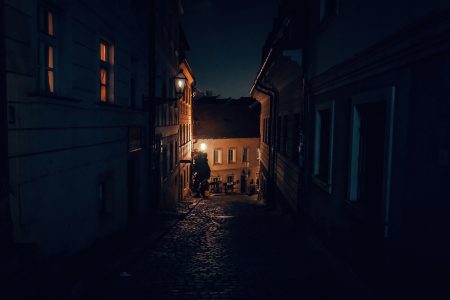
A late-night stroll through a park can be relaxing and calming — unless you lived in feudal Japan. Getting caught outside could get you arrested or even executed on the spot.
The shogunate of feudal Japan enacted strict curfews, with nobody (except the law-enforcing samurai) allowed to be on the streets after dark without a special pass from the government. And even with the nighttime pass, you could land yourself in a world of trouble if you didn’t stick to the approved roads.
The curfew was in place to prevent the peasantry from getting together at night to plot rebellion. Additionally, since you can’t do manual outdoor labor in the dark, obviously anyone going outside at night had something criminal on their mind.
3. Whistling

“Whistle while you work,” sang Snow White in the fairy tale’s Disney version. In reality, doing so would’ve likely seen her put in the stocks.
Whistling (especially after dark) was banned in many places around Medieval Europe, especially in France and England. The ban was the result of a belief that evil spirits could be summoned through whistling and/or that criminals used a secret whistling code to plot crimes.
As such, whistling was not allowed. Some of these superstitions persist to this day in folk beliefs stating that whistling after dark brings misfortune.
4. Dressing in Purple

At many times in history, illegal dressing wasn’t just about what you wear — it was also about the color of your clothes. Purple has traditionally been the color of royalty, as purple dyes were so exorbitantly expensive that only the wealthiest could afford them.
Then people figured out more affordable ways to dye cloth purple that even regular folk could afford. Naturally, that didn’t sit right with nobles, who banned anyone but themselves from wearing purple.
Through the ban, royalty aimed to stifle upward social mobility and keep the peasantry in their place. In some places (England, again) laws restricting garment color survived well past the Medieval period.
5. Drinking Coffee

Your morning cup of coffee has quite a controversial history. Depending on the time and place, drinking coffee could get you branded as a heretic or an instigator of rebellion.
Coffee was first drunk in the Muslim world in the early 16th century, and it was banned and unbanned several times as Islamic scholars debated whether the beverage was acceptable. Once coffee spread to Europe, it was initially frowned upon (sources disagree on whether it was officially banned) as a Muslim drink. Even today, Mormons and Seventh-Day Adventists officially shun coffee.
At other times, coffee was seen as a drink of the rebels due to coffee houses being fertile ground for subversive meetings. England, Prussia, and Sweden — among many others — have banned coffee at one point due to fear of caffeinated rebellions.
6. Eating Too Much

Overeating is not healthy in general, but in England, it was straight-up illegal for more than half a millennium. In 1336, King Edward III issued a new law that stated no meal could involve more than two courses.
The law partially aimed to curb the excesses of nobility, with their lavish feasts putting a serious strain on the economy. That said, it was also meant to prevent the peasantry from emulating the eating habits of their betters.
That said, there’s no evidence that this law was ever enforced and people kept eating just as much as before. Even then, it remained in English law books for 520 years until being repealed in 1856.
7. Kissing

Let’s face it, too much PDA is awkward. But in Puritan Colonial America, it was simply unacceptable.
In New Haven, Connecticut, kissing was plainly banned — if anyone could see you. Sure, a married couple could kiss each other in the privacy of their own home, but kissing (or showing affection in general) in public?
Unthinkable!
If a couple was caught engaging in PDA, they would be placed in the stocks and publicly ridiculed, on top of getting fined. That’ll teach them.
8. Celebrating Christmas

Kissing wasn’t the only thing the Puritans banned. They also made Christmas illegal.
You’d think the Puritans would be big on celebrating Jesus’ birthday, but they were everything but. Both in England and Colonial America, celebrating Christmas was banned as the Puritans viewed it as a frivolous pagan feast.
Of course, you were expected to commemorate the birth of Christ, but you would do so by sitting your butt in a church pew and keeping your mouth shut. The Christmas ban lasted less than 20 years in England but in America (especially New England), celebrating Christmas didn’t start catching on until well into the 19th century.
9. Bathing

You’d think that a horrible plague outbreak that kills half of everyone would get people to start paying attention to hygiene. Following the Black Death, however, it was the exact opposite.
Authorities, particularly the church, blamed excessive bathing for causing the plague epidemic. According to their view, bathing opened the pores which allowed both disease and sinful corruption to enter the body.
Consequently, public baths were outlawed in most regions of Europe. Even personal bathing was discouraged and could earn you public shaming for being vain and frivolous.
From the 16th to the 19th century, regular bathing was either frowned upon or illegal. Everyone knows a healthy righteous person stinks like s***.