
- In a way, cuttlefish are as smart as a human child.
Animals can be surprisingly smart. But even then, some of them can shock you with their intellect and capabilities.
Even more surprisingly, many animals are incredibly skilled in things that you wouldn’t necessarily expect. They excel in tasks that don’t seem to directly relate to their everyday lives.
Here are nine examples of animals that are surprisingly good at strange things.
1. Archerfish Can Tell Faces Apart
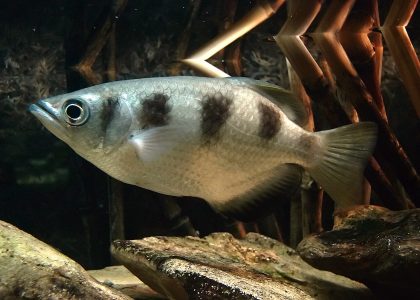
Archerfish are nature’s snipers. These Asian fish shoot down unsuspecting insects by spitting a spray of water at them with uncanny accuracy.
Considering their sniping abilities, it’s maybe not that surprising that they can tell one human face from another. That, however, is quite an unbelievable feat for a fish.
When researchers taught archerfish to spit at a specific people’s faces, they picked the correct person 81% of the time. Impressive, although I would’ve hated being one getting spit at by fish all the time.
2. Rats Love Hide and Seek

Rats are experts at hiding, as I’m sure you know if you’ve tried to catch one. However, it seems that finding a good hiding spot is not just a survival skill for them.
After teaching rats to play hide and seek, one group of scientists noticed that the rodents loved it. They were exceedingly good at it and seemingly relished the game for its own sake.
They wanted to play hide and seek even if there was no treat in it for them. A little tickle on the belly for finding a good hiding spot was all the reward they needed.
3. Crows Carry Generational Grudges

Never, ever cross a crow. If you do, you will incur the wrath of not just the slighted bird but its entire bloodline.
Crows’ incredible pettiness and ability to bear grudges have been proven through both academic study and unfortunate real-life experience. Should a crow put someone in its bad books, it will not stop at hating you personally.
No, it will teach its offspring to loathe you as well. Young crows who have never been wronged by a person will attack them on sight because their grandparents told them to.
For more critters that are out for vengeance, read our list of 9 animals that hold grudges.
4. Octopi Sense Light (Even When Flayed)

What do you need to sense changes in light conditions? You’d probably imagine eyes are necessary, but octopuses have shown it to not be so.
In fact, it turns out that octopus skin is sensitive to light – even when no longer attached to the octopus. Researchers discovered that when they noticed that pieces of octopus skin changed color in response to light.
That was despite the skin’s owner being dead and flayed. Impressive, if morbid.
5. Elephants Know Each Other’s Names
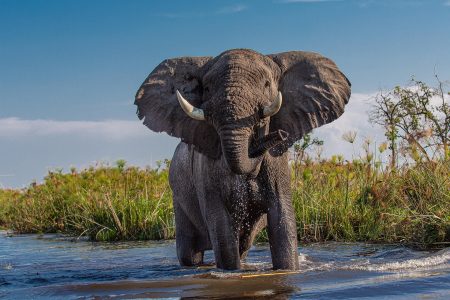
We all know elephants never forget. But fewer people are aware that each elephant may have an individual name.
Elephant researchers (elephantologists?) have noted specific repeating, unique calls when elephants are communicating with each other. Since only one elephant responds to each call, there’s a high chance that each trumpeting pattern is essentially that elephant’s name.
More research is necessary to conclusively prove that elephants have names, but so far, it really does seem so.
6. Electric Eels Can Do Mind Control (Sort Of)
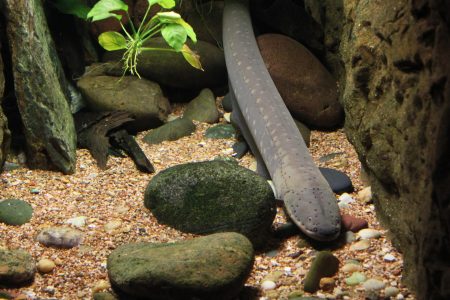
Ooooooh, you’re feeling drowsy! You want to come out of your hiding hole and get eaten!
Well, an electric eel’s mind control isn’t quite that subtle. Instead, it’s an extension of their incredible ability to control their famous electric charges.
If an electric eel finds a fish that’s tucked itself in a crevice the eel can’t reach, it can release a short, sharp blast of electricity that causes the prey’s muscles to contract. This spasm propels the fish out of its safe spot and allows the eel to bring its full electric charge to bear and knock it out.
7. Cuttlefish Pass the Marshmallow Test
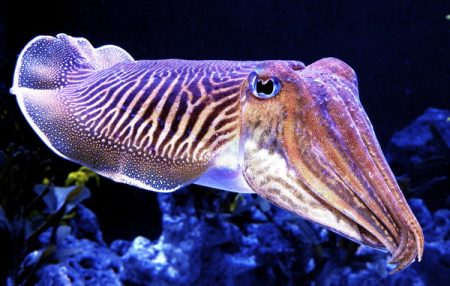
In 1970, psychologist Walter Mischel conducted the marshmallow test. In short, he offered kids a marshmallow, and if they waited a while instead of eating it right away, they got two marshmallows. The results showed that the kids who waited turned out to be more successful in later life.
Why am I bringing this up? Because cuttlefish pass the marshmallow test as well.
In experiments, biologists have noted that after being given a treat, cuttlefish can wait several minutes because they realize that they’ll get a better one if they don’t stuff their faces immediately. And as with humans, the patient cuttlefish tend to perform better in other learning experiments and survive longer in the wild.
8. Pigeons Recognize Cancer

If you show a pigeon an X-ray, it will likely coo and peck at the image. And if it does… You should probably head to the doctor.
Surprisingly, pigeons are as good, if not better, than humans at spotting cancerous growths in medical images. Researchers were shocked when pigeons learned to tell the difference between healthy and cancerous tissue in mammography pictures.
By the end of their medical training, the pigeons had achieved a 90% success rate, rivaling human doctors. They might be birdbrains in many ways, but they do know when you need to get a lump checked out.
9. Bees Understand the Concept of Zero

Insects likely wouldn’t be the first thing you think of when trying to find mathematical geniuses in nature. But honeybees show that even a bug can comprehend complex numerical hypotheticals.
Specifically, they understand the concept of zero. When taught that a sugary treat was always in a container with the least number of dots on the label, bees learned to gravitate toward the container with a blank label.
This indicates that they comprehend that zero is less than one, indicating that they understand the idea of “nothing.” While that may seem underwhelming, “nothing” is actually a very complex and abstract concept that most animals can’t wrap their heads around.
Case in point: humans didn’t “invent” zero until around 300 BCE.