
- From weirdly shaped holes to diamond-filled crevices and ancient cult sites, these are some unusual craters.
Meteorites are fascinating, and so are the craters they leave behind. Some of them are among the world’s most renowned natural sights and tourism destinations.
Others, meanwhile, are more obscure and mysterious. That may be because of their difficult location, ancient myths that surround them, or they may simply be so old or huge that you don’t even know you’re looking at them.
Here are eight odd meteorite impact sites from around the world.
1. Campo del Cielo
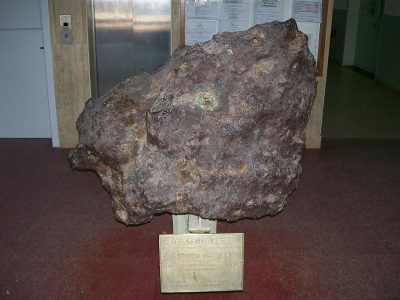
The Campo del Cielo is a meteorite impact field in northern Argentina. It’s unique in that it provided a vital resource for the area’s Native American inhabitants: meteorite iron.
Multiple meteorites (or possibly one meteorite that broke up in the atmosphere) fell at the site around 5,000 years ago. The huge pieces of iron didn’t sink very deep, with many protruding out of the ground.
As such, it was easy for the natives to mine pieces of them to manufacture weapons and other objects. When Spanish colonists arrived in the late 16th century and inspected one of the meteorites, they found the iron to be shockingly pure and of very high quality.
2. Henbury Meteorites Conservation Preserve
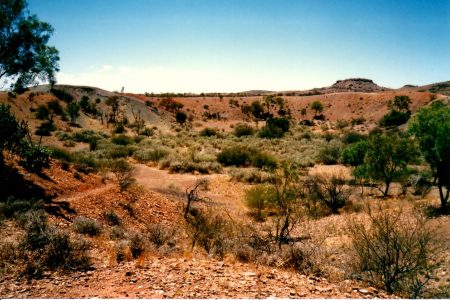
The Henbury Meteorites Conservation Preserve covers 40 acres of land in central Australia. A fragmented meteorite crashed into the area, creating several craters.
The strange thing about the Henbury craters is that they had eyewitnesses. Local Aboriginal tribes saw the meteorite impact, and it has lived on in their stories.
When an Australian researcher was inspecting the site in the 1930s, an elderly Aboriginal man told him his grandfather had seen a “fiery devil” charge down from the sun and “make his home in the earth.” The natives still don’t drink rainwater that builds in the craters, as they believe it will upset the devil.
3. Kaali Crater
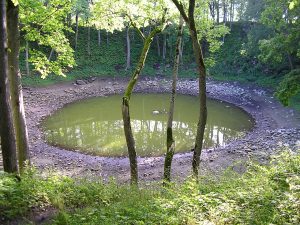
Like with the impact at Henbury crater, the meteorite that fell near the current village of Kaali on the Estonian island of Saaremaa had witnesses. During the Estonian Bronze Age, roughly 3,500 years ago, a meteorite fell on the island, forming a small, almost perfectly round crater that became a pond.
Unfortunately for the local residents of the time, they got a way too close look at the meteorite. Saaremaa is known to have been densely populated at the time, so it’s likely the impact killed quite a few people.
Perhaps that’s why the ancient Estonians started worshipping the site to keep the cataclysm from repeating. They built a now-ruined stone wall around the crater, and researchers have found animal bones and silver jewelry on the bottom of the lake, indicating sacrifices.
4. Macha Crater Field
The impact that created the Macha crater field in northeastern Siberia was quite the bang. The most expansive crater in the area is the second-largest meteorite crater known to have been formed during the Holocene era (that is, the current geological epoch).
What makes the Macha craters unusual is their shape. Instead of being round (indicating a direct impact) or elongated (created by an impact at an angle), they’re pear-shaped.
No one is quite sure how the craters got their bizarre shape. The most widely accepted theory is that the meteorite broke up right above ground, coming down at a very rare angle.
5. Popigai Impact Structure
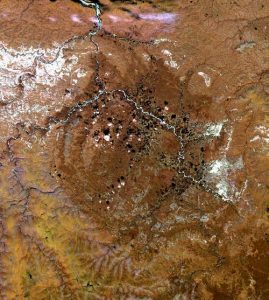
The Popigai impact structure is another northern Siberian crater. This 62-mile-wide hole in the ground was born some 35 million years ago.
And it’s full of diamonds.
Popigai’s large diamond deposits were created during the meteorite impact, when immense heat and pressure turned carbon in the ground into diamonds. While the jewels are valuable in themselves, no one has ever tried excavating them since Popigai’s extremely remote location would make retrieving them cost more than they’re worth.
6. Hiawatha Crater
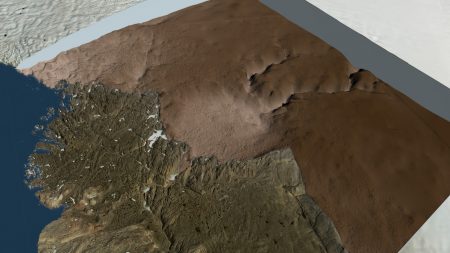
Have you ever seen the Hiawatha crater? No, you haven’t. First of all, it’s located in a remote, frigidly cold region of northern Greenland.
Second, it sits under a miles-deep ice sheet.
They only discovered the crater in 2018, when radar images of the Hiawatha Glacier showed a bizarre, circular depression under the ice. The radar images, together with deep-bore ice samples, have shown that the hole is a meteorite crater. However, how old it is and any other details remain a mystery since you can’t exactly access the crater.
7. Chicxulub Crater
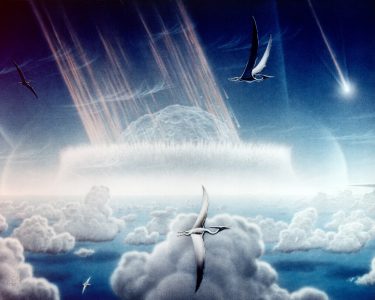
The Chicxulub crater might be the world’s most famous geological formation you’ve never heard of. It was created by the meteorite that killed off the dinosaurs.
Although it’s 120 miles wide, the crater isn’t something you can go gawk at. More than half of it lies under the Atlantic Ocean, and whatever is above ground in Mexico’s Yucatan Peninsula has been eroded by 66 million years.
However, the crater’s outer ring still exists as a small mountain range. It’s a valuable resource for geological research, as geologists can drill straight down to layers formed during the dinosaur-killing blast.
8. Vredefort Impact Structure

Finally, we have the Vredefort crater in South Africa. It’s the largest meteorite impact structure on Earth, having measured 190 miles in diameter when a space rock blasted it into the planet’s crust.
That space rock, however, fell down 2 billion years ago. As such, most of Vredefort has been smoothed out by wind, water, and time, with only some low mountains remaining at what was once the crater’s central dome.
An impact of this magnitude would’ve surely wiped out nearly all life on Earth. Fortunately, the only life that was around 2 billion years ago consisted of single-celled organisms floating about in the ocean.
While some of them certainly perished, the fact that you’re reading this now shows that the most important ones survived.
If you want more meteorite facts, check out our list of 7 strange meteorites that made it to Earth. But were they meteorites or probes aliens sent to chart our planet? Pentagon says it’s possible.