
- Would any of these ancient figures even want us to know where they’re buried?
While the dead undoubtedly deserve their peace, there’s always something fascinating about it when archeologists find the final resting place of a famous historical figure. Just think about King Tut’s tomb or the more recent discovery of the haphazard grave of English King Richard III.
There are some past legends whose burial places we may never know. And that’s not for a lack of trying — archeologists have been hunting for some tombs for centuries.
Here are eight famous historical figures whose burial places may forever remain a mystery.
8. Atahualpa
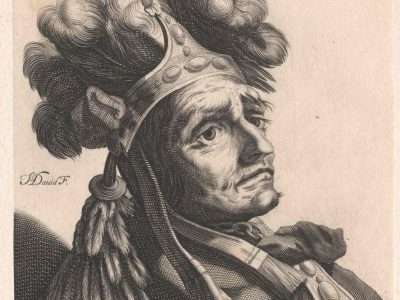
In 1533, Spanish conquistadors under the command of Francisco Pizarro captured Atahualpa, the last ruler of the Inca Empire. For his freedom, Atahualpa promised to pay Pizarro a room full of gold and twice as much silver.
The emperor delivered the treasures and Pizarro gladly accepted them. He then betrayed Atahualpa and executed him anyway.
Afterward, the Spanish reportedly gave Atahualpa a Christian burial. His followers, however, unearthed his body and transported it elsewhere.
Where they took the last Inca emperor’s remains, nobody knows.
7. Leonardo da Vinci
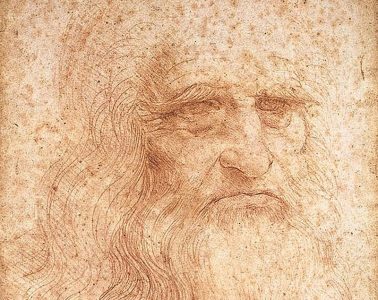
The true Italian Renaissance man and all-around genius Leonardo da Vinci died in 1519 while serving the king of France. He was originally buried in the chapel of Château d’Amboise, a French royal castle.
Fast-forward a couple hundred years and the French Revolution happened. During the revolt against the monarchy, Château d’Amboise was heavily damaged, leading to its demolition in 1802.
Many of the chapel’s graves were destroyed in the process —including Leonardo’s. His remains have been missing ever since.
It’s quite possible that whatever bones remained of Leonardo are now scattered in the former castle grounds.
6. Cleopatra
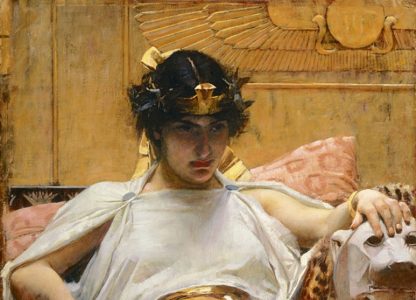
Cleopatra, the last queen of Egypt is one of the most well-known figures in the ancient kingdom’s history. As anyone who’s read Shakespeare knows (there have to be dozens of us), Cleopatra famously killed herself, possibly through a deliberate snake bite.
Shortly afterward, her lover Mark Antony fell on his sword once he heard of Cleopatra’s death. The two were allegedly buried together to lie side by side for all eternity.
We just have no idea where that happened. All that’s known about Cleopatra’s funeral is that she was buried in a mausoleum — and that’s it.
She may have been buried in the city of Alexandria. But the bad news is that the section of the city suspected of housing Cleopatra’s mausoleum is today under the waves of the Mediterranean Sea.
5. Mozart
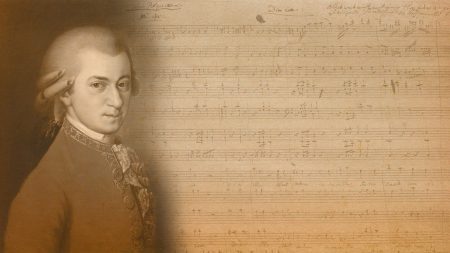
Mozart, one of the greatest composers of all time, died an inglorious death. He ended his life hopelessly sick and struggling with poverty.
As a result, he was buried unceremoniously in a “common grave.” For a long time, historians believed that meant somebody dumped the composer’s corpse in a mass grave.
Later studies, however, have determined that “common grave” actually simply meant an individual grave for a commoner. So, where is it?
Probably nowhere anymore. In the late 18th century, commoners’ graves were emptied after 10 years for reuse — permanent graves were for aristocrats.
4. Christopher Columbus
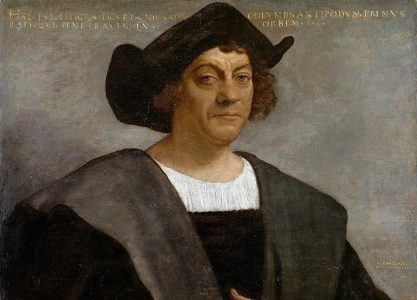
Christopher Columbus was the first European to sail to America and make a big enough deal out of it for more people to come on over. The Italian explorer died in 1506 and was buried at a convent in Seville, Spain.
In 1536, his remains were exhumed and moved to what is today Dominican Republic, as Columbus had requested. Then, they were moved to Cuba, and finally, back to Seville in 1898.
Or were they?
DNA tests suggest that the remains in Seville are not Columbus’. The result would support the Dominican Republic, which claims Columbus’ bones are still there.
Yet, the DNA test isn’t entirely foolproof. For the time being, it’s impossible to know whether Columbus is in Spain or the Dominican Republic.
3. Genghis Khan
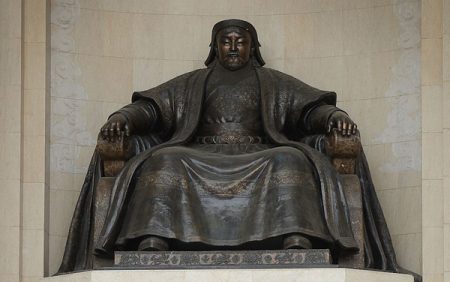
Genghis Khan united the disparate Mongol tribes and established the largest land empire in human history. In 1227, he died.
The Great Khan’s followers transported his remains to Mongolia and buried them in a place Genghis had chosen years earlier. However, he wanted his tomb to remain a secret.
To make sure it did so, more than 20,000 slaves who had constructed the Khan’s tomb were killed to hide its location. According to the story, the guards committing the massacre then slit their own throats to ensure no one would ever find the tomb.
The trick seems to have worked because, to this day, we have no idea where Genghis lies. Maybe instead of a tomb, we should just try to find the humongous pile of corpses on it.
2. Adolf Hitler
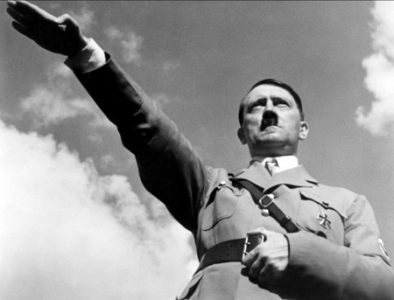
Realizing he had lost WW2, Adolf Hitler put a bullet in his brain on April 30, 1945. And that’s the last thing we know about him for sure.
According to eyewitness reports from the Nazi leader’s bunker, guards took his corpse outside and burned it to prevent the encroaching Soviets from seizing it. Over the next few days, enough explosives fell into the bunker yard to further damage the body.
Yet, there are Soviet records that they did find the Fuehrer’s body. They reportedly took it back to Russia and identified it before disposing of it.
Nobody will likely ever know what happened to Hitler’s corpse. It’s possible the Soviets destroyed it completely so that there would be no grave.
1. Alexander the Great
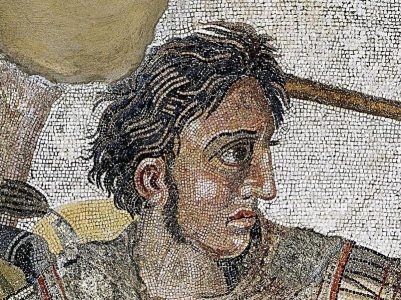
Perhaps the only person who could rival Genghis Khan’s reputation as the greatest conqueror of all is Alexander the Great. The Macedonian king took over Greece and Egypt before plowing his way into northern India, taking over much of the “known world” at the time.
In 323 BCE, he dropped dead in the city of Babylon, aged only 32. Alexander’s body was preserved in honey and sent to Greece, but it got hijacked and taken to Egypt instead.
There, he was interred in Memphis, exhumed, interred again in Alexandria, exhumed again, and finally placed in yet another Alexandrian tomb. That alone would be enough to confuse anyone looking for his grave.
But then the city of Alexandria got wiped out multiple times over the following centuries, both by marauding invaders and natural disasters. Today, it’s utterly impossible where Alexander’s tomb is — if anything at all remains of it.