
- Have you seen these crazy animals? Of course you haven’t.
It’s a tough world out there — either somebody is trying to eat you, or you’re trying to eat somebody else. When it comes to catching prey or avoiding becoming prey, the best thing you can probably do is to be the fastest or most intimidating thing around.
But let’s say you’re instead slow and, frankly, look kind of pathetic. In that case, you’d better be good at hiding.
And believe us, many animals are. Moths, big cats, and snakes — just to give a couple of examples — have perfected their camouflage patters to blend seamlessly into their environments.
Some critters, however, go further than just being a deceiving color. Here are eight camouflage masters from nature.
1. Common Baron Caterpillar
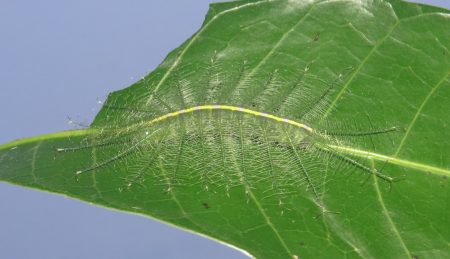
An adult common baron is an unassuming butterfly living in southern Asia. While its brown coloration does help it blend into its surroundings, it’s a real downgrade from their caterpillars’ camo.
The common baron caterpillar is perfectly adapted to hide on a flat leaf of the mango tree. It’s the exact same shade of green as the leaf, and even has a yellow stripe running along its back, mimicking the leaf’s spine.
The caterpillar somehow knows to align itself perfectly with the leaf to blend into it. To complete its disguise, the caterpillar has several fuzzy appendages that mimic the leaf’s veins.
2. Stonefish
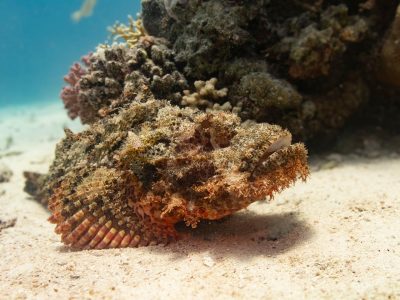
What the common baron caterpillar does to a mango leaf, the stonefish does to the ocean floor. Its name is accurate, because this fish might as well be a stone.
Its body is lumpy and rough, covered in random bumps and warts that resemble a stone texture to a tee. Add in the fish’ muddy coloring and the algae that it allows to grow on its skin, and you can’t tell it apart from a rock, much to the chagrin of the small sea creatures it eats.
And that’s kind of a problem because the stonefish is one of, if not the most venomous fish in the world. Stepping on the stonefish’s venomous spines causes excruciating pain and can shut down your heart or nervous system.
3. Leafy Sea Dragon
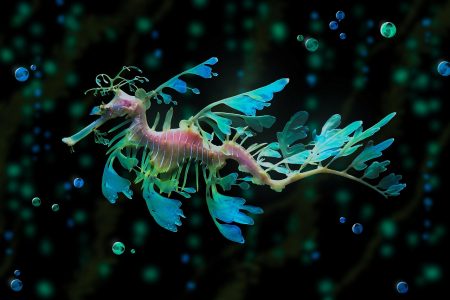
Here’s another ocean dweller that’s gone all in on the “I’ll grow random bits off my body” disguise scheme. Unlike the stonefish, however, the leafy sea dragon has chosen…
Well, leaves.
This sea dragon has several leaf-like protrusions growing out of its body. They’re not used for motion, and their only purpose is to wave about in the currents, perfectly blending the sea dragon among the seaweeds it calls home.
4. Common Flat-tail Gecko
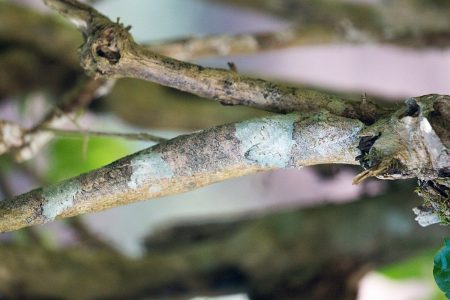
The common flat-tail gecko does kind of the same thing as the leafy sea dragon. This lizard from Madagascar sports a coloring that is indistinguishable from the bark of the trees it lives in.
To enhance the illusion of being nothing but tree bark, the gecko’s entire body is fringed with fuzzy-looking skin tags. They blend into the natural texture of the tree bark, rendering the gecko almost undetectable.
If you do notice it and venture too close, the gecko won’t sit still, though. Suddenly, the bark pops to life, opens its (proportionally) huge mouth and starts screaming in your face.
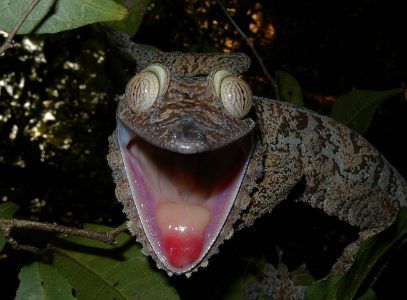
Hope you packed clean underwear.
5. Orchid Mantis
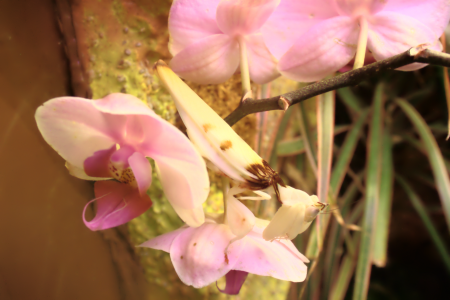
The common, green mantis is already hard to spot among leaves or grass. The orchid mantis, however, would stand out like a sore thumb in the same environment.
That’s because this brightly colored predator actually wants to stand out. Orchid mantis come in a variety of colors ranging from white to brown and even pink — just like the orchid flowers growing around them.
Not only that, the stalking mantis sways lightly from side to side, like a flower fluttering in the breeze. Bugs buzzing by can’t tell the difference between the mantis and a real orchid until something bites their heads off.
6. Stick Insect
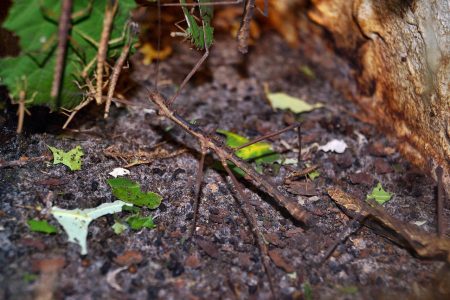
We couldn’t have a list about the masters of camouflage in the animal kingdom without including the stick insect, could we? When it comes to looking like an unassuming natural object, you can’t really beat these guys.
There are many different stick insect species, some of them more stick-like than the others. Describing the best-camouflaged ones would be kind of a redundant exercise, considering they look like sticks.
Some of them grow to be enormous, though, reaching lengths well upward of 20 inches. Be careful when grabbing a branch — it might start crawling away.
7. Cuttlefish
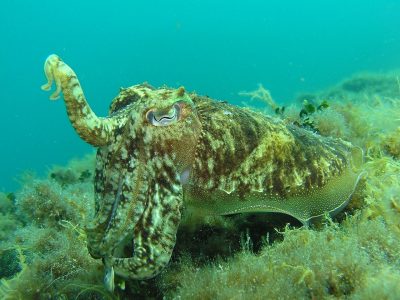
All the animals we’ve listed so far are incredibly good at camouflage, but they all mimic only one thing. The cuttlefish, though, doesn’t feel like being boxed in like that.
Cuttlefish (and many of their octopus relatives) are covered in chromatophores, iridiphores, and leucophores. These structures contain pigments and reflective materials that allow the cuttlefish to change their color on the fly to match pretty much whatever’s behind them.
They can blend into a new environment in less than a second. Not only that, they have limited control of their skin texture, allowing them to assume even the rough shape of the background material.
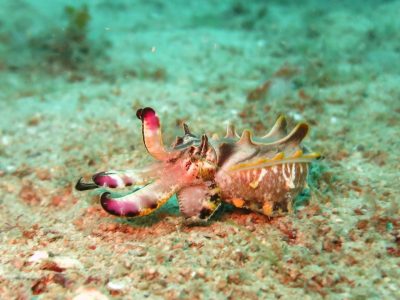
Unless you’re the flamboyant cuttlefish. This guy doesn’t hide — instead, it uses its ability to make itself look as bizarre as possible to scare intruders away.
8. Mimic Octopus
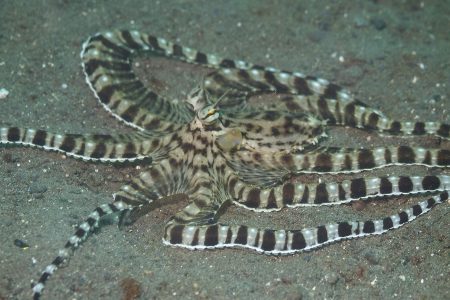
Like the cuttlefish, the mimic octopus can change its color. However, it takes camouflage to a ridiculous extreme by also pretending to be several different animals.
When it’s just swimming around, the mimic octopus generally assumes the shape of a flatfish, by curving some of its arms and extending others to form the tail. Pretending to be one probably makes it easier for the octopus to find food, as it won’t scare its prey.
That said, if you threaten the mimic octopus, it might extend two tentacles, hide the rest, and change color to match that of a venomous sea snake. Other creatures the mimic octopus can impersonate include lionfish, jellyfish, crabs,, sea stars, jawfish, and even sponges.