
- If you thought going to the bathroom was simple, think again.
As the famous children’s book states, everyone poops. From the pauper to the king, from the earthworm to the soaring eagle, we all must answer when nature calls.
Not everyone takes care of their business the same way, however.
In fact, many animals defecate in ways that you can only call weird. They may do it for protection, intimidation, or simply because they don’t give a s***.
Here are seven animals with unusual ways to drop a deuce. That said, you can’t help but be a little impressed by some of these fecal feats.
1. Wombats’ Poop Cubes
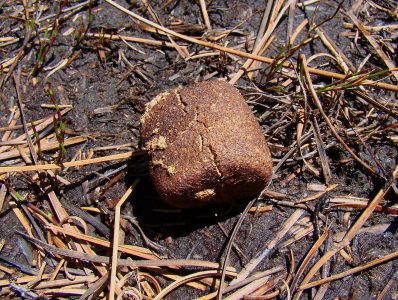
Poop comes in all shapes and sizes, from gnarled turds to long strings and tiny pebbles. The shape of wombat droppings, however, is entirely unique.
Their poo is cube-shaped.
For the longest time, biologists had no idea how wombats shaped their feces into cubes. It took until 2018 for them to figure out it’s due to their slow metabolism, high-fiber diet, and strong muscle-y ridges running through their intestines. By the time their food exits, it’s been compacted into a hard, dry cube.
There’s a reason for the cube-shaped poop, too. Wombats use their crap to mark their territory, and cubical poop helps them deposit a large pile in a high-up place to show who’s the boss of the turf without the nuggets rolling off.
2. Sloths’ Giant (and Risky) Dumps
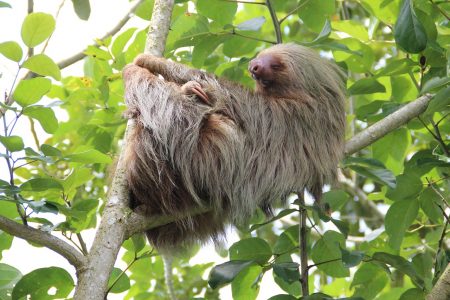
Sloths are famously slow creatures, so it makes sense their metabolism is extremely sluggish as well. In fact, your average sloth poops only about once a week.
But when they finally take a dump, it’s a massive one. A sloth loses anywhere between 30% and 50% of its body weight whenever it poops.
That’s the equivalent of your average person squeezing out a roughly 80-90-pound turd.
Doing your business is a potentially lethal business for sloths, though. They refuse to poop in their home trees, so they must descend to the ground to go potty — which makes the snail-paced creature easy prey.
3. Hippos’ Disgusting S***-nado
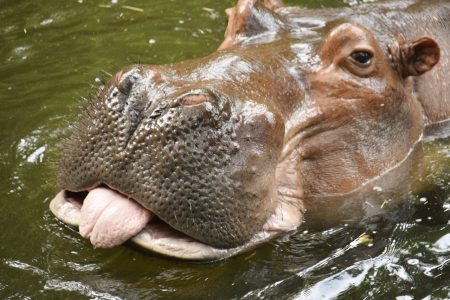
Poop is always gross. Hippos, however, crank up the disgust dial to 11 and beyond.
Let us introduce you to the concept of muck spreading.
Now, hippos are big creatures and they take big dumps. They don’t just let their feces drop to the ground or water, though.
When a hippo senses it’s time to go, it begins to furiously whip its tails back and forth as it lets ‘er rip. What follows is a physical demonstration of the phrase “s*** hitting the fan.”
Hippos muck spread to mark their territory. And it works — we sure wouldn’t want to go anywhere near them after they release their crap-nado.
4. Pandas’ Never-ending Defecation
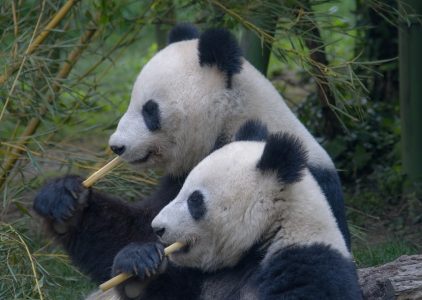
Remember still how sloths go to the potty very rarely? Well, pandas are the exact opposite — they simply can’t stop pooping.
An average adult panda consumes up to 84 pounds of food every day, and most of it is bamboo. However, despite bamboo being all they eat, panda guts aren’t designed to digest it.
So, the stuff simply runs through the black-and-white bears. They’re basically pooping all day, every day. Even when they sleep.
That’s why zoos with pandas must have staff at hand 24/7 to clean their enclosures. As a silver lining, panda poop doesn’t stink since it’s mostly undigested bamboo fibers.
5. Caterpillars’ Crap Cannon
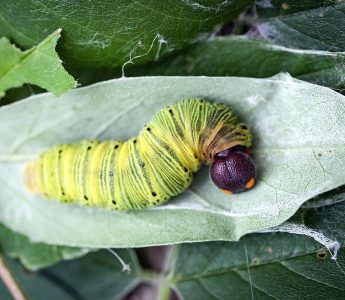
For caterpillars, poo is a problem since it attracts predators, such as parasitic wasps. Most caterpillars have resolved this problem with the ingenious strategy of simply crawling away from their feces.
The caterpillars of the silver-spotted skipper butterfly can’t do that. They spend their caterpillar phase in a little leafy that they build for themselves, and piling poop in the corners would be a giant “EAT ME” signal.
So, the caterpillar decided that if it can’t get away from the poop, the poop must get away from it. Consequently, their butt ends have evolved into what are essentially high-pressure crap cannons.
They’re able to launch their droppings more than 6.5 feet away. Considering that the caterpillar is only two inches long, the average human would have to fire a poop projectile roughly 230 feet to match the relative distance.
6. Turkey Vultures’ Poo-covered Feet
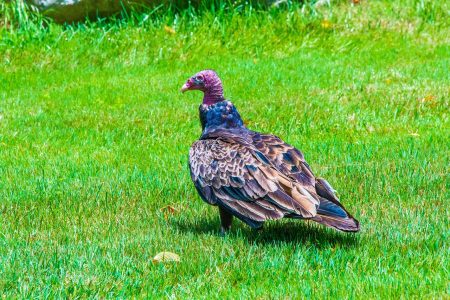
There’s no way to make this sound sanitary, so we’ll just say it. Turkey vultures s*** all over their legs and feet. They do it all the time.
For most animals, that would be an incredible sanitary risk. For the vultures, however, it’s the complete opposite.
Turkey vultures dine almost entirely on long-dead carrion. Rotting meat isn’t exactly healthy, but the vulture’s stomachs are so acidic that they can do it just fine.
That acidity carries over to their poo. The stuff is so caustic that the vultures can sterilize their feet after wading into an animal carcass — by crapping all over themselves.
Additionally, the layer of poop helps the birds keep their feet cool on hot days. Efficient, if utterly nauseating.
7. Parrot Fishes’ Poop Islands
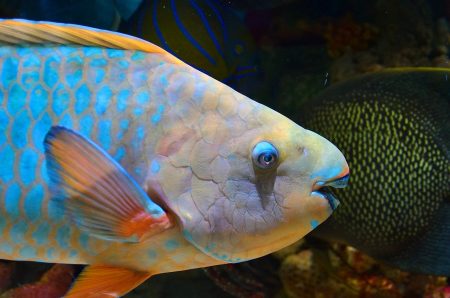
Picture yourself walking on the pristine, white sands of a South Pacific atoll as a calm breeze blows in from the ocean. But if we told you you’re actually walking on a ginormous mound of fish s***?
Because that’s what it is.
Parrot fish are a tropical fish species that feeds on algae growing on coral reefs. They don’t believe in accuracy, though, so they shear off pieces of the coral with their strong, beak-like teeth when they eat.
However, the fish can’t digest the coral. It travels through the fish’s guts until it comes out as small, sand-like pebbles.
Studies have found that the surface sand on Pacific beaches, such as those of the Maldives, consists of up to 85% of coral bits that parrot fish poop out. Hope we didn’t ruin that vacation you’ve been looking forward to.