
- Oh, the places you’ll never go!
The world is such a wide and fascinating place. You often hear people bitten by the travel bug bemoaning how they feel like they’ll never get to see all of it.
If you’re one of these people, you can relax a little. Yes, you may never see all of the world, but that’s because you simply aren’t allowed to go to certain parts of it.
There are many places around the globe where visitors are strictly controlled or completely banned. Here are seven examples of places nobody (at least no normal people) can go.
1. Poveglia
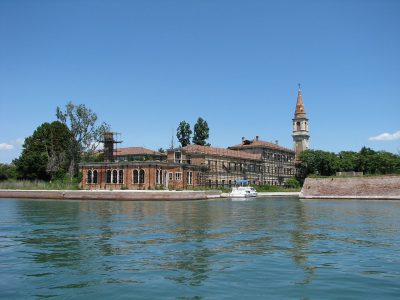
Poveglia is a small island in the Venetian Lagoon in northern Italy. That might sound picturesque, but the place is anything but.
There were a few hundred residents on Poveglia until they fled constant warfare in 1379. The island then stood empty until 1776, when it became a quarantine center for people with plague.
After Venetians stopped dumping plague victims on the island, it was used as a mental hospital of questionable ethics. In 1968, the hospital closed, and Poveglia has been closed to the public since.
The place is rumored to be potentially the most haunted place on Earth due to its tragic past. Yet, another, more pressing reason why very few visitors are allowed are the island’s crumbling infrastructure and potentially dormant plague bacteria.
2. Surtsey
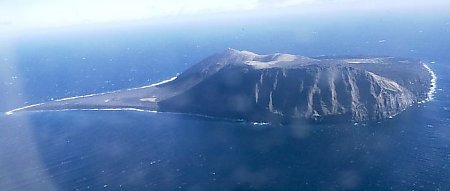
Surtsey Island sits in the Atlantic Ocean off the southern coast of Iceland. If you’ve never heard of the place, that could be because it didn’t exist until 1963 when volcanic upheaval pushed it to the surface.
As such, Surtsey is a perfect opportunity for researchers to study how life takes root on previously barren land. Due to this reason, the general public is banned on Surtsey out of concern that visitors might artificially introduce plant or animal life on the island.
Yet, people sneak onto the island from time to time. For example, one visitor took a poop on the island — which resulted in a tomato plant taking root.
The only people officially allowed on the island are a scant few researchers. Before the visit, they’re hosed from top to bottom (and potentially inside out) to ensure they don’t bring any foreign life onto Surtsey.
3. Lascaux Cave
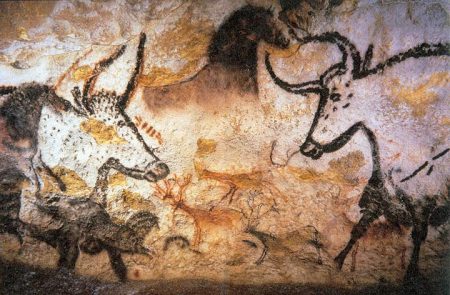
The Lascaux Cave in France is one of the greatest wonders of ancient human life. It’s filled with intricate cave paintings created roughly 20,000 years ago.
It’s too bad that you won’t get to see them, because general visitors aren’t allowed in the cave. But that’s because general visitors are to blame for the paintings’ rapid deterioration.
Once the cave was opened to the public after its discovery, its climatic conditions changed. Mold, water, and carbon dioxide introduced to the cave have started eroding the pictures, so Lascaux has been resealed.
Fortunately, there are multiple faithful reproductions of the original cave where you can go see replicas of the paintings.
4. Lake Vostok
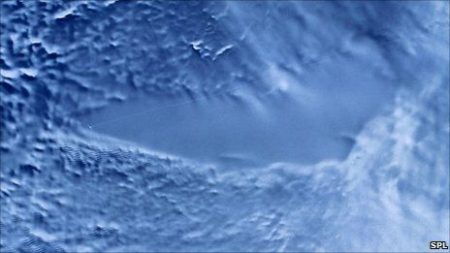
Technically, you can go to Lake Vostok. That’s because this subglacial lake in Antarctica is located at a depth of nearly 12,500 meters, so you can freely walk on the ice above it.
You’d better not start digging, though. Although researchers have drilled down to the lake before, all such activity is currently forbidden due to concerns that excavations could introduce foreign life to the lake’s unique ecosystem.
You can’t fly above the lake, either. Flight above the Vostok area is forbidden due to strange, unexplained magnetic anomalies.
Wonder what’s going on down under the ice…
5. Movile Cave
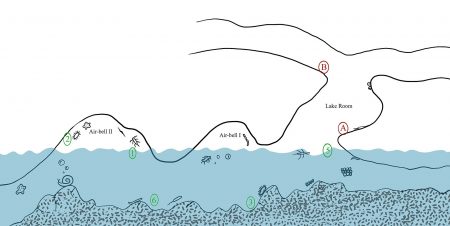
The Movile Cave is a unique subterranean space near the coast of the Black Sea in Romania that has virtually no oxygen. It hosts a bizarre ecosystem of bacteria and other lifeforms that all survive by consuming hydrogen sulfide, carbon dioxide, and other chemicals.
Consequently, the air in the cave is toxic to virtually anything from the outside. As such, it’s no wonder that public visits to the Movile Cave are strictly verboten.
It’s difficult even for researchers to get access to the cave. Only a scant few are allowed in each year because the Movile Cave is just that deadly.
6. Room 39
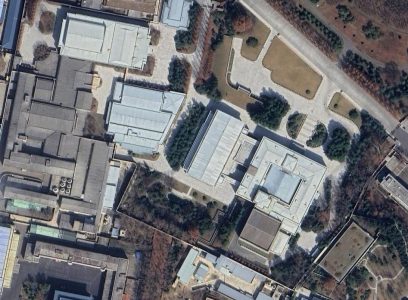
Room 39, officially known as the Central Committee Bureau 39 of the Workers’ Party of Korea, is a clandestine North Korean government organization. It’s believed to be responsible for managing the ruling Kim family’s vast personal fortune of foreign currencies through stock trading and various crimes, such as producing counterfeit money, drug production and trafficking, and international insurance fraud.
Funnily enough, it’s pretty well known where Room 39 is. It’s in all likelihood located on the third floor of the Secretariat of the Korean Workers’ Party building in Pyongyang, near Kim Jong Un’s personal office.
With all that said, we probably don’t need to say that you (or anyone else outside very select officials) absolutely, positively, indubitably cannot visit Room 39. Or any room in the Workers’ Party building, for that matter.
7. Tomb of Qin Shi Huang
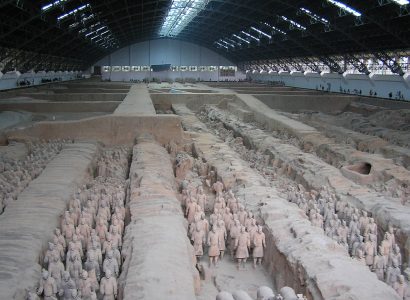
The tomb of Qin Shi Huang is the final resting place of the first emperor of unified China. It’s where the famous Terracotta Army is, so it might surprise you that people aren’t generally allowed to visit the place.
That’s due to a few reasons. First, most of the mausoleum is simply inaccessible because it hasn’t been excavated. This is, without exaggeration, an entire underground city of the dead, so it’s going to take a while to explore it.
Second, China’s government doesn’t allow research to proceed too fast with excavations out of fear that they might damage the ancient tomb. And then there’s the possibility of booby traps.
The tomb is rumored to be filled with various traps, from hair-triggered crossbows to fire-breathing statues and rivers of mercury. It sounds like something out of an Indiana Jones movie, but researchers have found bizarrely high levels of mercury in the soil surrounding the tomb.
Considering Qin Shi Huang died from drinking immortality elixirs made from mercury, the idea of mercury-based traps isn’t that far-fetched. Would you be willing to risk whether thousands of years have rendered the traps inoperable?
We sure wouldn’t.