
- Animals going extinct is bad — but we can sometimes make an exception.
Nature is often absolutely terrifying, with any number of animals out there that are perfectly capable of killing people. Some might poison you, others can rip your face off, while other can crush you with sheer mass and not even notice.
But things used to be worse. Much, much worse.
Many animals that no longer live were absolutely, pants-s****ingly nightmarish. Even that didn’t save them from extinction, though, and we can’t help but be thankful for that.
Here are X horrible animals that have long since gone extinct. And you’ll be glad they did.
1) Arthropleura
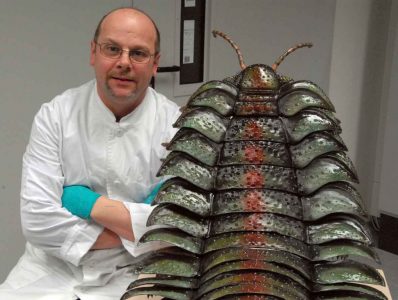
Many of use get freaked out by the centipedes and millipedes we come across today. Imagine, then, what walking into this thing in the woods would be like.
Arthropleura is a genus of extinct millipedes that grew to horrendous sizes. The smallest of them were merely foot-long, while the Arthropleura armata — the largest land invertebrate to ever live — was more than eight feet long and about two feet wide.
These creatures went extinct some 300 million years ago when the amount of oxygen in the atmosphere fell. Makes sense that it was the planet itself that had to kill off this horror bug — what else possibly could have?
We can only be glad that scientists believe Arthropleura was herbivorous. Probably.
2) Deinosuchus
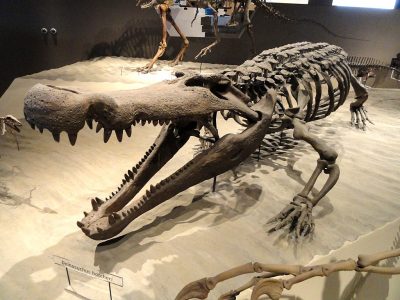
Here’s another terrifying gigantic version of modern animals. As if crocodiles needed to be any more terrifying.
Deinosuchus (which appropriately translates to “terrible crocodile”) grew to be about 35 feet long. Otherwise, it resembled and lived much like a modern alligator.
Which means that it was an apex predator that could and probably would kill and eat any animal that it deemed big enough to be worth the effort. That includes large dinosaurs.
If it was alive today, you would probably be on the menu too. Like it’s relative the alligator, Deinosuchus haunted the U.S. southeastern coast.
3) Therizinosaurus
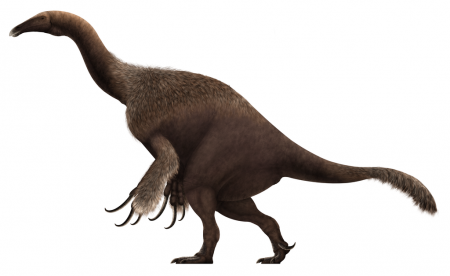
We don’t know much about Therizinosaurus. This 33-foot-long (estimated) dinosaur is only known from a pair of its fossilized forelimbs.
And those are some limbs. Meet the prehistoric Freddy Krueger.
Both of Therizinosaurus’ hands sports three three-foot-long claws. Attached to a school bus-sized dinosaur, that’s one godawful mental image.
Luckily, like the Arthropleura, paleontologists believe Therizinosaurus ate plants and used its claws to tear down or pick up leaves and other plant parts. But we’d still hate to see it get angry.
4) Jaekelopterus
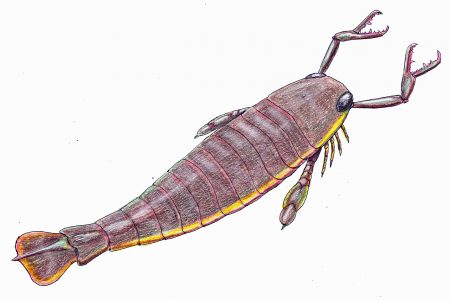
If Jaekelopterus lived today, people would enjoy their beach vacations a lot less. Why, you ask?
Three words — giant sea scorpion. All eight feet of it.
And that’s just its body length. On top of that, it had a pair of 18-inch claws, terminating in spiny pincers.
This giant piece of nightmare fuel lived in shallow brackish or fresh water, or, in other words, places where people like to swim. And those pincers weren’t just for show, as scientist believe the Jaekelopterus could easily pierce and dismember other, only slightly smaller prehistoric sea creatures with similarly hard carapaces.
5) Basilosaurus
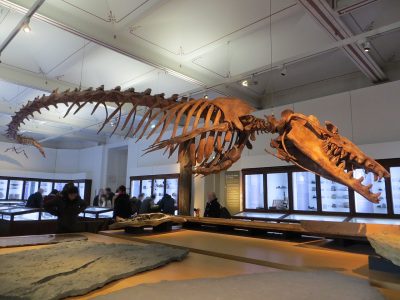
“When he rises up, the mighty are terrified; they retreat before his thrashing.” That’s how the Bible describes the sea monster Leviathan, but it might as well be talking about Basilosaurus.
Despite its name, Basilosaurus was actually a whale. A 66-foot-long, exclusively carnivorous whale.
Basilosaurus isn’t the largest flesh-eating whale to ever live (that’d be the aptly named LIvyatan), but that’s what makes it so terrifying. It was small enough that it’d probably see a human as appropriate prey, but still huge enough that it could kill you without any effort.
Also, unlike most whales, Basilosaurus chewed its food. So you wouldn’t be like Job and get trapped in a whale’s stomach — Basilosaurus would just tear you apart.
6) Archaotherium
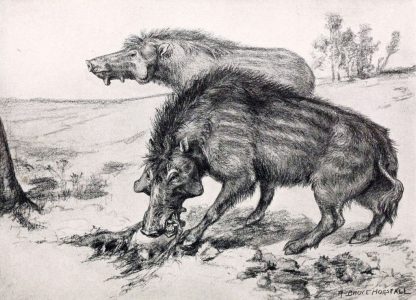
If the name Archaotherium isn’t intimidating enough, how about it’s nickname? This beast is commonly called the Hell Pig.
The “pig” part of the name is actually misleading, since it was more closely related to hippos or whales. The “hell” part is accurate, though.
Archaeotherium lived some 30 million years ago. It was a predatory omnivore roughly the size of a small cow.
Basically, a predatory warthog on steroids, and the roid rage to match. These things could bring down and ancient rhino.
7) Haast’s Eagle
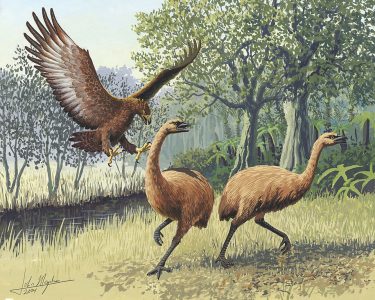
Haast’s eagle is a super-sized eagle that lived in the South Island of New Zealand. It is the largest known eagle to ever live, with a weight of 33 pounds (for comparison, the current largest eagle, the harpy eagle, weighs 20).
That might not sound much, but every pound of the bird was packed with 15 times the killing power. We’re saying that because it routinely hunted the flightless ostrich-like moa bird, which weighed 510 pounds.
But that’s not what makes Haast’s eagle scary. That would be the fact that it didn’t go extinct until the 15th century when the first Maori settlers killed off the moa.
This means that Haast’s eagle coexisted with modern humans for at least 200 years. And what do you know — Maori mythology features stories of the Pouakai, a giant monster bird that swooped down to kill and eat human children.
Coincidence? We’d love to think so.