
- Which of these eras would you like to live in?
If you look at the world today, it seems things aren’t going particularly well. War, death, disease poverty…
It kind of makes you wonder what was the best time in human history to be alive.
Well, there were several times in the past when life was actually pretty awesome. At least if you’re a man — women and the many slaves people used to keep probably found things less amazing.
Still, overall, life was better in these eras compared to those immediately before and after them. Here are seven of the best times in history to live.
1. Ancient Athens (5th Century BCE)

Life must’ve been good in 5th-century Athens, considering it formed the template for pretty much all of Western civilization. And indeed, many reasons made these great times for Athens’ male citizens.
First of all, they invented this thing called democracy. As long as you were a non-enslaved man, you got an equal say with everyone else on how things should be run. It would take a long time before anyone would try that again to this extent.
Additionally, the recent victory over the Persian Empire resulted in Athens’ place as the top dog in all of Greece. With a (brief) peace secured, trade, arts, and philosophy burgeoned, bringing wealth and new ideas into the city state. There’s a reason why the citizens of Athens had time to sit down and think, generating a bunch of the most famous philosophers of all time, like Socrates and Plato.
2. Roman Empire (27 BCE-180 CE)

This period in Rome’s history is known as Pax Romana — the Roman Peace. It was a relatively long period of relatively stable life, with few wars.
The reason why was simple. Rome had spent the preceding centuries in constant war, and there was no one left to fight. This was it; Rome controlled virtually all of Europe and the Mediterranean.
Rome could now start pouring money into civil projects and trade, vastly improving its citizens lives. There were bread and circuses, baths and amphitheaters, and new foodstuffs pouring in from all corners of the empire. With Emperor Augustus’ reforms, the rule of law became stable and civil right expanded to more (but still not most) people.
Just to illustrate how much time people could put into entertainment, the Romans had time to invent sports sponsorships.
3. Iraq (8th Century CE)
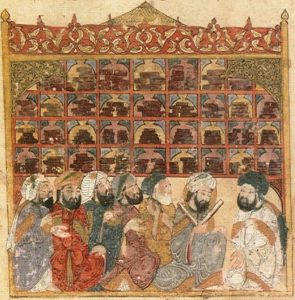
The 8th century was smack-dab in the middle of the Islamic Golden Age, when science, literature, arts, and economy prospered. At the center of it all was Baghdad and its Great House of Wisdom.
With expanded education in the Muslim world, philosophers, alchemists, scholars, and scientists from all around the world converged on Baghdad. This resulted in an explosion of new knowledge, and a lot of modern science and math still rely on ideas developed in Baghdad.
Additionally, this era was relatively peaceful, and people of other faiths were allowed to live freely in the city. Sure, they had to pay more taxes and couldn’t vote, but it sure beats what came with the chaos following the Abbasid Caliphate’s collapse in the Mongol invasions.
4. Empire of Mali (14th Century)

For a brief period of time in the 1300s, the Empire of Mali — and specifically the city of Timbuktu — was a fantastic place to live in. It’s all thanks to two reasons.
First is a man called Mansa Musa. He was an extremely shrewd and capable ruler, who developed Timbuktu into a flourishing city of trade, arts, and learning.
The second reason is gold. There was so much gold in Mali that it’s impossible to imagine how rich the empire (and Mansa Musa, by proxy) was.
It’s easy to make things better for your citizens when you have enough money to throw away. Literally — when Mansa Musa made a pilgrimage to Mecca, he became famous for tossing gold coins to people as he passed through cities.
5. Renaissance Italy (14th-17th Century)

Now, the success of Renaissance Italy is built on one of the first tragedies of human history. We’re talking about the Black Death, which killed off about half of Europe’s entire population in the preceding century.
However, the depopulation had a morbid silver lining. There were so many fewer mouths to feed that the famines that had plagued Europe for centuries virtually disappeared.
Additionally, with fewer workers to do everything that needed doing, people’s wages and living conditions improved dramatically. Much like in Athens, people were doing so well that they could turn to philosophy, arts, and sciences without worrying about where they’re getting their next meal from.
Which means that in order for us to have Leonardo, Michelangelo, Raphael, Donatello, and other Renaissance men who didn’t make it into the Ninja Turtle team, half of Europe had to drop dead. Worth it?
6. Roaring Twenties (1920s)

After World War I ended and American doughboys returned home from the battlefields, things got pretty great for a while. The U.S. economy exploded, with national wealth doubling between 1920 and 1929.
Technology started its rapid advance, with automobiles, radios, movie theaters, and more going from luxuries to everyday items. Urbanization created a vibrant city life that gave us jazz and the Harlem Renaissance.
Women gained the vote, and the speakeasies created by the Prohibition brought previous social boundaries crashing down, resulting in a more egalitarian society. Sure, it all stopped with the Great Depression at the end of the decade, but for a few years, it was honestly pretty excellent.
7. Now

No matter how you feel, right now is likely the best time ever for humans to be alive. Looking at things from the outside, we live in a paradise.
Modern medicine can cure people from diseases that were death sentences just a few decades back. Life expectancy is higher than ever, poverty and hunger rates are near the bottom (at least in terms of human history), and democracy of some sort is the default form of government in most countries.
That’s not to say that the modern world doesn’t have its own massive problems. But that’s true for any era — there’s no perfect world, but you can try to look at the bright side of things.
Was this article a bit too positive for you? Then, you might want to find out which were the 6 absolute worst times to be alive in history.