
- Would you rather jump through flames, get fall-over drunk, or clean your home in abject terror?
Shooting fireworks, popping a bottle of bubbly, counting down to midnight… There’s a certain formula to celebrating the New Year.
Of course, these traditions aren’t the same everywhere. And when you start turning back the clock thousands of years, you’ll find some pretty wild or, alternatively, dead serious ways people commemorated the start of a new year.
What’s more, their new year’s celebrations could take place at times that seem very odd to us. After all, there’s nothing tangible dictating that the new starts on January 1 — especially if your civilization predates “January.”
Here are six surprising ways and times ancient peoples celebrated their version of the New Year.
1. Janus Kept Romans Busy
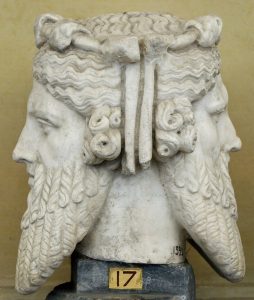
Although many cultures have their New Year’s parties at varying times, the Roman celebrated it on January 1. After all, they invented the month of January, naming it after their liminal deity Janus.
He’s an appropriate god to preside over New Year’s, as with his two faces, Janus could always look both to the future and the past. On January 1, Romans would make offerings and pray for Janus to bless the 12 months ahead with good luck.
They’d also give gifts of sweets to each other, hoping that the good fortune they bestowed on their neighbors would rub off on them for the coming year. Finally, if they had nothing better to do, the Romans would go to work, as they considered being idle a vice that would certainly sour the next year.
Maybe knowing this will make you feel a little better if your boss calls you in on New Year’s Day.
2. Humiliating the Babylonian King
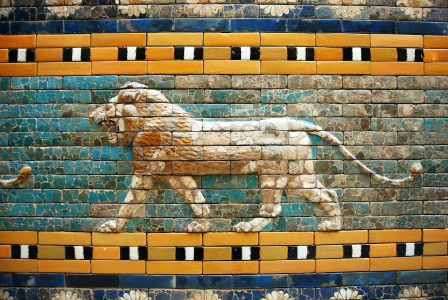
The ancient Babylonian New Year was a multi-day festival called Akitu, taking place in March. It was party time for all — except the king, who had to undergo various humiliating ceremonies.
One ritual included stripping the king and forcing him to kneel in front of a statue of Marduk, the Babylonian chief god. After swearing that he had ruled with valor, the head priest would start smacking the king around and pulling him by his ears. If the king shed tears during the beating, it was a sign that Marduk was pleased with his humility, and his reign was safe.
Then, the king got to play the role of Marduk in a retelling of the god’s triumph in battle over the evil Tiamat. At the end of the play, the king would be killed so that his spirit could fight beside Marduk for all eternity.
Surprisingly, the kings weren’t too keen on that last part, so they typically delegated the role of Marduk to a criminal on death row. Sounds morbid, but the criminals considered it a redeeming honor, so… To each their own, we suppose.
3. Persian Fire Jumping
The ancient Persians’ New Year, called Nowruz, also takes place in March. Fire plays an important role in the Persian Zoroastrian religion, so things got pretty hot during Nowruz.
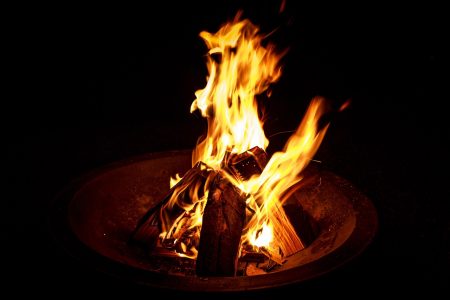
This festival season features a slew of different celebrations, most of which involve bonfires to a varying degree. The most dramatic, though, is the fire jumping ritual.
People would build a series of small bonfires and then run or leap through the flames. The sacred fires would burn away any bad rap carried over from the last year, allowing everyone to start the new one with a clean slate.
While this celebration is ancient, it’s by no means dead. People of Iran still celebrate Nowruz and run through fire every year.
4. The Egyptian Frat Party
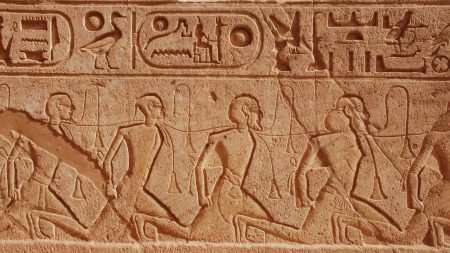
Ancient Egypt had probably the most drastically different timing for its New Year, which took place in July. This is when the Nile would flood and spread nutrient-rich sediment to the fields, so the timing made sense from the Egyptian point of view.
And boy, did the Egyptian celebrate. Their New Year’s festival, called Wepet Renpet, was one wild party.
The event was tied to the story of the sun god Ra saving humanity by getting the omnicidal goddess Sekhmet too drunk to kill everybody. So, to honor his trickery, the Egyptians would welcome the New Year by ceremonially getting black-out drunk (with all the mayhem and mishaps that go along with excessive drinking).
Which, coincidentally, is how many people still celebrate New Year’s. There’s nothing new under the sun.
5. The Chinese Lunar New Year
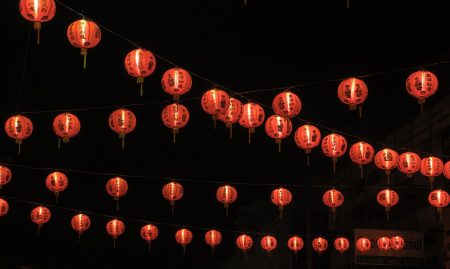
You’re probably familiar with China’s Lunar New Year celebrations. Together with Nowruz, this is one of the oldest still-existing traditions in the world.
And it has changed surprisingly little. Even thousands of years ago, people would decorate their homes with the color red, play loud music, shoot fireworks, burn incense, and eat lots of good food.
It all ties down to the Nian, a horrible monster from Chinese mythology. It would emerge from its slumber during the New Year and would consume everyone in its path — unless people scared Nian away with garish colors and lots of noise.
These days, people may be less concerned about man-eating beasts, but Nian is still present at every part. After all, its name is now the modern Chinese word for “year.”
6. Mayans Cleaned in Fear
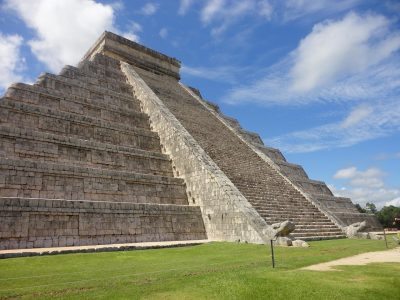
Most ancient peoples threw some kind of party on New Year’s — but not the Mayans. For this South American civilization, there was nothing happy about New Year.
According to the Mayan cyclical concept of time, everything bad and evil be at its worst just before the cycle resets. That time was, of course, the New Year’s, which had its own five-day “month” in their calendar, called Wayeb.
During this time, the Mayans would avoid traveling or making any important life decisions. Instead, they would huddle at home, ritualistically clean the house, repair their home altars, and pray for the gods to let them make it through the foulest days of the year.
That is, unless they were called to work to replace the statues of the gods at the many temples of Mayan cities. Essentially, the Mayans started the year with a terrified deep clean of their homes, cities, temples, and souls.