
- Welcome the new year with one of these quirky customs.
New year, new me! Deciding to change something about your life is a common way to celebrate a new year that’s found all over the world.
However, there are also plenty of national and regional New Year’s traditions that you may not have ever heard of. If you’ve been reading Oddee for a while, you’ll know that we’ve written about them before.
It’s a wide world, though, and we haven’t even scratched the surface on fun and quirky New Year’s celebrations. So, to bring in 2026, let’s take another look at how people elsewhere celebrate the occasion.
Here are six more weird and wonderful New Year’s tradition from around the world.
1. Romania — Talking to Animals

Some of you might be aware of the famous Romanian New Year’s tradition of dancers dressed as animals going from house to house. However, there’s another animal-related custom in the country.
On New Year’s Eve, many Romanian farmers go out to the barn and talk to their animals. If an animal responds, it’s a sign of trust and friendship between farmer and beast, and a sure sign of good luck in the coming year.
What we couldn’t find out is whether it’s enough for a cow to moo or a sheep to bah back, or whether they have to respond in clear human language. We’re just saying, if their luck depends on the latter, there will be a lot of disappointed farmers in Romania.
Read more about the Romanian animal spirit dance here.
2. Philippines — Wearing and Eating Round Things

If you happen to be spending New Year’s in the Philippines, you will see a lot of people clad in polka-dotted clothing. It’s all because the locals believe this will guarantee them good fortune in the year to come.
The round dots are considered to symbolize money, which is always good. So, the folks are essentially going around in clothes adorned with symbols of coins.
Not only do Filipinos dress in clothing with round shapes, they also eat round fruit. Watermelons, oranges, grapes, and pomelos are all common sights at New Year’s Eve feasts.
But are you supposed to have 12 or 13 fruits on the table for maximum good luck? Well, that’s a point of contention foreigners probably shouldn’t weigh in on.
3. Inuit — Nalujuk Night
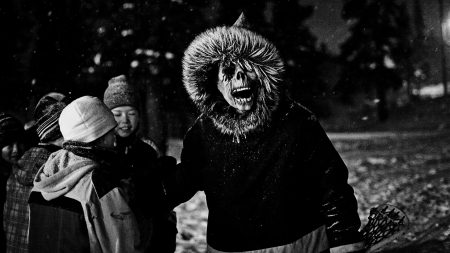
In some areas of Canada, the Inuit people celebrate Nalujuk Night. While this tradition is technically part of extended Christmas celebrations, it’s celebrated on January 6, so it’s a little bit of a New Year’s thing too.
Nalujuk Night is a fascinating mix of Christian and Native American traditions. On this day, the elders of the community dress as monsters emerging from the sea.
They will then go around, rewarding children who have been good with sweets and small gifts. They will then chase around kids who have misbehaved and whack them with sticks to teach them a lesson.
4. Chile — Graveyard Picnics

When the clock chimes midnight on January 1, you might find people standing around the graveyards of Chile. They’re not there mourn, but to celebrate.
Cemetery picnics are a relatively fresh New Year’s tradition in Chile. It started around the city of Talca in 1995 and has since spread across the country.
On New Year’s Eve, people will gather at graveyards to bring in the new year with their deceased loved ones. They will party as if those long gone are there with them, eating, drinking, and singing. The bravest will even sleep by the graves to tuck the spirits of the dead in after a night of merrymaking.
The graveyard picnics show that not all fun New Year’s traditions are age-old — new ones are still being invented.
5. Brazil — Jumping into the Sea While Wearing White

The Festa de Lemanjá in Brazil is a New Year’s celebration that’s associated with the Candomble religion. This religion developed in the 1800s, drawing inspiration from African native religions and putting it in a Brazilian context.
During Festa de Lemanjá, people celebrate the day’s titular sea goddess, Lemanjá. They will wear white clothes to symbolize peace and spiritual purity, which brings good fortune for the coming year.
As midnight strikes, people run into the sea and jump over seven waves, one for each major Candomble deity. While they leap over the waves, they’ll recite prayers for what they want to achieve in the 365 days to come.
6. Greece — Smashing Pomegranates
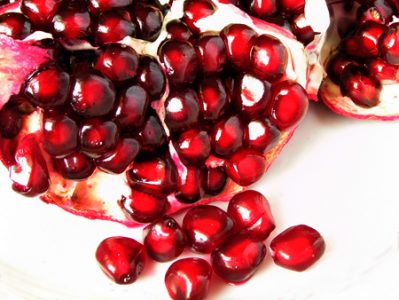
In Greece, we find the New Year’s festival of Podariko, which aims to bring good fortune for the year. It begins with people hanging pomegranates on their doors a couple of days before New Year’s Eve, as the fruit symbolizes luck, prosperity, and fertility.
On New Year’s Eve, just before midnight, everybody is rushed out of the house. One person is chosen to reenter the house, making sure they step in with their right foot first. This is supposed to ensure good fortune for the household.
Then, a second person will check just how much fortune the family can expect. They’ll grab one of the pomegranates (with their right hand) and smash it on the house’s door.
The bigger the mess, the better the luck!