
- Here’s a bunch of spy stuff you’ll never see James Bond use. Which is probably for the best.
The Cold War might as well have been called the Spy War because, really, that’s what it was. The CIA and its Soviet counterpart, the KGB, were constantly coming up with new, sneaky ways to find out what was happening on the other side of the Iron Curtain.
Some spying techniques the CIA developed were absolutely ingenious, but they are also got into plenty of completely harebrained schemes. We’re talking about stuff like trying to turn Fidel Castro bald or using psychics to discover hidden treasures.
Occasionally, the spy masterminds drafted animals to play a part in their plots. Here are six examples of when the CIA involved animals in their bizarre spy schemes, in one way or another.
1. Pigeons
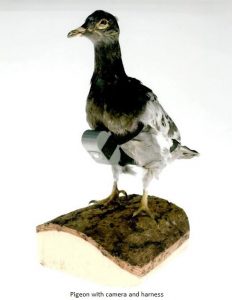
You can tell a lot about, say, a secret base if you can get an aerial photograph of it. Unfortunately, spy planes can be spotted and even shot down, which can lead to all manners of international unpleasantness.
So, the CIA devised a solution. They started using trained pigeons as camera carriers.
CIA operatives would strap a small harness carrying a tiny camera to the bird’s chest. They would then release the pigeon near an area the CIA wanted to know more about. As the pigeon started flying home, the camera snapped photos, getting pictures much closer than a spy plane ever could.
The CIA chose to use pigeons because they are relatively easy to train. Additionally, pigeons are everywhere, so it’s unlikely anyone would think twice about a pigeon flapping about.
Unless it’s carrying a fairly conspicuous 1960s camera on its chest. Funny enough, some elements of the pigeon program are still classified, but you can take a look at the declassified documents on the CIA website.
2. Cats
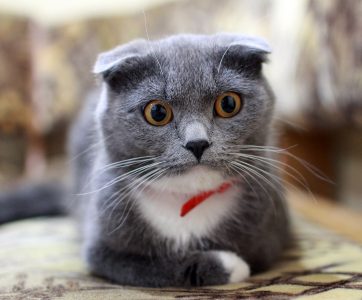
In 1964, the CIA launched a new program called Project Acoustikitty. It seemed to use regular house cats with implanted microphones to spy on foreign agents.
The project was an abject failure. But perhaps not for the reasons you would think of.
Technologically, Project Acoustikitty was a triumph. The microphones placed in the cat’s ears and the transmitter antennas woven into their skin worked flawlessly, and the surgical operation didn’t harm the cats.
It was the cats themselves that ruined the program. It turned out that cats aren’t the most disciplined animals and, once released, they’d wander wherever they pleased instead of listening in on sensitive conversations.
Project Acoustikitty was officially terminated in 1967 after only three years. In hindsight, the CIA probably should’ve seen this coming.
3. Catfish
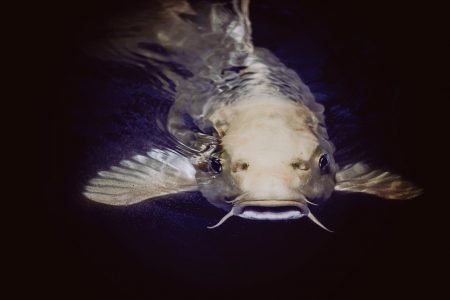
Okay, cats didn’t pan out, but how about catfish? Believe it or not, they were a much bigger success.
Meet Charlie and Charlene — the catfish robots created by the CIA’s Office of Advanced Technologies and Programs.
This dynamic duo was built to resemble catfish to a shocking degree, all the way down to their movements. The radio-controlled fish could sneak about underwater and gather water samples to monitor for, say, possible poisons or radiation introduced into waterways.
Since the robots looked exactly like regular catfish, nobody would ever suspect them. Sadly, we don’t know who the model catfish for the robots was.
4. Dragonflies
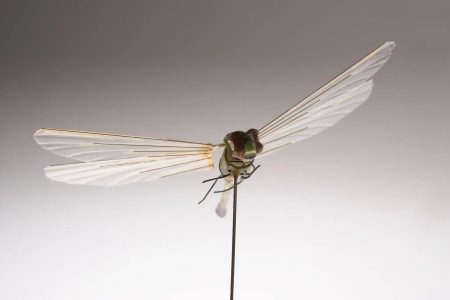
Catfish weren’t the only creatures the CIA turned into robotic spies. They also did it to dragonflies.
Project Insecthopther sought to create a small, remote-controlled bug that would carry a bug to listen in on secret discussions. At first, the robot was supposed to resemble a bumblebee, but the CIA soon realized that was a poor choice.
Bumblebees typically fly in unpredictable, erratic patterns, so having one hover around would be suspicious. Additionally, if the robo-bee got too close, the target might be scared of getting stung and slap the bug.
Instead, the CIA modeled the Insecthopter after a dragonfly. The laser-guided robot, which flapped its fake wings as it flew, could hover around like real dragonflies and zoom across 200 yards in 60 seconds.
That is, as long as there was no wind. It turned out that even a slight crosswind would blow the mechanized bug into the nearest wall and the CIA quietly scrapped Project Insecthopther.
5. Tigers
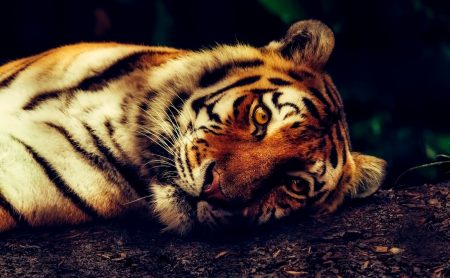
In the ‘60s and ‘70s, the CIA was very interested in what was happening in Vietnam. The spy agency was enlisted to develop an inconspicuous way to monitor Viet Cong fighters’ movements in the thick jungle.
For that, the CIA turned to tigers — or specifically, their crap.
The agency’s scientists developed an ultra-sensitive seismic detection device that could monitor enemy combatants’ footsteps from 300 yards away. But how do you make this contraption not stand out in the jungle?
Well, there are tigers in Vietnam, so the CIA disguised the seismic detectors as tiger droppings. We suppose it works, but couldn’t they still have picked a more common animal?
6. (Dead) Rats
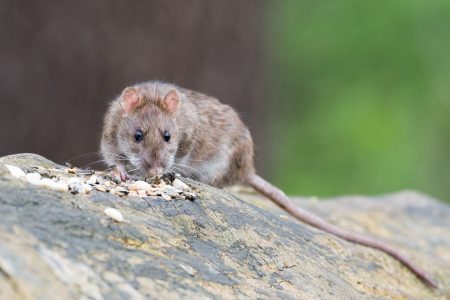
Finally, we have the CIA’s perhaps most disgusting animal-related spy tool. That is, a literal rat.
The CIA wanted to create a device agents could use to drop off documents, money, or anything else in plain sight. It needed to be obvious to other spies, but blend into urban environments so perfectly that no one else would see it.
That’s where the rats came in. The CIA got a bunch of dead rats, taxidermied them, and cut their stomachs open to create a pocket into which spies could stuff classified things.
The agency’s thinking was that nobody in a big city would pay any mind to dead rats, and if they did, their instinct would be to stay away from it. Well, it worked like a charm with people — but not with cats.
As it turned out, stray cats loved the idea of an easy rat meal and kept stealing the decoy rats. This went on until the CIA started treating the rats with wormwood oil to make them smell foul to kitties.